

EXPLORE EPISODE FOUR - 28 to 25
Local Navigation

Bringing to life spectacles of natural wonder on our doorstep
No.26
Arctic Tern
The Arctic Tern is a maritime bird which visits the British Isles in summer from the icy landscape of Antarctica.
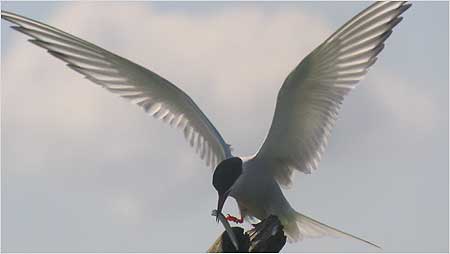
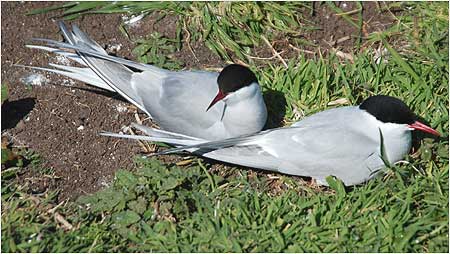
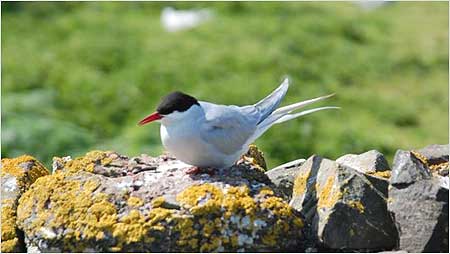
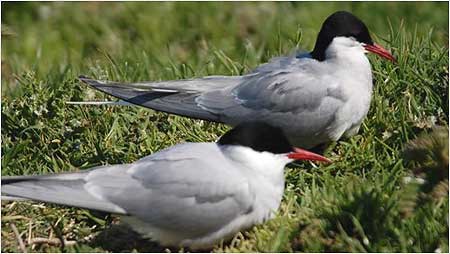
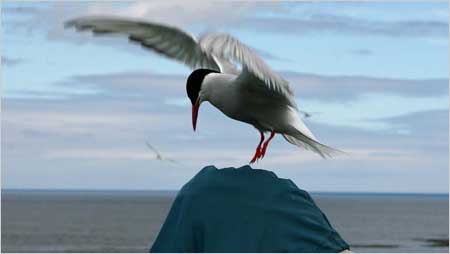
This small bird is white and light grey with a black cap and a brightly coloured red beak. The Arctic Tern only weighs around 110 grammes, but it can pack the punch of a heavyweight boxer. It is well known for attacking anyone intruding into its territory during the breeding season - and giving them a peck on the head!
The bird's long tail and acrobatic, graceful flight has led to it being nicknamed 'the swallow of the sea'. It measures about 32-35cm length with a wingspan of 80-95cm.
The Arctic Tern is easily differentiated from a Sandwich Tern which has a black bill, a tuft on the back of its head and a shorter tail. In contrast the Common Tern has a paler underbelly, a shorter tail and longer legs. The Arctic Tern's long tail streamers make it stand out from other terns.
The birds have extremely long lives and can reach 30 years or more. But these are birds under pressure. Not only do they undertake a remarkable long distance migration, they also face problems getting food when they arrive in Britain. Their favourite food is the sand eel but when this population crashes due to over fishing, life can be hard for the birds.
Web links
National Trust - Farne Islands
The BBC is not responsible for the content of external internet sites.
Photo gallery
Watch and Listen
Watch Arctic Terns dive-bombing visitors on the Farne Islands off the Northumberland coast with presenter Chris Packham:
Listen to the sound of an Arctic Tern on the RSPB website:
Help playing audio/video
Tips
Tips for viewing this species:
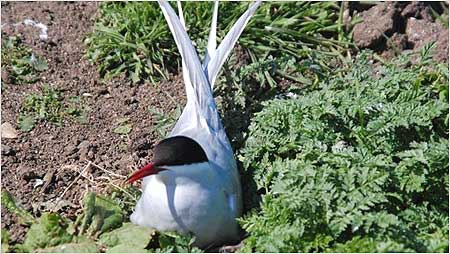
- The Arctic Tern is most easily identified by its long tail streamers which extend much further than those of a Common or Sandwich Tern. Also look out for its distinctive red beak and legs.
- Listen for a high pitched repetitive 'gwik' sound which distinguishes the Arctic Tern from other terns. .
- Watch out for Arctic Terns on their spring and autumn passage when they can be observed at inland waterways and coastal areas.
- The best months to watch Arctic Terns are May, June and July before and during the breeding season.
- Coastal locations in Northern Scotland, North East England, North Wales and Northern Ireland are great places to spot this bird. Breeding terns are most easily observed on the Farne Islands or the Northern Isles where there are the highest breeding densities.
- The Farnes Islands are arguably the most spectacular location for the Arctic Tern. Take a boat trip from Seahouses Harbour to Inner Farne (daily in summer) where you can disembark at the sea bird colony run by the National Trust. The Farnes also boast huge colonies of Puffins, Kittiwakes, and Guillemots in summer.
- Breeding takes place in late July and August. Look out for the Arctic Tern's elaborate courtship dances on the ground with the male strutting around with a raised tail and lowered wings. Male birds may also offer fish to the female as a courtship ritual.
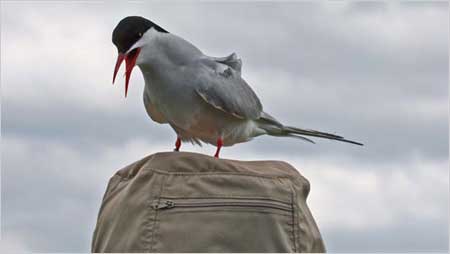
- Beware of attacking birds! Wear a hat and wave something above your head to deter the Arctic Terns if they start to attack you.
Habitat
The Arctic Tern is found on coasts and rocky islands around the British Isles, and occasionally can be seen inland on migration. These birds usually live in large, densely packed colonies with other terns.
The bird has been described as "the ultimate long distance migrant" with summer migrants to the British Isles travelling 6,000 miles every year from the Antarctic.
There are about53,000 pairs of Arctic Terns in the UK during the summer. Some of the most densely packed colonies can be found on the Northern Isles (Scotland) and the Farne Islands (Northumberland). The birds can also be found around the coast of Northern Ireland and North Wales.
There are about 2,000 pairs of Arctic Terns on the largest of the Farne Islands, Inner Farne. The birds are closely jammed together around the area where visitors land by boat. They can become very aggressive towards anyone who encroaches on their territory. As a result in summer the Farne Islands are known as 'dive bomb alley' - it's the height of the nesting season when the Arctic Terns become very defensive of their nests.
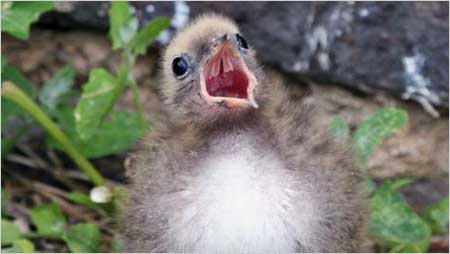
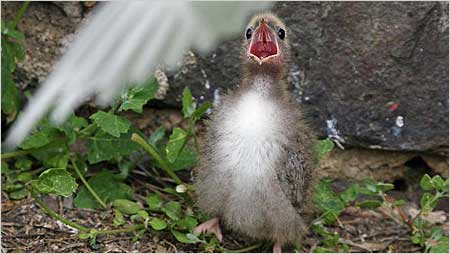
Arctic Terns usually return to the same breeding colony each year and generally mate for life. The bird makes its nest in a depression in the ground, and this is fiercely defended from predators and humans.
No. 28 - Roosting bats
Seventeen species of bats can be found in Britain from two main families - find out about their roosting habits.
Best places to see - Dalby Forest (North Yorkshire), Cheddar Caves, Crom (Northern Ireland).

No. 27 - Butterflies
Butterflies boast some of the most vivid colours of any of the UK’s wildlife. In summer the spectacle of clouds of butterflies is a sight to behold.
Best places to see - Great Orme (Wales). Summer meadows.
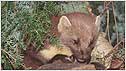
No. 25 - Pine Martens
ThePine Marten is a slender, colourful and shy creature with a red-brown coat and long chocolate coloured bushy tail.
Best place to see - Highlands (Scotland).


Also on Nature's Top 40
BBC Nature & Wildlife

More from bbc.co.uk nature


BBC iD
BBC iDBBC navigation
BBC links

BBC © 2014The BBC is not responsible for the content of external sites. Read more.
This page is best viewed in an up-to-date web browser with style sheets (CSS) enabled. While you will be able to view the content of this page in your current browser, you will not be able to get the full visual experience. Please consider upgrading your browser software or enabling style sheets (CSS) if you are able to do so.
