Tony Hall speech at the launch of the BBC’s Annual Report and Accounts 2017/18
Tony Hall, Director-General of the BBC - Wednesday 11 July 2018
Published: 11 July 2018
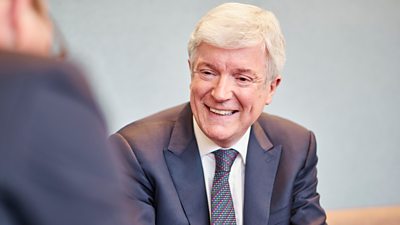
I hope this report shows just how powerful a creative force the BBC continues to be for Britain not just in this country but also around the world. I strongly believe that the BBC‘s role is going to be more important in the next decade than in the last: Standing up for journalism you can trust; standing up for the creativity of this country.
Check against delivery
Thanks David. The reason the BBC is here is to commission and make great programmes and content - on radio, television and online. That’s what we’re paid by the British public to do. We’re here to back boldness, creativity and originality. And I think - and I say this without a hint of complacency - that this year our teams have done our audiences proud. 17 Baftas, 18 RTS programme awards, and 36 Arias tell their own story. So let’s have a look at some of the highlights.
[SHOWREEL]
I’d like to make a couple of points on the back of that video.
First about the people who work for us.
At home our teams have been called on to cover the terrible terrorist attacks in Manchester and London - as well as the appalling events at Grenfell tower. I’ve talked to our teams. They have conducted themselves with great professionalism and dignity often in really challenging circumstances. They’ve been deeply affected by what they’ve witnessed. I’m sure the same’s true in your newsrooms.
And abroad - especially in the Middle East and Afghanistan - the risks have been even tougher. It saddens me enormously to report the murder of Ahmad Shah in Afghanistan. I went to see our Afghan team, working just two floors up from here, shortly afterwards. They were united in grief - and in their determination to see justice done.
The way in which the media are often targeted in these areas is a deplorable development in journalism. More especially at a time when the best defence against what we broadly call fake news - is strong, brave knowledgeable journalists - particularly on the ground.
My second point is more optimistic. I think this year has also shown how programme makers can have an impact for good on the world we live in.
The drama Three Girls about sex abuse in Rochdale played on BBC One over three nights. It did what only drama can - you felt what it was like to be that girl. It helped you understand grooming - and opened the nation’s eyes to the danger. And it led to a campaign to get proper recognition for the whistleblower in the case - played brilliantly by Maxine Peake.
And this last autumn Blue Planet II moved us all. And changed our way of thinking. 8 out of 10 viewers said it made them care more about conservation. Government policy changed. Companies like McDonalds banned plastic straws and communities across the country got together to set themselves the challenge of going plastic free. All that made possible because our natural history team committed to a big idea - to their craft - and to each other.
All of this is a timely reminder we can make a difference. And that’s a role you can expect more of from us in the future.
If the first comment I want to make about the year is our creativity then the second is about our impact globally - and locally.
This year we’ve completed the expansion of the World Service in twelve new languages - our biggest expansion since the end of World War II. That includes a new Korean service - at a time of unprecedented global interest in the tensions on the Korean peninsula, we’ve been able to invest in specialists working here and in Seoul, providing a vital lifeline to audiences in the North, and a digital service for Korean speakers around the globe.
And we’ve invested in original journalism elsewhere. Our new investigative journalism strand Africa Eye reported on Nigeria’s problems with addictive codeine cough medicines, in a programme which produced an instant policy response from the Government there, and reminded audiences why the BBC is the most-trusted brand for international news.
Or in India where we’re working on the ground tech solutions to the growing threat from fake news; where the spread of misinformation and scare stories on chat platforms is causing violence and even deaths, the BBC is part of the solution, working with our own journalists from our new bureau in Delhi.
This year, we’ve also been working to reflect our nations and communities. Already we make more programmes outside London than anyone else. Over a half of our network television production comes from outside London. But we also want to respond to the challenge of representing all voices in an increasingly diverse and devolved UK.
That’s why this year we have embarked on the biggest transformation of our local and national services in more than 30 years.
Last autumn I announced how we would free up local radio stations in England to do what they do best; champion local people, local stories, local talent and celebrate success. Local journalism is so important because it’s so often what communities trust and rely on the most. That’s why in the last year we also began working in partnership with regional newspapers and the local media sector more widely to support a new network of 150 local democracy reporters. I’m delighted that in the past ten days Helen Thomas has been appointed to lead the English regions.
We’re also investing in our Nations. I am hugely pleased that we are launching a brand new channel in Scotland - which is now been given the greenlight from Ofcom. In Wales, we are focusing new investment into BBC One Wales, iPlayer and strengthening our mobile service. And in Northern Ireland new money is going into an online news service with enhanced coverage right across the week.
We also recognise what a special part we play in the creative economies of those nations. I’ve seen in Salford what we can do - we’ve been an anchor for investment that’s transformed jobs and opportunity in that part of the country.
That’s why it was so good to be handed the keys to the new broadcast centre in Cardiff a few weeks ago. It was why it was also great to be in Belfast to announce investment in our building there which will deliver even more for Northern Ireland. It’s what we’re also doing in Stratford in East London with the move to brand new music studios that we announced in the last few weeks. These are great examples of the impact that big bold interventions by us can have around the UK - and more evidence of our determination to rise to the challenge of better reflecting and representing a changing UK.
The third thing I want to stress is data.
In the non-linear world data is the key to getting the programmes we make to the people who want them. 31 million people have now registered with the BBC. That’s nearly half the population. 17 million of them are signing in each month so that we can provide them a service tailored to them. That’s why the appointment of Kerris Bright from Virgin Media as the BBC’s first chief customer officer is so important. She started just over a fortnight ago. She will lead the drive for what we are calling a public service algorithm… Personalisation that gives you not just what you want from the BBC - but also what we think you should know. I’m excited because we’ve got this amazing chance to get closer to the people that pay for us.
Data is also key to developing iPlayer. In the last year, we have been experimenting with how we release content - with box sets of the latest dramas as well as the full back catalogue of big hits like Peaky Blinders and Line of Duty. This contributed to iPlayer’s biggest ever weeks with close to 80 million requests between Christmas and New Year - and our best year ever for the service.
We’ve also been working on a new audio app - BBC Sounds - which brings together all our live and on-demand radio, music and podcasts. Every user’s experience of BBC Sounds will be unique, as it’s designed to learn from your listening habits. We released the first version last month. We will learn from the feedback and do a full launch in the autumn, with even more content.
The other big change to the organisation has been the establishment of BBC Studios.
This was its first year of operation - and by the way the first year that BBC programme makers made content for other channels. I’m immensely proud of how Mark Linsey, Anna Mallet and the team have responded to this first year. But, of course, as of this April, Studios and what was BBC Worldwide have come together to form a wholly owned commercial programme making subsidiary of the BBC.
This will have a crucial role in growing and exploiting IP for the BBC. We want it to be successful competing on a level playing field against other competitor companies - the profits it generates will help to augment the licence fee and increase our effectiveness as a public service broadcaster.
All of this change is necessary to reinvent the BBC and Public Service Broadcasting for the next generation. If anything, in the next year we must quicken the pace.
And that is the fourth point I want to leave you with. Our priority is to spend as much of our income as we can on content. This means continually driving savings and efficiencies across the entire organisation. So far in the first year or so of this charter we have delivered £244 million pounds of savings. Our overheads continue to be at industry leading levels - just 6% of our total costs.
Of course, there is more to be done. But it’s obvious that further savings and efficiencies will be increasingly hard to find.
And let me remind you of the bigger financial context. Since the licence fee was frozen in 2010, overall BBC funding for services for UK audiences has fallen in real terms by 18%. Alongside that there is very real inflation in production costs in the market. The giants of Netflix, Amazon, and Apple - and we all value their services - are investing significant amounts to drive expansion. The reality is that we face some tough choices ahead. The current direction is not sustainable in the long term. In my view, the way in which the BBC has shrunk relative to its competitors over the last 10 years, should come to an end. We have so much to offer the UK and the world.
Finally let me say that whilst what we do is of primary importance - so is HOW we do it.
And that’s why this year has been a year when, as a team, we’ve been concentrating on the culture of the BBC - the sort of place we want the BBC to be.
Last month, after a staggering amount of work by Anne Bulford and Valerie Hughes D’Aeth and her team, the staff agreed in a ballot to change the terms and conditions under which they are employed. This was the end result of two years of working jointly with the unions - and I pay tribute to the NUJ and Bectu for their hard work in bringing this result to pass. This is the biggest change to the way we employ our staff in a generation. It will help us show the world how efficient and effective we are - as well as giving our staff the clarity and structure they deserve.
What really interests me though is how much more we can do to create opportunity for ALL.
It’s an ambition I feel passionately about. Creatively it’s the right thing to do. Morally, it’s something I profoundly believe in. I was the first person in my family to go to University. That opened up a world to me, it gave me opportunity, that my parents simply didn’t have. So equal opportunity is personal for me. Everyone should have those chances. It’s your talents, your experience, and your commitment that counts. That’s all.
That’s why we’ve started a programme of reform that’s set to fundamentally change us …
- We’ve committed to having at least two members of our top team who are black, Asian or from other ethnic minorities – by the end of 2020. And we’re doing the same in every part of the BBC.
- Last week we talked about the progress we’re making on gender pay - the gap’s down by nearly a fifth to 7.6% - and that applies to EVERYONE who works with us in our public services.
- And we announced the recommendations of our project on women at the BBC. We had hundreds of staff take part, thousands of ideas put forward, and the work’s going to fundamentally change our approach to leadership development for women, to recruitment, and to flexible working arrangements too.
It’s early days, but we have a great opportunity right now. You can sense the positive energy around the place - and a shared commitment to reset the dial; and to challenge ourselves to do more.
I hope you’ll see that same spirit and sense of change starting to emerge in the salaries we’re publishing today.
First of all, to remind you, they are for on air presenters, journalists and contributors funded from the licence fee - who’ve earned over £150,000 in the financial year - starting April 2017 and ending March 2018.
Those dates matter. This is historical data - and payments made, in some cases over 15 months ago, don’t tell the story of the work we’ve been doing throughout the year and continue with to this day.
They’re not an accurate reflection of the progress we’ve made - and don’t represent an up-to-date picture.
That’s why, in the Annual Report, we have also provided a table telling you where things stand based on everything we know about pay today. The figures you have for individual pay in the previous financial year, won’t reflect their current levels of pay.
The table shows you the extent to which things are changing. In 16/17, only 25 percent of our top earners were women. As we sit in this room today, we’re at 40%. That is a substantial change. I am pleased at that progress, but not satisfied. I want to be at 50:50 by the end of 2020 - if not before.
And nearly 20% of those top earners are from BAME backgrounds - that’s ahead of our target of 15%.
We’re going further on transparency too - saying more about the work people have done and publishing salaries within a £10,000 band. Of course, we’ve also got reviews running into transparency and they’ll guide us on what more we should do.
This is a year of transition. No more than that. But it feels to many of us working here like ‘a very different environment’ to where we were a year ago.
None of us are complacent about it. All of us want to go further - and we will.
You can already see a rebalance of salaries, with more women earning over £200,000, while some men are taking pay cuts too. That means that these changes are broadly cost neutral across the three years that we’ve outlined in the Annual Report.
We’ve been working with the Unions in this area for nine months - and they’ve played a crucial part in helpful us shape the work we’ve been doing.
Conclusion
I hope this report shows just how powerful a creative force the BBC continues to be for Britain not just in this country but also around the world. I strongly believe that the BBC‘s role is going to be more important in the next decade than in the last:
- Standing up for journalism you can trust
- Standing up for the creativity of this country
This World Cup is a timely reminder of just how much broadcasting matters. With our colleagues at ITV - we’re creating memories that are going to last a lifetime, that bring us together. That tell our story. It’s why so many of us feel every one of those ‘years of hurt.’ We’ve shared them - and there’s something very precious in that for all of us. It’s why I’m proud of the BBC, and public service broadcasting. It’s why I’m confident for the future… and for tonight!
