Speech by Sir David Clementi, at the Annual Report and Accounts launch
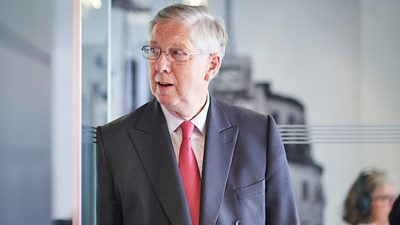
Speech by Sir David Clementi, Chairman of the BBC at the ARA launch on Wednesday 11 July 2018.
Published: 11 July 2018
Check against delivery
Introduction
Welcome, everyone, to this launch of the BBC’s Annual Report for 2017/18. Thank you all for coming.
This is the first Annual Report under the BBC’s new governance arrangements, and for which the Board, appointed in April 2017, is responsible.
I’m proud of progress it sets out, and of what the Board has achieved in its first year.
I don’t plan to talk about the report in detail - Tony will say more in a moment. But I did want to draw out three points which have particularly struck me in my first year as Chairman.
First, the extent to which the BBC’s public service mission is growing in importance in a fast-changing world.
Nowhere is this more obvious than in news.
Our responsibility to provide impartial and accurate news is one that we take more seriously now than ever.
That’s because - in an era of false information, fake news, and social media echo chambers which reinforce our own view of the world - we believe impartiality and accuracy are now more needed than ever.
The BBC continues to be the place the country relies on as their most trusted source of information and analysis. As the former Culture Secretary, Matt Hancock, said recently: the BBC is the “best bulwark against fake news”.
At home we have worked hard to take on the challenge of fake news, not just with the quality and depth of our everyday journalism and our commitment to excellence in investigative reporting - but also with initiatives such as an expanded Reality Check - our award-winning, fact-checking service which now includes a television version.
And if it is hard for adults to tell the difference between fact and falsehood, we know that it is even harder for young people - bombarded as they are from all sides by information, gained largely from social media. That’s why up to 1,000 schools around the country are now being offered mentoring from expert BBC journalists to help young people identify real news and filter out false information.
These are examples of where we are not just living up to our public service responsibilities, but rising to a new challenge.
The second thing that has struck me this year is how deeply committed the senior management of the BBC is to making the Corporation a great place to work.
There has been excellent work going on in this area for some years. And, under Tony, the organisation has set itself seriously ambitious goals and put plans in place to reach them.
The last few months have seen this accelerate, with an important range of initiatives around changing the culture and make-up of the BBC.
We have already published our plans to drive career progression for women and staff from BAME backgrounds. We also have similar projects underway to look into career progression for disabled staff, LGBT staff and for those from different social backgrounds.
I was also very pleased last week when we published our latest gender pay gap report, which showed that we have brought our median gap down by nearly a fifth - from 9.3 to 7.6 per cent.
The gender pay gap numbers are a reflection in large part of the number of women in senior positions within an organisation. I recognise that many of you might not wish to report it, but I want to be clear that the BBC’s pay gap compares favourably with those published by other broadcasters and other news organisations.
It also compares well with median figures of 16.5% in the public sector, 17.4% in technology and media, and the broader national figure of 18.4%.
We are ahead of other organisations. This is not to say that we are complacent. It is work that needed to happen, and there is more to do.
We have committed to closing the gender pay gap by 2020 - something I don’t think any other large organisation has done. And we have also committed to an equal split of men and women on air by the same year.
It’s a programme of change that I believe is unmatched by any other organisation. And, of course, the Board are firmly behind these plans.
The third and final thing that has struck me is that the environment around the BBC - competitive, financial, technological - has never been tougher.
Over the last eight years the BBC has maintained quality and reach and invested in content, in large part funded by a substantial and extensive programme of cost management. We have made impressive progress once again this year too, as Anne will touch on in a moment.
But the financial challenge is getting ever greater, and the market around us is getting ever tougher.
Even now we are still thought of by some as the big beast in the jungle, from whom all the others need protection. The reality is, of course, very different.
Today the market is increasingly global and competitive. And increasingly it is dominated by a very small number of large, global players, with extraordinary creative and financial firepower.
Their big budgets have driven up costs to a significant degree, and we have seen huge super-inflation in key areas such as drama production, sports rights and talent costs.
As the BBC, we need to think very carefully about how we respond to all these financial pressures. And what it means for our audiences.
As Tony will highlight, it is clear that the current level of services is not sustainable in the long term; and this is what will be at the very top of the agenda for me and the Board in the year ahead.
I’m now going to hand over to Tony.
