6 Minute English
Intermediate level
Climate change and animal evolution
Episode 220714 / 14 Jul 2022

Introduction
In the 1830s Charles Darwin visited the Galapagos islands in the Pacific Ocean. He studied the unique animals living on the islands. Darwin's trip led him to the theory of evolution. In today's episode, Sam and Rob discuss the impact of climate change on today's wildlife. Can animals evolve quickly enough to survive a changing climate? Join us to explore this topic and learn the useful vocabulary you need to talk about it!
This week's question:
What was the name of the ship Charles Darwin sailed to the Galapagos in?
a) HMS Beagle
b) HMS Victory
c) SS Great Britain
Watch the video to find out the answer.
Vocabulary
evolution
the way living things change and adapt to their environment, and pass on these adaptations to their children
flora and fauna
the plants (flora) and animals (fauna) of a place
drab
dull, boring, and colourless in appearance
beak
the hard, pointed part of a bird's mouth
cling on
hold on very tight to something
trait
characteristic determined by your genes
Transcript
Note: This is not a word-for-word transcript.
Rob
Hello. This is 6 Minute English from BBC Learning English. I’m Rob.
Sam
And I’m Sam.
Rob
When we think about famous figures in the history of science, the name of Charles Darwin often comes up.
Sam
Darwin is most famous for his theory of evolution, the idea that animals change and adapt in response to their environment. In the 1830s he visited the Galapagos, a string of islands in the Pacific Ocean famous because of the unique animals living there.
Rob
It was while in the Galapagos, observing small birds called finches, that Darwin started forming his theory of evolution. But today, the animals of the Galapagos face the same pressures as animals across the world because of the effects of man-made climate change.
Sam
Warming sea waters and more frequent extreme weather events are affecting animals as much as humans, so, in this programme, we’ll be asking ‘can animals evolve to deal with climate change?’
Rob
But first I have a question for you, Sam, and it’s about Charles Darwin’s trip to the Galapagos. In 1831, Darwin set sail around the world, collecting samples of flora and fauna, the plants and animals, of the places he visited. But what was the name of the ship he sailed in?
a) HMS Beagle
b) HMS Victory
c) SS Great Britain
Sam
Hmm, maybe it was B. HMS Victory.
Rob
Are you sure?
Sam
No.
Rob
OK. I’ll reveal the correct answer later in the programme. Now, it may have been the Galapagos finches that started Charles Darwin thinking about how animals adapt to their environment but, as naturalist, Kiyoko Gotanda explained to BBC World Service programme The Climate Question, Darwin’s first impression of the small birds wasn’t very good:
Kiyoko Gotanda
When Darwin got to the Galapagos Islands, he actually wasn’t that interested in the finches – they were kind of a drab colour and didn’t have a very interesting song. He sampled, though, the finches from different islands, and so when he got back to England he was looking at all the variation in beak shape and size, and body size and shape, and he was recalling how certain finches were found on certain islands but not on other islands
Rob
In contrast to more colourful birds like Galapagos parrots, the finches Darwin observed were drab, dull and boring-looking, with little colour.
Sam
Instead, what Darwin noticed were variations in the finches’ beak – the hard, pointed part of a bird’s mouth. Finches born with a beak that could help them get more food were more likely to survive and have babies. Over time, as the birds passed on their successful genes, they adapted to fit in with their environment – what we know as evolution.
Rob
So, if animals can evolve to survive their environment, can they also evolve to cope with the impact humans are having on the climate?
Sam
Well, there’s already some evidence to show they can. Studies on birds in the Brazilian Amazon and red deer on the Isle of Rum, in Scotland, show warmer temperatures have caused animals to evolve smaller bodies. It’s easier to keep cool when you’re small!
Rob
American conservationist Thor Hanson records and measures anole lizards in the Caribbean. He wants to see how the effects of man-made climate change, in this case hurricanes, is affecting the lizards. Listen to what Thor found out as he speaks with presenters of BBC World Service’s The Climate Question.
Jordan Dunbar
What you can see is that large toe pads and strong front legs give some lizards a tighter grip.
Kate Lamble
When they do start to let go and their body starts flapping in the air like a flag, smaller back legs reduce the drag, and allow them to cling on and survive the hurricane.
Thor Hanson
So the survivors were those lizards with those characteristics, and they passed those traits along to their offspring.
Rob
Thor’s lizards developed stronger front legs and smaller back legs, allowing them to cling on, hold on to something tightly, when hurricanes pass through.
Sam
It’s this trait, a genetically-determined characteristic, that allows the lizards to survive, and is passed on to their babies. Thor checked other areas of the Caribbean where hurricanes were frequent and found the same traits in lizards there, proof of evolution in action. But whereas we often think of evolution happening over hundreds, even thousands of years, the changes in the Caribbean lizards happened in around forty years, something that would have surprised Charles Darwin. Which reminds me of your question, Rob.
Rob
Yes, I asked you for the name of the ship Darwin sailed around the world in.
Darwin’s ship was called the HMS Beagle and, appropriately enough, it was named after an animal - a beagle is a type of dog. OK, let’s recap the vocabulary from this programme about evolution, the way living things adapt to their environment and pass these adaptations on to their children.
Sam
Flora and fauna is another way of saying the plants and animals of a place.
Rob
Drab means dull and colourless in appearance.
Sam
A bird’s beak is the hard, pointed part of its mouth.
Rob
To cling on means to hold on very tightly.
Sam
And finally, a trait is a genetically-determined characteristic. Once again, our six minutes are up! Join us again soon for more interesting topics and useful vocabulary here at 6 Minute English. Goodbye for now!
Rob
Bye!
ሐድሽ ፓድካስትታት ተመልከት 6 Minute English
United against food waste
Episode 221229 / 16 Dec 2022
According to the UN, one third of the food we grow ends up in the rubbish bin - how can we stop this?
3D printers
Episode 221222 / 16 Dec 2022
How are 3D printers providing solutions to some of our medical problems?
Deep-sea mining: Good or bad for the planet?
Episode 221208 / 29 Nov 2022
Learn about an idea to deal with climate change that could affect marine ecosystems.
Can music mend a broken heart?
Episode 221201 / 24 Nov 2022
Is music really a cure for a broken heart?

The art of conversation
Episode 221124 / 24 Nov 2022
We discuss whether the art of conversation is being lost in the era of social media
Qatar's World Cup workers
Episode 221117 / 17 Nov 2022
Hear about the workers who built the World Cup stadiums


Are Halloween costumes too scary?
Episode 221027 / 25 Oct 2022
We discuss whether Halloween costumes are now too scary to be fun.
Does climate change make you anxious?
Episode 221020 / 20 Oct 2022
We discuss how extreme weather events are affecting our mental health.

Are artistic brains different?
Episode 221006 / 06 Oct 2022
We talk about Mozart, Jimi Hendrix and teach you vocabulary.


English for dating online
Episode 220922 / 22 Sep 2022
We discuss the language used for online dating
Man vs beast: Who is more efficient?
Episode 220915 / 15 Sep 2022
We discuss the advantages of the design of the human body
Are you following your dreams?
Episode 220908 / 08 Sep 2022
Hear the inspiring story of people who are doing it
Do emojis make language better?
Episode 220901 / 01 Sep 2022
Are emojis turning us into lazy writers?

Being a beauty influencer
Episode 220825 / 25 Aug 2022
Hear about women who are using social media to change attitudes to beauty

Women in the workplace
Episode 220818 / 18 Aug 2022
Hear about the career-killing tasks that are holding women back in the workplace
How pandemics end
Episode 220804 / 04 Aug 2022
We talk about previous periods in which deadly diseases went global

Confused by modern idioms?
Episode 220728 / 28 Jul 2022
Having a Groundhog Day? Keen to break the internet? Learn some modern idioms.
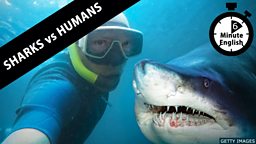
Which are more dangerous: sharks or humans?
Episode 220721 / 21 Jul 2022
How sharks have become an endangered species.
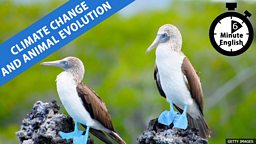
Climate change and animal evolution
Episode 220714 / 14 Jul 2022
Can today's animals evolve quickly enough to survive a changing climate?
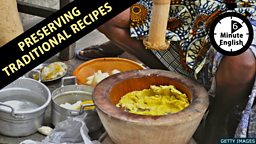
Preserving traditional recipes
Episode 220707 / 07 Jul 2022
Missing your mother's cooking? We talk about traditional dishes.
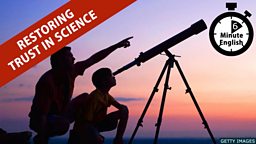
Restoring trust in science
Episode 220630 / 30 Jun 2022
Astronomer Neil deGrasse Tyson's quest to highlight the difference between opinion and fact

The Manhattan Project
Episode 220623 / 23 Jun 2022
In this episode, we discuss the events leading to the creation of the first atomic bomb.
Island life: Is it paradise?
Episode 220616 / 16 Jun 2022
What is life really like in the Pacific islands?

The technology of translation
Episode 220609 / 31 May 2022
What is the relationship between translation, technology and the human brain?

Queen Elizabeth II: What is the Platinum Jubilee?
Episode 220602 / 02 Jun 2022
We talk about a very British tradition


Can VR treat fears and phobias?
Episode 220512 / 12 May 2022
Hear how tech is helping people change their behaviour for the better


Remembering Desmond Tutu
Episode 220428 / 28 Apr 2022
Deep convictions and a sense of humour - we talk about a man who helped end apartheid in South Africa.
Discoveries of the Deep Sea
Episode 220421 / 21 Apr 2022
We talk about an extreme environment which is stranger than fiction
Rhetoric: How persuasive are you?
Episode 220414 / 14 Apr 2022
We talk about an art that started with ancient Greek philosophers

Britain's love affair with coffee
Episode 220407 / 07 Apr 2022
It's not all about tea. Britons love coffee too!
Optimists vs Pessimists
Episode 220331 / 11 Mar 2022
Listen to a conversation about optimists and pessimists

The world of Agatha Christie
Episode 220324 / 24 Mar 2022
Hear a chat about the queen of murder mystery, who had her books translated into over 100 languages

Why laughter is the best medicine
Episode 220310 / 10 Mar 2022
Shouldn't we take laughter more seriously?
Is being kind good for you?
Episode 220303 / 03 Mar 2022
Listen to what scientists are saying about the benefits of giving others a helping hand
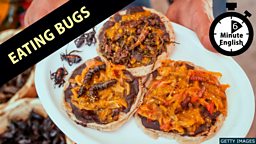
Eating bugs
Episode 220224 / 24 Feb 2022
Would you eat a cricket? How about a portion of nice crunchy ants?

Do our pets care about us?
Episode 220210 / 10 Feb 2022
We wonder what all that licking is really all about
Sleepy in South Korea
Episode 220203 / 03 Feb 2022
Life in a place where people work, study longer hours and get less sleep than anywhere else
Preparing for the Beijing Winter Olympics
Episode 220127 / 27 Jan 2022
Artificial snow, coronavirus and controversy surround the Beijing Games starting soon.

Are personalised diets the best way to be healthy?
Episode 220120 / 20 Jan 2022
Learn how microbes help digest food and have an impact in our bodies.