Unit 22: Beyond the planets
Present and past passive
Select a unit
- 1Nice to meet you!
- 2What to wear
- 3Like this, like that
- 4The daily grind
- 5Christmas every day
- 6Great achievers
- 7The Titanic
- 8Travel
- 9The big wedding
- 10Sunny's job hunt
- 11The bucket list
- 12Moving and migration
- 13Welcome to BBC Broadcasting House
- 14New Year, New Project
- 15From Handel to Hendrix
- 16What's the weather like?
- 17The Digital Revolution
- 18A detective story
- 19A place to live
- 20The Cult of Celebrity
- 21Welcome to your new job
- 22Beyond the planets
- 23Great expectations!
- 24Eco-tourism
- 25Moving house
- 26It must be love
- 27Job hunting success... and failure
- 28Speeding into the future
- 29Lost arts
- 30Tales of survival
Session 4
Have you ever read a science-fiction story about a future world? In this session you'll read about a project that uses science-fiction writing as a way to create hope for the future. You'll also be able to learn some interesting vocabulary about space exploration in News Report.
Activity 1
Can science fiction save the day?
Stories about the day after tomorrow
Do you like to watch films and read books about the future? Do you think Earth will be destroyed by armies of robots, or do you think technology will help us to live in happiness? Read this article to find out about new types of stories that envisage what the future might be like.
Read the article and complete the activity
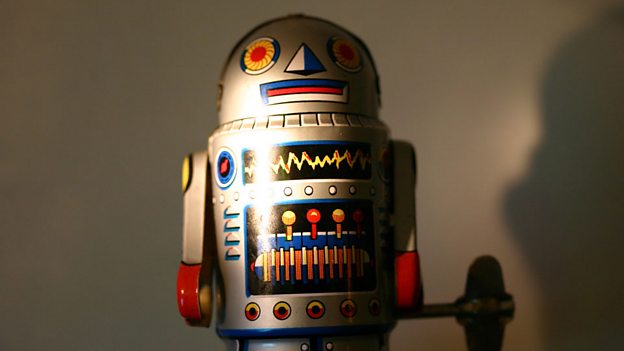
Is there hope for the future?
What will the future be like? It’s a topic that is discussed again and again in modern times. In science-fiction films, the future worlds we are shown are often dark and scary places. In the film Blade Runner we see robots that are hunted down by Harrison Ford’s character. The future we are shown in Planet of the Apes is very bleak indeed.
This kind of future is called a dystopia – a place where things are unpleasant or bad (the opposite is called a utopia). But do things have to be so depressing?
Some people think not. Project Hieroglyph was set up to see what happens when people are inspired by science fiction to create a better future. Writers, scientists, engineers and artists were brought together to make stories about things which could actually happen in the near future. How easy is it to write a hopeful story about the future though? Some people think it’s much easier to create a dystopia than to write a more feel-good story. They think stories are more interesting if there are a lot of problems to be solved. If everything is perfect already, there is no challenge for the characters.
Even so, the project has already produced a book with some promising stories. One of these is about environmentalists fighting to stop a hotel being built in Antarctica. It’s a realistic scenario with an element of conflict in it – things that make a good story.
The question remains if all this writing will actually change anything. Ed Finn, who edited the book, thinks that it can: "A good science-fiction story can be very powerful. It can inspire hundreds, thousands, millions of people to rally around something that they want to do." And we could say modern research is already influenced by science fiction. Braden Allenby, a Project Hieroglyph participant and Professor of Engineering, Ethics and Law at Arizona State University wonders why scientists are working on things such as invisibilitycloaks. "Well, it’s Harry Potter, right?" he says.
To do
How well did you understand the article? Do the quiz to find out. Choose the best words or expressions to complete the sentences – there are a lot of passives.
Can science fiction save the day?
7 Questions
Choose the best words or expressions to complete the sentences about the article.
ሓገዝ
Activity
Choose the best words or expressions to complete the sentences about the article.
ኣመት
Look at the first paragraph.Question 1 of 7
ሓገዝ
Activity
Choose the best words or expressions to complete the sentences about the article.
ኣመት
Look at the first paragraph.Question 2 of 7
ሓገዝ
Activity
Choose the best words or expressions to complete the sentences about the article.
ኣመት
Read the second paragraph carefully.Question 3 of 7
ሓገዝ
Activity
Choose the best words or expressions to complete the sentences about the article.
ኣመት
Read the third paragraph.Question 4 of 7
ሓገዝ
Activity
Choose the best words or expressions to complete the sentences about the article.
ኣመት
Read the fifth paragraph.Question 5 of 7
ሓገዝ
Activity
Choose the best words or expressions to complete the sentences about the article.
ኣመት
Find the word ‘Antarctica’ in the article and read the sentence carefully.Question 6 of 7
ሓገዝ
Activity
Choose the best words or expressions to complete the sentences about the article.
ኣመት
Read the last two paragraphs carefully.Question 7 of 7
Excellent!Great job!ሕማቕ ዕድል!ዘመዝገብኩምዎ ነጥቢ ...:
Next
From science fiction back to science fact - in this Unit's News Report we look at how history was made when the space probe Philae landed on a comet. Pick up some new vocabulary and see some passives in action on the next page.
Session Vocabulary
envisage
imagine something that does not existscary
frighteningbleak
sad and hopelessdystopia
an imagined place, often in the future, that is full of problems and everything is unpleasant or badutopia
an imagined place where everything is perfect and there are no problemsdepressing
making people feel sad and hopelessinspired
made to want to do somethingfeel-good
making you feel happychallenge
difficult task(s); problem(s) that you need to solvepromising
showing signs of future successenvironmentalists
people who work to protect the natural worldscenario
(here) setting, particularly in film or literatureconflict
serious disagreement or argumentrally around
get together with other people in support of something or someoneinvisibility
the state of not being able to be seencloaks
loose coats with no sleeves
