Unit 23: Great expectations!
First conditional
Select a unit
- 1Nice to meet you!
- 2What to wear
- 3Like this, like that
- 4The daily grind
- 5Christmas every day
- 6Great achievers
- 7The Titanic
- 8Travel
- 9The big wedding
- 10Sunny's job hunt
- 11The bucket list
- 12Moving and migration
- 13Welcome to BBC Broadcasting House
- 14New Year, New Project
- 15From Handel to Hendrix
- 16What's the weather like?
- 17The Digital Revolution
- 18A detective story
- 19A place to live
- 20The Cult of Celebrity
- 21Welcome to your new job
- 22Beyond the planets
- 23Great expectations!
- 24Eco-tourism
- 25Moving house
- 26It must be love
- 27Job hunting success... and failure
- 28Speeding into the future
- 29Lost arts
- 30Tales of survival
Session 4
We’ll find out about the cost of having a baby in different countries. We’d also like to hear from you. What are the traditional beliefs about childbirth where you live?
Wayitii marii qabxii 4
0 / 9
- 0 / 9Activity 1
- 0 / 0Activity 2
- 0 / 0Activity 3
Activity 1
The cost of childbirth
How much do women have to pay?
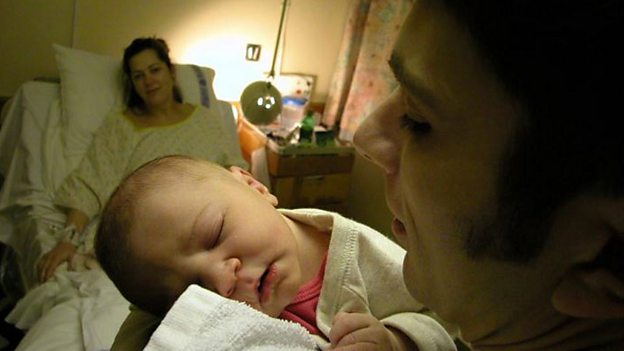
The cost of giving birth is very high in some countries and very low, or even free, in others. We read about the BBC’s Mariko Oi, who gave birth in Singapore. She compares her costs with those in some other developed countries.
To do
While you are reading the article, answer this question: How many different countries are mentioned?
This text is based on an original BBC News article.
Barreeffama kana dubbisii shakala kana xumuri
Different countries, different systems
“Money should be the least of your concerns when you are in labour. But when I was about to push my baby out I noticed that the epidural was running low, and before asking my doctor to top it up I thought to myself: ‘Would that be another $500?’”
Three days later, Mariko was presented with three different hospital bills; one for her, another for her baby daughter and a third one, which she cannot even remember.
The cost of her delivery in Singapore was around US $6,700, rising to around $7,600 for the whole birth, including the prenatal check-ups.
Mariko is from Japan and her husband is from the UK. Starting a family in those countries can be much cheaper. In Japan, new parents are given an allowance by the government. In the UK, people are covered by the taxpayer-funded National Health Service.
In Singapore, if you are a citizen, you get a ‘baby bonus’ of $4,400 and other subsidies because the government wants people to have more children. It is regarded as a very fair system. Unfortunately for Mariko, expatriates living in Singapore pay the full price for all medical treatment.
However, compared with the costs in some countries, $6,700 can seem cheap. The US is said to be the most expensive country to give birth in. The average cost of a natural childbirth is $30,000 according to Truven Health Analytics. Bills for complicated deliveries can be over $100,000 - a huge amount of money for those without medical insurance.
In contrast, France provides universal health coverage through health insurance contributions from employers and employees. This means that people do not receive a bill when they have a baby.
"A uniform, high-quality medical service is available throughout the country and medical care is available to all, so no distinctions are made between rich and poor," says Professor William Haseltine, president of ACCESS Health International. He thinks the French system is one other countries should learn from.
To do
So, how many different countries are in the article? The answer is five: Singapore, Japan, the UK, the US and France.
What else did you learn about giving birth in different countries? Do the quiz to find out.
Childbirth around the world
9 Questions
How well did you understand the article? Do the quiz to find out. Choose the best word or words to complete the sentences.
Gargaarsa
Activity
How well did you understand the article? Do the quiz to find out. Choose the best word or words to complete the sentences.
karaarra buusu
Read the first paragraph carefully.Question 1 of 9
Gargaarsa
Activity
How well did you understand the article? Do the quiz to find out. Choose the best word or words to complete the sentences.
karaarra buusu
Find the number ‘three’ in the article and read the whole sentence carefully.Question 2 of 9
Gargaarsa
Activity
How well did you understand the article? Do the quiz to find out. Choose the best word or words to complete the sentences.
karaarra buusu
Find each country in the text and read what it says about them.Question 3 of 9
Gargaarsa
Activity
How well did you understand the article? Do the quiz to find out. Choose the best word or words to complete the sentences.
karaarra buusu
Read the fourth paragraph carefully.Question 4 of 9
Gargaarsa
Activity
How well did you understand the article? Do the quiz to find out. Choose the best word or words to complete the sentences.
karaarra buusu
Read the paragraph that starts ‘In Singapore’.Question 5 of 9
Gargaarsa
Activity
How well did you understand the article? Do the quiz to find out. Choose the best word or words to complete the sentences.
karaarra buusu
Read the paragraph that contains the highest numbers.Question 6 of 9
Gargaarsa
Activity
How well did you understand the article? Do the quiz to find out. Choose the best word or words to complete the sentences.
karaarra buusu
Find the numbers in the article and read the whole sentence carefully.Question 7 of 9
Gargaarsa
Activity
How well did you understand the article? Do the quiz to find out. Choose the best word or words to complete the sentences.
karaarra buusu
Find his name in the article and then read what he says.Question 8 of 9
Gargaarsa
Activity
How well did you understand the article? Do the quiz to find out. Choose the best word or words to complete the sentences.
karaarra buusu
Read the last paragraph carefully.Question 9 of 9
Excellent!Great job!Carraa badaa!Qabxii argatte:
Next
So, the cost of having a baby can be very different depending on where - and who - you are. Next we’d like to hear from you. Are there any traditional beliefs about childbirth in your country? Does advice vary from country to country?
Caasluga kutaa kanaa
We use the first conditional to talk about future situations (or 'conditions') we think are certain and their results.
We make the first conditional with
if + present simple with will + infinitiveIf I feel tired, I'll have a nap.
I'll have a nap if I feel tired.
Negative
If we don’t hurry, we’ll miss the train.Question
How will he feel if he doesn’t get the job?
Session Vocabulary
developed countries
those with advanced economies e.g. Singapore, France, the US
labour
(here) the process of giving birth
epidural
an injection, usually given in the lower part of the back, that reduces pain
delivery
(here) the act of giving birth
prenatal
before birth; during pregnancy
check-ups
medical examinations to find any problems
allowance
an amount of money which is given for a specific reason
covered
(here) provided for; protected
taxpayer-funded
paid for by people who pay tax
citizen
someone who legally belongs to a country
subsidies
money which the government pays towards particular costs
expatriates
people who live in a country that is not their own
medical insurance
a system where people pay a regular fee to an organisation that then pays their medical bills
universal health coverage
a system that gives medical care to everyone
contributions
(here) regular payments towards the cost of something
employers
people or organisations that pay people to work for them
employees
people who are paid money to work for a particular person or company
uniform
(here) not changing; the same for all people
distinctions
(here) different treatment for different people
