Lingohack

Intermediate level

How tourism and science work together in Antarctica

Episode 180522 / 18 May 2022

The story…

How tourism and science work together in Antarctica

Learn language related to…

adventure

Need-to-know language…

alluring – mysteriously attractive

remote
– far away from other places

expedition – journey involving a group of people, often to explore

ambassadors – people who represent a place

fragile – weak; easily damaged

Answer this…

How many visitors go to Antarctica each year?

Transcript

‘Trip of a lifetime’ is how many describe going to Antarctica. This incredibly alluring but remote location attracts around 60,000 visitors each year.

These tourists are travelling on the Roald Amundsen, an expedition cruise ship that uses battery hybrid powered engines, has an impressive science centre, and equipment below deck that automatically analyses the surrounding seawater.

This scientist, visiting the ship for the first time, wonders if it's capable of doing even more.

Alexander Koloskov - Senior Scientist, Vernadsky Research Base
This ship may be effectively used for real science, not only for education, not only to spread information between the tourists, but the tourists can help with the science.

Professor Alia Khan has a five-year research grant from the US National Science Foundation to study snow algae, and how it affects the rate that snow melts. But she can't spend five years straight in Antarctica, so joining a trip like this works well for her.

Alia Khan - Assistant Professor, Western Washington University
I'm able to collect some samples and data for my research, and I can use some of the facilities on the ship, such as the microscopes, to look at the samples and then also work with the tourists to show them what I'm sampling in the snow.

Most of the ship's expedition crew also have science backgrounds, and help run citizen science projects for the passengers.

Zoe Walker - Science Coordinator, Hurtigruten Expeditions
You have a little bubble of water on top and no air...

Studying the microscopic phytoplankton in the water helps monitor the effects of global warming. Samples are packed up and sent off to be analysed by researchers who can't get here themselves.

Zoe Walker - Science Coordinator, Hurtigruten Expeditions
Coming to places like Antarctica costs a lot and takes a lot of planning, so by integrating citizens into their science, they're able to collect data repeatedly at the same locations throughout the season while the tourist ships are already here.

Julie Ritson – BBC Journalist
Scientists also live and work in Antarctica for many months of the year. This presents its own unique challenges, logistics being one of them.

This research base on Livingston Island is temporary home to around 40 scientists, but their supply ship has been delayed and they're running low on food. Luckily, our ship was nearby and able to help.

For them it's been a lifesaver that tourist ships cruise these waters.

But what the scientific community really hope, is that the passengers return home as ambassadors, who can educate others and help change behaviours that threaten this fragile environment.

Did you get it?

How many visitors go to Antarctica each year?

Antarctica gets around 60,000 visitors each year.

Latest Lingohack

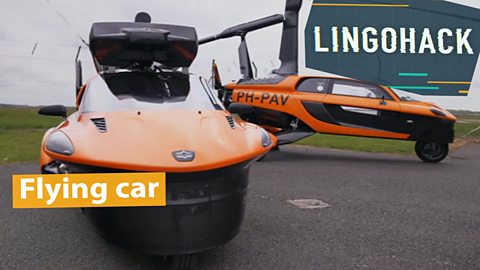
  • Flying car

    Flying car

    Episode 220525 / 25 May 2022

    Language related to retail: model, processing, licensed, orders, bring (something) to market.
  • Pigs on patrol

    Pigs on patrol

    Episode 220511 / 11 May 2022

    Learn language related to farming: scarecrow, harvest, crop, soil, fertile
  • ‘Extinct’ fish returns to the wild

    ‘Extinct’ fish returns to the wild

    Episode 220504 / 04 May 2022

    Learn language related to disappearing and reappearing: missing, under the radar, bringing (something) back, recovering, making a comeback
  • Endurance: Shackleton's lost ship is found in Antarctic

    Endurance: Shackleton's lost ship is found in Antarctic

    Episode 220427 / 27 Apr 2022

    Learn language related to shipwrecks: preserved, construction, pristine, portholes, raised

  • How to make people like robots

    How to make people like robots

    Episode 220420 / 20 Apr 2022

    Learn language related to behaviour: playful, curious, sociable, interact, accept

  • Hope for people with diabetes

    Hope for people with diabetes

    Episode 220413 / 13 Apr 2022

    Learn vocabulary related to medical treatment: trial, monitors, game changer, quality of life, stabilised.
  • First woman of colour completes a solo expedition across Antarctica

    First woman of colour completes a solo expedition across Antarctica

    Episode 220406 / 06 Apr 2022

    Learn language related to physical challenges: comfort zone, gruelling, toughest, reservations, hardships

  • Going for gold in e-waste

    Going for gold in e-waste

    Episode 220330 / 30 Mar 2022

    Learn language related to chemical process: components, extract, heated, end result, recover

  • A family’s hope of ending discrimination

    A family’s hope of ending discrimination

    Episode 220316 / 09 Mar 2022

    Learn language related to discrimination: to face, bullying, uniqueness, educate, stigma.

  • Recycling food waste

    Recycling food waste

    Episode 220309 / 09 Mar 2022

    Learn language related to sustainability: deal with, breaks down, organic matter, sustainable, pathogens

  • Ancient bone found in the Thames

    Ancient bone found in the Thames

    Episode 220302 / 23 Feb 2022

    Learn language related to rivers: lurking, shallows, causeway, low tide, mudflats

  • Britain's lost Lego

    Britain's lost Lego

    Episode 220223 / 23 Feb 2022

    Learn language related to the beach and the ocean: wash up, shoreline, off the coast, ocean currents, tide
  • Boxing to beat Parkinson’s disease

    Boxing to beat Parkinson’s disease

    Episode 220216 / 16 Feb 2022

    Learn language related to health and lifestyle: quality of life, rock bottom, medical intervention, exercise-orientated therapy, back on its feet

  • Out-of-hours work ban

    Out-of-hours work ban

    Episode 220209 / 09 Feb 2022

    Learn language related to work: civil servant, job, boss, normal hours, private sector.
  • Electric buses: greener public transport

    Electric buses: greener public transport

    Episode 220202 / 27 Jan 2022

    Learn language related to buses: chugging, double-decker, secreted, cabin, range

  • Reducing construction waste

    Reducing construction waste

    Episode 220126 / 26 Jan 2022

    Learn language related to construction: wooden pallets, skip, manufacturing, supply chain, building site
  • Following whales round the Southern Ocean

    Following whales round the Southern Ocean

    Episode 220119 / 19 Jan 2022

    Learn language related to researching animals: conducted, tags, track, migrations, transmitting

  • Robotic surgery

    Robotic surgery

    Episode 220112 / 12 Jan 2022

    Learn language related to surgery: operation, medical field, patient, surgeons, keyhole surgery

  • Protecting seahorses

    Protecting seahorses

    Episode 220105 / 05 Jan 2022

    Learn language related to sea and boats: teeming with (life), mooring chains, seabed, tide, seafarers
  • How tourism and science work together in Antarctica

    How tourism and science work together in Antarctica

    Episode 180522 / 18 May 2022

    Learn language related to behaviour: alluring, remote, expedition, ambassadors, fragile