Latest Ask BBC Learning English
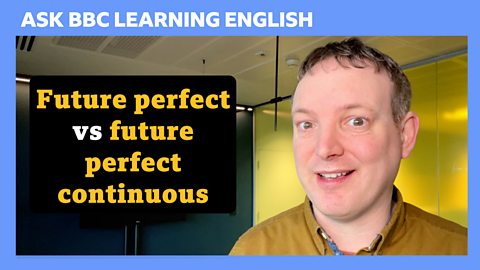
Future perfect vs future perfect continuous
Episode 250612 / 12 Jun 2025
What's the difference between the future perfect and the future perfect continuous? That's Ali's question. Phil has the answer
Synonyms: How do I know which to choose?
Episode 250605 / 05 Jun 2025
Lots of English words have synonyms. Elie wants to know how to choose between them. Let Sian explain!
What's the passive voice?
Episode 250529 / 29 May 2025
What's the passive voice? Viviana has a question. Phil has the answer
How to be polite in English
Episode 250522 / 07 May 2025
How can we be polite in English? Marta wants to know. Sian has some answers!
How to pronounce 'th' sounds
Episode 250515 / 15 May 2025
How can you get better at saying 'th' words? Let Phil help you out

Gerund or infinitive?
Episode 250508 / 08 May 2025
When do we use the English gerund (doing) - and when do we use the infinitive (to do)? Rafael wants to know. Sian has some answers!
How can I improve my listening?
Episode 250502 / 02 May 2025
How to get better at listening? That's what Fatosh wants to know. Phil has some tips!
Present perfect or past simple?
Episode 250424 / 24 Apr 2025
Present perfect or past simple? Maryam wants to find out about the differences. Sian has some answers!
How can you identify words that sound the same but have different meanings?
Episode 241213 / 13 Dec 2024
How can I identify words that have the same pronunciation but different meaning? That's what Marta wants to know.
How to use prefer, would rather and prefer
Episode 241206 / 06 Dec 2024
What's the difference between 'I prefer', 'I would prefer' and 'I would rather'? That's what Maria wants to know.
How can you get better at using the third conditional?
Episode 241129 / 29 Nov 2024
Why is using the third conditional so difficult? That's what Vitoria wants to know.

6 tips for learning new phrasal verbs
Episode 241122 / 22 Nov 2024
How can I learn new phrasal verbs? That's what Alejandra wants to know.
How can I stop translating when speaking English?
Episode 241115 / 15 Nov 2024
How can I speak English without translating from my language? That's what Semsihan wants to know.
How can I use 'pop' in informal English?
Episode 241108 / 08 Nov 2024
How can I use 'pop' in informal English? That's what Joao wants to know.

How can I speak English more fluently?
Episode 241101 / 01 Nov 2024
How can I speak English more fluently? That's what Mary wants to know.

Present perfect simple vs Present perfect continuous
Episode 241025 / 25 Oct 2024
What's the difference between present perfect simple and present perfect continuous? That's what Juan wants to know.