6 Minute English
Intermediate level
Embarrassed to go to the doctor?
Episode 241226 / 26 Dec 2024

_____________________________________________________________________________________________________
Download a free 6 Minute English worksheet!
Download a free transcript!
______________________________________________________________________________________________________
Try more episodes of 6 Minute English:
______________________________________________________________________________________________________
Introduction
What are the consequences of medical embarrassment? Beth and Neil discuss this issue and teach you some new vocabulary.
This week's question
According to the UK’s Nursing Times newspaper, what percentage of people surveyed said they had delayed visiting their doctor out of embarrassment, and then later been diagnosed with a health condition? Was it:
a) 21% ?
b) 41% ? or,
c) 61% ?
Listen to the programme to hear the answer.
Vocabulary
delay
put off to a later time; postpone
diagnose
identify a disease or medical problem by recognising the symptoms and examining the patient
suffer in silence
endure or struggle with painful feelings or trauma without asking anyone for help
put (someone) at ease
make someone feel calm and relaxed
confidential
kept private and secret; information which is not shared with anyone
non-verbal cues
communication using means such as the expression on your face, hand gestures, or tone of voice to show how you feel about something, rather than using words
TRANSCRIPT
Note: This is not a word-for-word transcript.
Neil
Hello. This is 6 Minute English from BBC Learning English. I'm Neil.
Beth
And I'm Beth.
Neil
Lots of things can make us feel embarrassed – that self-conscious, uncomfortable feeling when your face blushes red and you wish you could just disappear.
Beth
Have you had any embarrassing moments, Neil?
Neil
Yes, many. Once I met my parents in a car park and I saw them arriving in their car and I waved my hands around in a very silly way. But unfortunately, I soon discovered that it wasn't my parents. It was another couple.
Beth
Oh no, that's really embarrassing. I remember answering the phone, I thought it was my best friend and I said "hello" in a very silly voice, and then they asked to speak to my dad, and it wasn't my friend.
Neil
What was the voice?
Beth
Hello?
Neil
Oh dear. But embarrassment is more than just shyness and blushing. When it comes to our health, there's no end of things to be embarrassed about.
Beth
Yes, and some people feel so embarrassed that they don’t go to see a doctor when they should, sometimes with serious consequences.
Neil
In this programme, we'll be discussing the issue of medical embarrassment, and as usual, we'll be learning some useful new words and phrases.
Beth
So, I have a question. Neil, according to the UK's Nursing Times newspaper, what percentage of people surveyed said they had delayed visiting their doctor out of embarrassment, and then later been diagnosed with a health condition? Was it:
a) 21% ?
b) 41% ? or,
c) 61% ?
Neil
So I think it's probably a lot. So c) 61%.
Beth
OK. We will find out if that's correct at the end of the programme.
As humans we get embarrassed if we feel different from others, especially if the difference is physical. But how does feeling embarrassed about a medical condition impact our relationship with the doctor? Here's Dr Vanessa Apea, consultant in sexual health at Barts Hospital in London, explaining more to BBC Radio 4 programme, Inside Health:
Dr Vanessa Apea
So they'll delay accessing the clinic, and also seeking treatment, and so then you'll often see people that could have been diagnosed with what's happening much earlier, and could have had earlier intervention, but it's delayed quite significantly. And so I then feel that we see a lot of people kind of suffering in silence really.
Neil
Many people delay going to the doctor – they postpone going or put it off until a later time. As a result, their problem isn’t diagnosed. To diagnose means to identify a disease or health problem through medical examination.
Beth
For some, feelings of embarrassment are so strong they prefer to suffer in silence – to struggle with pain without seeking help - rather than visit the doctor. But fortunately, there are things you can do to help. Writing your problem down, going with a friend, and visiting a doctor you trust are some ideas Dr Apea recommends.
Neil
There are ways that doctors can help as well, as Dr Vanessa Apea explains here to James Gallagher, presenter of BBC Radio 4 programme, Inside Health:
James Gallagher
Can you tell us what techniques you use to put people at ease?
Dr Vanessa Apea
I bring transparency to the conversation, and own it, and say that I'm going to be asking you some quite personal questions, and there may be also intimate examination… I want to assure you that this is confidential, that this is a safe, non-judgmental space… So really, I often name the words to create that space as well. Also in my manner, I would hope, and in my non-verbal cues.
Beth
James asks what doctors can do to put people at ease – to make them feel calm and relaxed - and Dr Apea describes her ideal conversation: it’s a safe space, it’s non-judgmental and what is said is confidential, kept private and not shared with anyone.
Neil
As well as discussing embarrassing problems sensitively, Dr Apea also uses non-verbal cues - the expression on her face, her hand movements, and the tone of her voice, rather than words, to communicate and relax the patient. Embarrassment is normal, and with support hopefully more of us will feel safe to visit the doctor despite it. OK, Beth, isn't it time to reveal the answer to your question?
Beth
It is. I asked you: What percentage of people said they had delayed visiting the doctor because they were embarrassed, but then had later been diagnosed with a health condition? Do you remember what you said, Neil?
Neil
Yes, I think I said c) 61%.
Beth
I'm afraid that is not the correct answer! It was, in fact a) 21% or just over a fifth. OK, let’s recap the new vocabulary we've used, starting with delay, to postpone or put off until a later time.
Neil
To diagnose a disease or medical condition means to identify it by recognising the symptoms and examining the patient.
Beth
If you suffer in silence, you endure and struggle with painful feelings without asking someone for help.
Neil
The phrasal verb put someone at ease means to make someone feel calm and relaxed.
Beth
The adjective confidential means kept private and secret and describes information which is not shared with anyone else.
Neil
And finally, non-verbal cues are types of communication using facial expressions, hand gestures or tone of voice, rather than speech, to show your feelings. Once again, our six minutes are up, but why not built your vocabulary and listening skills even more with the quiz and worksheet related to this programme? They’re both available now on our website, bbclearningenglish.com. See you there!
Beth
Bye!
Latest 6 Minute English
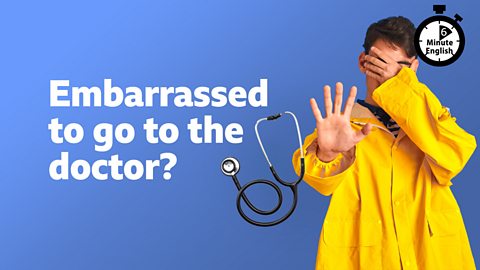
Embarrassed to go to the doctor?
Episode 241226 / 26 Dec 2024
Have you ever been embarrassed to go to the doctor?
Call centres: Are you talking to AI?
Episode 241219 / 19 Dec 2024
Have you ever phoned up a company and had your call held in a queue? Could AI make this less painful?

Making 'mum friends'
Episode 241212 / 12 Dec 2024
Is making new ‘mum friends’ the positive experience it’s often described as?
Can you trust ancestry DNA kits?
Episode 241205 / 05 Dec 2024
Are DNA ancestry tests a reliable way to trace your ancestry?
How babies learn to talk
Episode 241128 / 28 Nov 2024
What do babies need to learn to do to be able to talk?

The bond between sisters
Episode 241114 / 14 Nov 2024
Are the stereotypes about older and younger sisters true?

Why you need a good night's sleep
Episode 241031 / 31 Oct 2024
Why is it so important to get a good night's sleep?
Divorce: Why does it happen?
Episode 241024 / 24 Oct 2024
How is divorce talked about in different countries?
Did Taylor Swift fans cause an earthquake?
Episode 241010 / 10 Oct 2024
Did Taylor Swift move the Earth?
Learning a new food culture
Episode 240926 / 26 Sep 2024
Would you find it different to adapt to a new food culture?

Saving water in the driest place on Earth
Episode 240919 / 19 Sep 2024
How do farmers in the driest place on Earth manage to grow crops? With this solution!


Chocolate: Meet a real Willy Wonka
Episode 240829 / 29 Aug 2024
Would you like to be a chocolate maker, like Roald Dahl's Willy Wonka?

Why we love dumplings
Episode 240822 / 22 Aug 2024
Warning! This episode might make you very hungry...

Kids and climate change
Episode 240815 / 15 Aug 2024
What are young people's thoughts on climate change?


The science of falling in love
Episode 240801 / 01 Aug 2024
What's really happening in our brain when we fall in love?
AI to reduce animal testing
Episode 240718 / 18 Jul 2024
Could AI reduce the need for animal testing?

Why read books, not screens?
Episode 240718 / 25 Jul 2024
Why is it better to read from a book than a screen?

The school that puts the kids in charge
Episode 240711 / 11 Jul 2024
What happens when you put the kids in charge of the school?

What can we learn from toddlers?
Episode 240704 / 04 Jul 2024
Learn to speak to yourself in the way that toddlers do!
How learning to read changes lives
Episode 240627 / 27 Jun 2024
How can literacy change people's lives?

Building a better world with wood?
Episode 240620 / 20 Jun 2024
How can buildings made from wood help our mental health?


E-rickshaws driving away pollution
Episode 240606 / 06 Jun 2024
Could E-rickshaws give us cleaner air?


Bitter food, better health?
Episode 240509 / 09 May 2024
Could bitter foods be better for your health?



Disability in music and theatre
Episode 240321 / 21 Mar 2024
Learn about the people who are making it easier for disabled musicians and music fans to perform and see live music

Sewing to fight period poverty
Episode 240307 / 07 Mar 2024
Period poverty affects over 500 million people worldwide. How can a volunteer project help?
Plastic waste eaten by enzymes
Episode 240229 / 29 Feb 2024
Plastics can be difficult to recycle. Could a recently discovered enzyme help?
Feed your brain
Episode 240222 / 22 Feb 2024
Food is fuel for our brains. So, what should we be eating?

Food for new mums
Episode 240215 / 15 Feb 2024
Having a baby is exhausting! What do mothers need to eat after giving birth?
Fighting loneliness with soup
Episode 240208 / 08 Feb 2024
Hear how a project in the Netherlands is helping in the fight against loneliness

How the language of menus matters
Episode 240125 / 25 Jan 2024
Why is the language used on menus important?