Unit 28: Speeding into the future
The future (predictions)
Select a unit
- 1Nice to meet you!
- 2What to wear
- 3Like this, like that
- 4The daily grind
- 5Christmas every day
- 6Great achievers
- 7The Titanic
- 8Travel
- 9The big wedding
- 10Sunny's job hunt
- 11The bucket list
- 12Moving and migration
- 13Welcome to BBC Broadcasting House
- 14New Year, New Project
- 15From Handel to Hendrix
- 16What's the weather like?
- 17The Digital Revolution
- 18A detective story
- 19A place to live
- 20The Cult of Celebrity
- 21Welcome to your new job
- 22Beyond the planets
- 23Great expectations!
- 24Eco-tourism
- 25Moving house
- 26It must be love
- 27Job hunting success... and failure
- 28Speeding into the future
- 29Lost arts
- 30Tales of survival
Session 2
What will life be like in 100 years' time? Do you think we might all live on the moon? We all make predictions about the future, but how do we do this in English? In this session we'll look at how to talk about the future with will, going to, might and be likely to. Read our grammar explanations and have a go at our quizzes. Will you score 100%?
Activity 1
Making predictions
What will life be like 100 years from now?
Have you ever wondered how life will change in the future? Have you ever thought about what you might be doing in five, ten or twenty years' time? In this session we'll look at four phrases we can use to talk about the future: will, going to, might and be likely to.
To do
Read this grammar explanation and see if you can work out which of these sentences sounds more probable (that means we are more certain about it happening):
- Next year I will move abroad.
- Next year I might move abroad.
Read the text and complete the activity
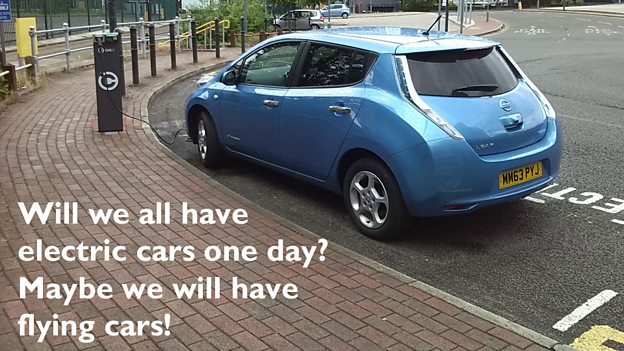
Predicting the future in English: Uses of will, going to, might and likely to
In English, we can make predictions in several ways:
In 100 years' time, everyone will have a flying car.
The government is going to raise fuel taxes.
We might move to New York as I've just got a job with that American company.
With prices falling, ownership of smartphones is likely to increase in the near future.
We use will to make predictions about the future when we are certain that something is going to happen.
Everyone will have an electric car in 50 years' time.
With global warming, there won't be any ice caps left.
I didn't charge my phone. The battery's going to run out.
Sometimes we can use will or going to without any difference in meaning.
The company will be 40 years old in 2016.
The company is going to be 40 years old in 2016.
But we often use going to when our prediction is based on a present situation or evidence.
We are launching our new smartphone today. It's going to be really popular.
The opinion polls show support for both parties is strong. The election is going to be close.
We use might and be likely to when we think something will happen, but we are not certain. Might is less certain than be likely to.
I might buy a new smartphone – I've just been given a raise at work!
People are throwing away more and more of their old technology. The amount of electronic waste is likely to increase a lot in the near future.
Expressing certainty and uncertainty
We can use probably and possibly with will to make less certain predictions about the future.
Advances in technology mean that buying a computer will probably get cheaper.
Using touchscreen devices will possibly have a negative effect on children's handwriting skills.
We can also use I think, I expect and I'm sure with will to make predictions that we are less certain about.
I think everyone will have microchips in their heads one day.
Iexpect mapping technology will improve a lot with more and more wifi spots.
I'm sure smartphones will be much cheaper.
So, thinking about the question at the beginning of this activity: Which is more probable: Next year I will move abroad or Next year I might move abroad? The answer is... I will move abroad is more probable! We use will for things we think are more certain and might for things we think are less certain.
To do
Do you think you will get all the questions on this quiz right? Have a go and test your knowledge of predicting in English.
Talking about the future quiz
6 Questions
Will you get 100% in this quiz? Choose the best word or phrase for each gap
Help
Activity
Will you get 100% in this quiz? Choose the best word or phrase for each gap
Hint
If they announced it, how certain is the release date?Question 1 of 6
Help
Activity
Will you get 100% in this quiz? Choose the best word or phrase for each gap
Hint
How certain do you think a weather report is?Question 2 of 6
Help
Activity
Will you get 100% in this quiz? Choose the best word or phrase for each gap
Hint
Is it very certain for an economy to recover?Question 3 of 6
Help
Activity
Will you get 100% in this quiz? Choose the best word or phrase for each gap
Hint
These are reports so they might not be that certainQuestion 4 of 6
Help
Activity
Will you get 100% in this quiz? Choose the best word or phrase for each gap
Hint
How certain do you think the rain is? Remember this prediction is also based on a current situation (the dark clouds)Question 5 of 6
Help
Activity
Will you get 100% in this quiz? Choose the best word or phrase for each gap
Hint
The laptop isn't so expensive, but is it certain that the speaker has enough money?Question 6 of 6
Excellent!Great job!Bad luck!You scored:
Next
So, basically there are four ways of predicting in English that we have looked at: will, goingto, might and be likely to. Will and going to are for things that are more certain. Might and be likely to are for things that are less certain.
In the next activity, we'll look at the form of these words and phrases in positive, negative and question forms. See you there!
Session Grammar
Will + verb: we use this to make predictions about the future when we are certain that something is going to happen.
The company will be 40 years old in 2016.
Going to + verb: we use this when our prediction is based on a present situation or evidence.
I didn't charge my phone. The battery's going to run out.
Might + verb: we use this to show future possiblity.
The weather might be better next weekend.
Be likely to + verb: we use this when we think something will happen, but we are not certain.The amount of electronic waste is likely to increase a lot in the near future.
