Unit 30: Tales of survival
Present and past modals of ability
Select a unit
- 1Nice to meet you!
- 2What to wear
- 3Like this, like that
- 4The daily grind
- 5Christmas every day
- 6Great achievers
- 7The Titanic
- 8Travel
- 9The big wedding
- 10Sunny's job hunt
- 11The bucket list
- 12Moving and migration
- 13Welcome to BBC Broadcasting House
- 14New Year, New Project
- 15From Handel to Hendrix
- 16What's the weather like?
- 17The Digital Revolution
- 18A detective story
- 19A place to live
- 20The Cult of Celebrity
- 21Welcome to your new job
- 22Beyond the planets
- 23Great expectations!
- 24Eco-tourism
- 25Moving house
- 26It must be love
- 27Job hunting success... and failure
- 28Speeding into the future
- 29Lost arts
- 30Tales of survival
Session 2
Could you survive in an extreme situation? People who live in the desert are able to deal with extremely difficult living conditions. Some parts of Russia see temperatures fall to -50C, but the people who live there manage to cope. We're talking about modal verbs of ability in this session. Can you join us?
Activity 1
'They can survive without water...'
Survival in tough times
There are some amazing animals in the world. Some, like camels are able to survive in extreme conditions, like the heat of the desert. They can go for days without drinking water.
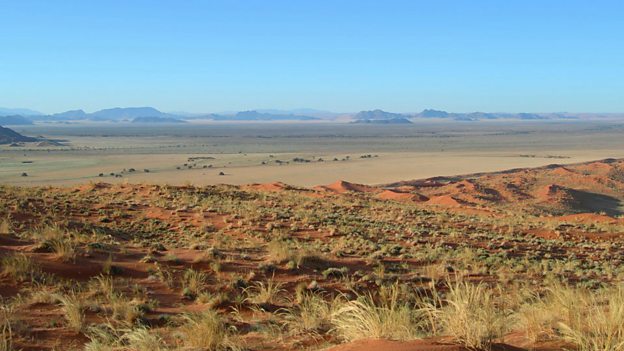
And there are plenty of tough humans too. Traditional bushmen in the Kalahari Desert are able tothrive and make the desert their home. The skills passed down over the generations mean that they can do all sorts of things - like lighting fires without matches!
A few remarkable people have survived the toughest situations imaginable. Like Mauro Prosperi, the Italian athlete who got lost in the Sahara desert and couldn't find his way out. He managed to keep going for 12 days by drinking urine and bat's blood.
When you're talking about surviving and dealing with tough situations, the phrases can, be able to and manage to are very useful. In this session you'll look at the grammar of these phrases and find out how to talk about surviving the desert!
ፅሁፉን ያንብቡና ቀጣዩን ክንውን ይሞክሩ
Can, could, be able to, manage to: Meaning and use
We use can or be able to when we want to say someone or something has the ability to do something. Can and be able to have similar meanings, but we often use be able to when something is surprising or unusual.
Camels can carry up to 600 pounds on their backs.
They are able to close their noses to keep out the sand.
To talk about ability in the past, we use could or be able to.
50 years ago, you could walk along this road for hours without seeing anyone else.
We were able to speak on the phone every evening.
Mauro Prosperi was able to survive by drinking urine and bat's blood.
For a single event in the past, we use be able to (not could) in positive statements.
Our guide was able to show us the caves where the bushmen lived.
NOT: Our guide could show us where the bushmen lived.
In negative statements and questions about single events, we can use could or be able to.
Could you talk to the bushmen? Were you able to talk to the bushmen?
We couldn't talk to them. We weren't able to talk to them.
If something is very difficult to do or is very successful, we often use the verb manage to instead of a modal verb like can or could.
Mauro Prosperi managed to find shelter from the sun.
To do
Try out our ability phrases quiz! Can you remember when to use can, could, be able to and manage to?
Did you get the meaning?
6 Questions
Choose the best word or words to fill in each gap. Can you get them all right?
ድጋፍ
Activity
Choose the best word or words to fill in each gap. Can you get them all right?
ፍንጭ
This is a single event in the pastQuestion 1 of 6
ድጋፍ
Activity
Choose the best word or words to fill in each gap. Can you get them all right?
ፍንጭ
This was very difficult!Question 2 of 6
ድጋፍ
Activity
Choose the best word or words to fill in each gap. Can you get them all right?
ፍንጭ
This describes a general ability in the past - remember the correct form!Question 3 of 6
ድጋፍ
Activity
Choose the best word or words to fill in each gap. Can you get them all right?
ፍንጭ
This is a statement about ability in the presentQuestion 4 of 6
ድጋፍ
Activity
Choose the best word or words to fill in each gap. Can you get them all right?
ፍንጭ
This was a single event in the past - and it was difficult!Question 5 of 6
ድጋፍ
Activity
Choose the best word or words to fill in each gap. Can you get them all right?
ፍንጭ
You need a negative hereQuestion 6 of 6
Excellent!Great job!መጥፎ እድል ነጥብ አስመዝግበዋል :
Next
So you've learnt about the modals can and could and the phrases be able to and manage to. And you've learnt some facts about deserts! Next up, we're going to another extreme environment - the freezing temperatures of Russia! Don't let your English freeze though, because we're going to take a closer look at the form of phrases for talking about ability.
የሰዋሰው ክፍለ ጊዜ
We use can and be able to with infinitive verbs to talk about ability in the present.
An elephant can carry up to 9,000kg.
They are able to walk for up to 50 miles a day.For ability in the past, use could and was/were able to.
I could see the fish in the water, but I couldn't catch them.
They weren't able to survive long without food.For single events in the past, use be able to for positive sentences.
We were able to take a photograph of the lions (NOT: We could take a photograph of the lions)
For single events, use be able to or could / couldn't for negatives and questions.
We weren't able to see the elephants today. We couldn't take any photographs. Could you see any giraffes?Use manage to when something is very difficult to do or very successful:
They managed to travel across the Atlantic Ocean.
Session Vocabulary
bushmen
members of tribes in southern Africathrive
survive and growharsh
rough, difficultenvironment
(here) the area around the place where a person or thing lives
