MISCARRIAGE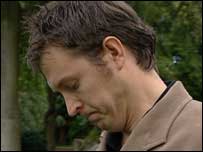 | | Two miscarriages left Steve devastated |
With as many as one in four pregnancies ending in miscarriage, many couples beginning a family experience the grief of losing an unborn child. Midlands Today sports presenter Steve Clamp and his wife Clare, share their anxiety, after suffering two previous miscarriages. Clare was 12 weeks pregnant when she suffered her first miscarriage. "We went for our scan and lay down in a dark room and looked at the screen. They didn't say anything. "The room fell quiet. And I thought this isn't right they would have seen something, then I knew something was wrong." "Steve and I didn't know what to say to each other then I burst into tears and it didn't stop." Early daysMiscarriage still isn't fully understood and can often happen without explanation. The most common time for something to go wrong with a pregnancy is in the first days and weeks after conception. 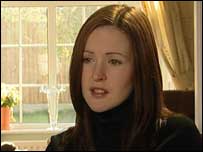 | | "I couldn't believe it had happened a second time. Total shock again. Bewilderment." | | Clare Clamp after her second miscarriage |
Clare and Steve were both devastated by the loss of their first baby, but hoped that like many women, Clare would go on to have a healthy second pregnancy. When four months later Clare miscarried for a second time, the couple's hopes were shattered. "I couldn't believe it had happened a second time. Total shock again. Bewilderment," explains Clare. Despite being united in their grief, Clare admits she felt an overwhelming sense of loneliness and isolation. She says, "It sounds silly because you've got someone else, but you think that no-one knows how you feel, the loneliness was just incredible." Searching for answers| The Facts | Miscarriage is defined as the spontaneous loss of a foetus before 24 weeks. Stillbirth is when a baby dies in the uterus after this date. Reasons for miscarriage Blighted ovum - when a fertilised egg doesn't develop as it should. Hydatidiform mole - this isn't a real pregnancy, as there's no fertilised egg. Instead, the body responds with pregnancy hormones to the development of collection of fluid-filled sacs growing from tissue that would have become the placenta if the pregnancy had been successful. Problems with the cervix - the cervix starts to open, and the uterus contracts, pushing the baby out too soon, often before 20 weeks. Ectopic pregnancy - the embryo is developing in one of the fallopian tubes. Source: BBC Health |
Birmingham Women's Hospital is at the forefront of research into the causes of miscarriage. "Women are bombarded by large amounts of information," explains Professor Kilby. "From newspapers, from radio, from the television, and from the internet and I think that makes it very difficult for women to decide if it's correct or not. "It's very difficult to prevent miscarriage. What you can do is make yourself as healthy as possible. "Stop smoking if you smoke, stop drinking if you drink alcohol, eat a healthy balanced diet." Too much to bearAlthough most women go on to have a normal, healthy pregnancy after miscarriage, for a small number of couples, baby loss happens time and time again. This is the situation that Nikki and Matt found themselves in. After losing their third baby through miscarriage, the couple found it just too much to bear. "We didn't officially decide to stop trying, but we found out that having talked to each other later on that I thought exactly the same as Matt which was, 'I can't do this again'," explains Nikki. 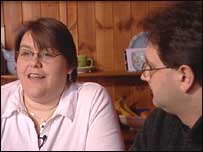 | | The grief of losing three babies was too much to bear |
"Initially it was easy, no more miscarriages, no more bereavement, no more having to deal with a child dying," Matt continues. "But after a while it started to dawn on me that I didn't know what to do with the next 20 years of my life." Nikki and Matt have come to terms with the prospect of life without children. "It's a decision we have made that we think is a positive choice," says Nikki. "It's not something that everybody would do, but for us it was really the right thing to do." 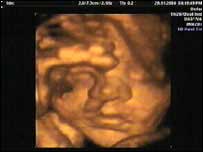 | | A scan reassures Clare and Steve that the baby is growing well |
A bouncing baby girlClare and Steve similarly felt overwhelmed by the pressure of trying again for a child. Thankfully they tried again. At 31 weeks pregnant, a scan showed a clear image of their unborn baby's face and even predicts the birth weight. "After everything we've been through, I can't believe we've seen the face of our unborn child," says Steve. | Sources of help and support | The Miscarriage Association
c/o Clayton Hospital
Northgate
Wakefield
West Yorkshire WF1 3JS
Helpline: 01924 200 799
Scottish helpline: 0131 334 8883
Babyloss.com
PO Box 1168
Southampton
SO15 8XZ
UK |
Yet even in the latter stages of her pregnancy, Clare was still understandably nervous. "You wake up in the night and you've got little superstitions about what will make this pregnancy a good one in comparison to the ones that failed." But they needn't have worried. Clare gives birth to a healthy baby girl. As Clare and Steve welcome baby Emma into the world, their success serves as hope to countless other couples who have faced the heartache and grief of miscarriage. "It's the most amazing thing I've ever experienced," says Steve. "She's just perfect." | 



 Inside Out - West Midlands: Monday February 21, 2005