FERTILITY FEARS | | OVERWEIGHT | Carrying too much weight is not just unhealthy - it can cause infertility |
Like many women, Tracy Fell would like to shed a few pounds. But unlike most women, it’s not just a question of vanity, it’s a question of fertility. Tracy has been diagnosed as having polycystic ovary syndrome, or PCOS, a condition strongly linked to carrying excess weight. Too much fat in the abdominal cavity can lead to insulin resistance, which causes a whole set of problems, most obviously diabetes in later life. But it can also cause women to become infertile. Tracy's weight probably prevented her from becoming naturally pregnant when she and her husband were trying for their second child.  | | This mask monitors breathing and can calculate the amount of calories used whilst resting |
Loosing weight can be difficult enough, but the genetics are also stacked against her. Tracy's mum and other family members are also overweight, but there is hope in sight. ResearchAt Derriford Hospital patients are given advice on how to manage their weight. Thankfully, PCOS is treatable - and reversible. Terry Wilkins and his team have been investigating this problem as part of the Earlybird research project into diabetes. As part of the study, they measured the waists of women who already had children - and those of women who were infertile. They found waist measurement was crucial. | Polycystic Ovarian Syndrome | Polycystic Ovarian Syndrome is a health condition linked with hormonal imbalances and insulin resistance Symptoms can range from:
irregular or non-existent periods
excess body and facial hair
acne
weight gain
tiredness
fatigue
depression
hair loss
mood swings
breast pain
abdominal pain
aching joints
dizziness
fertility problems
increased tendency to faint Between 5% and 7% of women are thought to have this problem The disease was first recognised in 1935 |
"All the mothers had a waist measurement below 110cms, whereas 10 per cent of the women attending a fertility clinic had a waist that was more than 110cms," says Terry. "In a way it tells us what we already know - that weight is linked to infertility - but now we can put a value on that and say that above 110cms, you are very unlikely to conceive." Of course not every overweight woman is infertile. Lifestyle"Genetics has got a part to play in this," continues Terry. "If you inherit and apple shape you are more likely to have this problem as well as all the others for example, heart disease." But of course the other big factor is lifestyle. "Nutritionalists tell us that the real change of the past 25 years has not been in the amount of food we eat but with the amount of exercise we take," explains Terry. "We need to go back to having a more healthy lifestyle." The problem starts in childhood, video games, lack of PE at school and bad diets. That's why Terry and his team are studying 300 so far healthy children, to try and see how early the seeds of obesity and diabetes are sown.  | | The problem is not how heavy an individual is, it is where the weight is carried |
For parents, filling in the study's questionnaire, it can be a shock. "I never realised how much my daughter ate and how little exercise she did till I joined this study," reveals one parent. "You almost feel tempted to lie because it’s so awful." Childhood weight gain "We believe the seeds are sown in childhood," says Terry. "Its society's problem. The government has got to do something about this because the problem is getting worse and its going to cost the NHS a fortune." But some patients find it difficult to lose weight and have to be helped by drugs which control their diabetes and start them ovulating again. Treatment from a fertility clinic to control Tracy's insulin resistance allowed her to fall pregnant with her second child, Rowan. But this does nothing to cure the underlying problem. 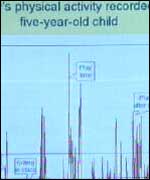 | | Terry and his team are studying the eating habits and activity of 300 children |
"There are medications which can reduce insulin resistance chemically without a reduction in weight. Now that's not a good thing because being pregnant and overweight is a danger to the pregnancy itself," warns Terry. "But a large proportion of these women find that they are just not able to lose the weight despite the one thing they want more than anything in life is a pregnancy and a child," continues Terry. "The prediction has to be that the problem can only get worse if women in increasing numbers get fatter. That means longer queues at the fertility clinic and the fertility clinics won't be able to handle it." "I've tried diet after diet after diet," says Tracy. "I've tried the book-based diet, Slimfast, WeightWatchers, Slimming World. I've done everything its possible to do - but even though it may have caused my problems with conceiving, the one thing it boils down to is lack of willpower." | 



 Inside Out - South West: Monday 17th February, 2003