SPERM AND EGG DONATIONDespite the commitment required - not to mention the potential health risks - egg donors undergo the hormone treatment and extraction procedure with no financial reward. These are women who feel passionately about giving other couples the chance to have the family like their own. Inside Out meets one woman who feels passionate about becoming an egg donor. Making a contributionSarah has two children and decided to donate her eggs while suffering a near miscarriage with her second child. 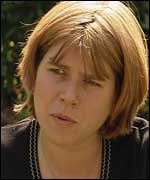 | | Sarah is an egg donor |
"I think sometimes you have to get up and make the world a better place and this is my contribution to that," says Sarah. Sarah is visiting the University of Bristol clinic for the final stage of the process - the egg collection. The harvesting is done while Sarah is unconscious. A hollow needle is attached to a pipe and a pump and guided by ultrasound. It pricks the follicles in the ovary and sucks out the eggs. The gift of lifeOne hour and eleven eggs later Sarah is back on her feet, ecstatic with the news that two couples will benefit from her donation. | FACTS | * Every year around 1,500 people are born through donor assisted conception. * Since the 1990 Human Fertilisation and Embryology Authority Act was introduced in 1991, over 18,000 donor children have been born in the UK.
* There are over one million donor offspring worldwide. * After 2008 (when the children born after 1st Aug, 1991 reach 16), donor children intending to marry can contact the HFEA to find out if they are related to their partner. * Cryos, the world's largest sperm bank is based in Denmark and exports to 35 countries including Britain. Of their donors, 12% would continue to donate if anonymity was abolished. * According to a survey Matthew Hill (BBC Newsnight and Points West Health Correspondent) completed in 2002, out of 82 donors 53 (65%) said that they would be against changing the law and would not continue to donate if their anonymity was lifted. |
Her part is now over and she does not see the potential offspring as hers. "I don't think these eggs are growing as part of me," explains Sarah. "I think very much these eggs are the children of the mother and father who will be conceiving the child.' Anonymous donationBoth egg and sperm donors remain anonymous and often donor offspring can remain ignorant of their origins The government is currently reviewing this to decide whether these donor children have a right to know who their donor is. As there is no obligation for recipient couples to tell the child, the birth certificate states the social mother or father as the parents. Christine Whipp found out at the age of 41 that the man she had thought of as her father actually had no genetic link to her at all. Christine's parents were determined to have a child and sought help at a pioneering clinic in Exeter, run by Dr Margaret Jackson. She was a gynaecologist who had studied artificial insemination in cattle and had refined the technique for use in humans. Her donors were any healthy, fertile man she could find. These men donated their sperm for free and were assured complete anonymity. Tracing a donor 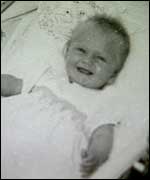 | | Christine grew up not realising she was a donor baby |
Christine's quest to trace her donor has been difficult. She has been told that all the records have since been destroyed. "How many more clinics, how many more adults like me living a lie," asks Christine. "Wondering why they didn't fit in to their life?' Christine lives with the knowledge that she may well have half-siblings that she walks past in the street - for all she knows she could have married one. "So few people have so few bits of information about their fathers and I have to pick up any little bits I can find," says Christine. Moral obligationRecords of donor offspring have been kept by the Human Fertilisation and Embryology Authority since it was set up in 1990. Records can only be checked if someone suspects they are either a donor child or related to their partner. When the Authority was established, Baroness Warnock chaired the committee that decided that donors should remain anonymous. 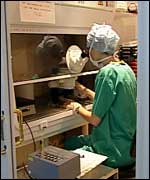 | | Harvesting the eggs is a complicated procedure |
The Baroness now believes that donor offspring have the moral right to know their donor and is campaigning for the law to be changed. FulfillingSome groups fear this will lead to a decline in donors. In countries like Sweden, they did experience a temporary drop in donation, but now have as many identifiable donors as they did anonymous ones. Sarah, like many other donors, would not be deterred by a change in the law. "If I had done it for money or if I had done it for an ulterior motive then I would be worried," says Sarah. "But I hope in 18 years time someone will knock on my door and say 'thank you, I've had a lovely life and you've made my parents' life fulfilled'. I'm hoping that's what it is creating." |