Researchers explain goalkeepers' mistake
Sumber gambar, AFP
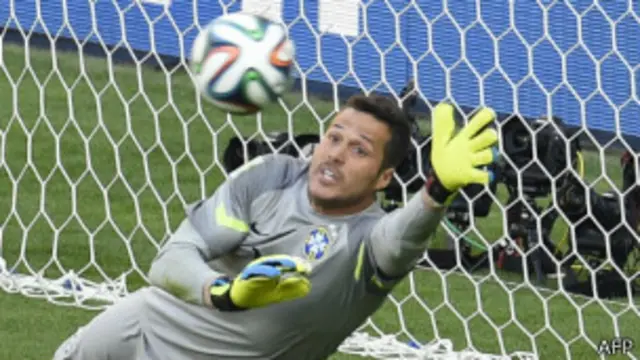
Goalkeepers facing penalty shootouts make a predictable mistake that could influence the outcome, say researchers.
Psychologists who analysed World Cups and European championships over 36 years found that after three kicks in the same direction, the keepers were more likely to throw themselves the opposite way.
The research has been published in the journal Current Biology.
Reporter:
Matt McGrath
REPORT
<link type="page"><caption> Listen to the report</caption><url href="http://http-ws.bbc.co.uk.edgesuite.net/mp3/learningenglish/2014/08/bbc_witn_goalkeepers_report_140801_witn_goalkeepers_report_au_bb.mp3" platform="highweb"/></link>
If a tossed coin comes up 'heads', ten times in a row, is it more or less likely to show 'tails' on the next throw?
If you think it must be tails, you are falling for the gambler's fallacy, the idea that sequences of results are connected. And you're not alone.


Some of the world's top goalkeepers are prone to making the same mistake.
Researchers from University College London analysed videos of penalty shootouts at every World Cup since 1976. They found that after three kicks in a row towards the same side of the goal, on the next shot the goalkeeper dived for the opposite side 69% of the time.
This small but statistically significant pattern could be enough to win shootouts. But so far the goalkeepers have been lucky. Penalty takers are under such pressure to score, they've failed to notice and take advantage of the flaw.
VOCABULARY
<link type="page"><caption> Listen to the words</caption><url href="http://http-ws.bbc.co.uk.edgesuite.net/mp3/learningenglish/2014/08/bbc_witn_goalkeepers_words_140801_witn_goalkeepers_words1_au_bb.mp3" platform="highweb"/></link><bold> </bold>
tossed: dilempar, diundi
in a row: berurutan
tails: salah satu sisi dari mata uang logam
fallacy: kesalahan
prone to: rentan terhadap
dived: bergerak, menjatuhkan diri untuk menangkap bola
to score: mencetak gol
flaw: kelemahan, cacat