The digital revolution that started in the late 90s, neared part completion with the analogue TV switch off in 2012.
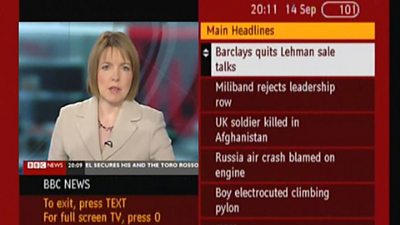
Since the start of 21st century, digital BBC TV channels, and radio services have increased, and HDTV has become the new standard. New services, such as Red Button, Connected Red Button, the BBC iPlayer, and 3D TV, continue to make a huge impact.
May 2004 - Come Dancing returns as 'Strictly'
The original Come Dancing ran between 1949 and 1998, but only reached cult status when it was re-launched as Strictly Come Dancing in 2004.
Placing well known celebrities outside their comfort zone, and seeing them come through a tough competition and selection process has had people viewing in their millions.
July 2007 - BBC iPlayer – see what you want when you want
By the mid 2000s, streaming technology had developed sufficiently to offer whole TV programmes online.
Designed by BBC developers as a simple way of catching up on missed programmes, without an additional fee to pay, the BBC iPlayer is a complement to conventional TV viewing.
September 2007 - BBC Pacific Quay opens
Officially opened by the then Prime Minister, Gordon Brown, BBC Pacific Quay is the home of BBC Scotland and was the first all-digital BBC centre.
The new building is a dynamic broadcasting centre and a benchmark in terms of state-of-the-art digital technology and production methods, across TV, radio and online. All BBC Scotland's national broadcast output comes from here, including the popular Reporting Scotland and Sportscene.
March 2008 - BBC Arabic and BBC Persian Television – a new way forward
With dwindling numbers listening to shortwave radio, the BBC World Service radically shifted its focus to the Arab and Persian world.
BBC Arabic Television provided a solid news service, whilst BBC Persian Television focused on youth and current affairs.
November 2008 - Red Button - extends television viewing
Replacing the earlier BBCi services, BBC Red Button took its name directly from the red button viewers used to select the service on their TV remote controls. Video on demand, the ability to answer quiz questions, and background programme information are just some of the features now on offer.