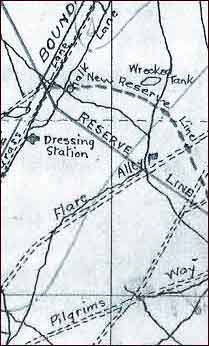
This map reflects the realities of battle during the latter stages of the Somme fighting. Wrecked tanks are marked because they were invaluable landmarks. Trenches have names for ease of description; battalion and company headquarters as well as dressing stations are marked. This map reflects the realities of battle during the latter stages of the Somme fighting. Wrecked tanks are marked because they were invaluable landmarks. Trenches have names for ease of description; battalion and company headquarters as well as dressing stations are marked.
Dressing stations treated wounded who had been sent back from their Regimental Aid Post, and they went thence to Casualty Clearing Stations further back. Advanced Dressing Stations often became cemeteries as soldiers died in them before they could be evacuated. The SOS line just in front of British positions marks the line that guns would be laid on when they were not engaged on other tasks. If the infantry was attacked it would simply need to call, by field telephone or signal rocket, for fire on the SOS. Radios, not in general use in World War One, would have made the co-ordination of artillery fire, and much else, a great deal easier. 
|