| 13 November 2014 |

| |
| BBC Homepage | | |
| |||
| Contact Us | | |
Places StoriesYou are in: Hereford and Worcester > Places > Places Stories > Mass battle grave 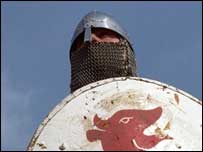 Norman soldier Mass battle graveby BBC H&W's Nicola Goodwin Near the church of St John the Baptist and St Alkmund in Aymestry are buried 4,000 soldiers killed at the battle of Mortimer's Cross in 1461.
The Church of St John the Baptist and St Alkmund in Aymestry dates from the 14th century, and contains memorials to many historic Herefordshire families such as Weever, Lingen and Dunne. But the most historically important grave in the village is believed to lie approximately 200 metres from the churchyard, where a mass grave was dug for more than 4,000 soldiers killed at the battle of Mortimer's Cross in 1461. A mound can still be seen from the main road as you travel towards the turning for Lucton. The battle, when Edward Mortimer defeated the Lancastrians, led by the Earl of Pembroke, and prevented them from reaching Ludlow and Wigmore castles, though relatively small, proved to be one of the most decisive in the Wars of the Roses. The 19-year-old victor went on to become Edward IV. last updated: 08/12/2008 at 09:29 SEE ALSOYou are in: Hereford and Worcester > Places > Places Stories > Mass battle grave [an error occurred while processing this directive] | ||||||||||
| | About the BBC | Help | Terms of Use | Privacy & Cookies Policy |