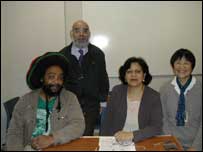
Dual meanings - it's a peculiar phenomenon that makes the English language one of the most difficult languages to learn. | Dual meanings | Youngsters are often the first to adopt words and give them dual meanings. Here are a few words that can have dual meanings: Wicked means bad or evil but it also means extremely cool or excellent. Sick can mean distasteful but it can also mean that something is cool. Sound usually refers to an audible noise but it can also mean safe or reliable. |
By dual meanings we take a word that has its conventional use - a word like wicked means evil or very bad, a word that would often be associated with a act of cruelty. However wicked can, bizarrely, also mean excellent or extremely cool. How can that be true with two so diametrically opposed words? Modern language is peppered with catchphrases, buzzwords and euphemisms that mesh seamlessly into everyday life. To people in the know, these words can convey the appropriate meaning in conversation. When it becomes difficult to tell the difference, it's usually the result of a generation gap. For kids who grow up at the cutting edge of modern language it's easy, but for the rest of us it depends on our ability to understand the new meaning in the context it has been given. Working with today's youth  | | Rupert McKenzie has seen the increased use of words with dual meanings... |
Rupert McKenzie, from Gloucester, is a youth worker and he's confronted by this modern language on a daily basis. Working with youngsters has enabled him to gain a greater understanding of exactly how these modern buzzwords work. He says:  Being a youth worker I'm exposed over the years to new speech that's coming off the street from the youngsters. This they get from the media, the music and basically you create words. Being a youth worker I'm exposed over the years to new speech that's coming off the street from the youngsters. This they get from the media, the music and basically you create words. 
However, Rupert remembers that things were surprisingly similar when he was a youngster. He explains: When I was a youngster my gang had buzz words that only we knew. One new word has really bemused Rupert is the word 'sick'. The conventional use of the word generally refers to someone that is ill or an act of depravity. Yet youngsters today use the word with wholly different connotations, Rupert explains: | "I'm telling you. If it's really cool, it's sick." | | Rupert McKenzie |
The latest [word] I've got is from when I was doing some artwork with some kids. They did one piece and it was really cool - they were saying 'that's sick'! That's the latest expression, I'm telling you. If it's really cool, it's sick. The pace of change in the use of buzzwords has amazed Rupert, he now sees them changing far more rapidly than he would have imagined possibly. He revealed: The words are changing yearly. When I'm talking to the youngsters I have to ask them 'do you actually mean this [word] to mean this or do you mean it to mean the opposite?'. If you're not in the know about this dual meanings then it can clearly be quite confusing! Man, you're wicked! 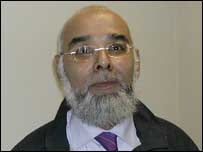 | | Mahmood Patel finds some words that have dual meanings to be very confusing, given their original meaning! |
Mahmood Patel, long time resident of Gloucester, continues the conversation. He, too, is confused by the way some words have dual meanings: As Rupert was describing in terms of creation of words and where words cause conflict is like the word 'wicked'. To any faith-based person that you walked up to and said 'man, you're wicked!', that goes against the whole belief system that they've been striving to be. The word 'safe'... what is a safe? You know, it's a large steel box that you put your valuables in. 'Sound' is another word but sound is invisible. So what is 'sound'? Listen to Rupert and Mahmood as they discuss the use of buzzwords with dual meanings in today's society...  Listen to the audio clip in 56k Listen to the audio clip in 56k
Listen to the audio clip in broadband
To listen to audio content on the BBC you will need to have a program called RealPlayer installed on your computer. Download it for FREE by clicking here |