Mary Berry's lemon tart
- Prepare
- 1-2 hours
- Cook
- 30 mins to 1 hour
- Serve
- Serves 8
- Dietary
- Nut-freeVegetarian
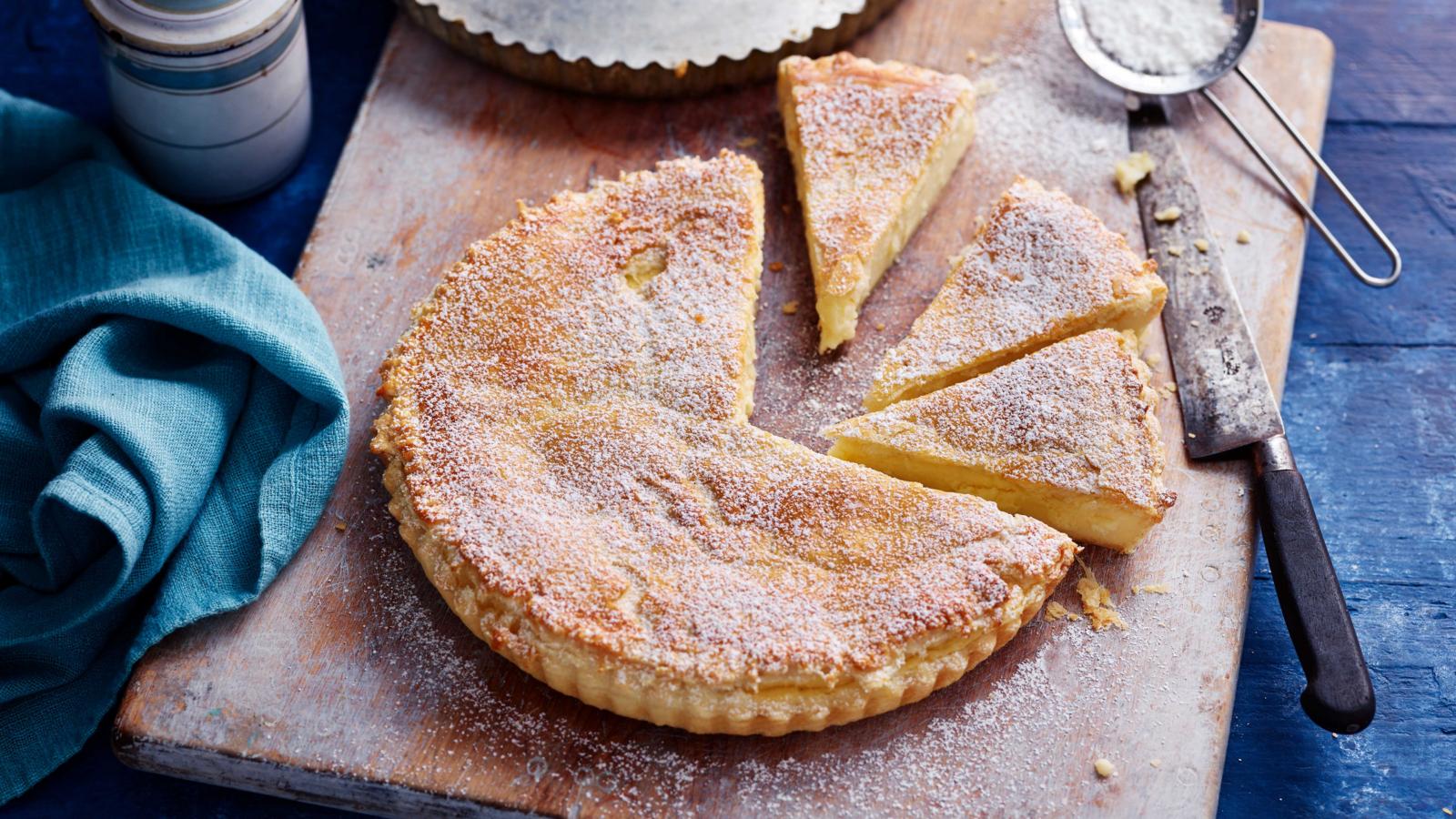
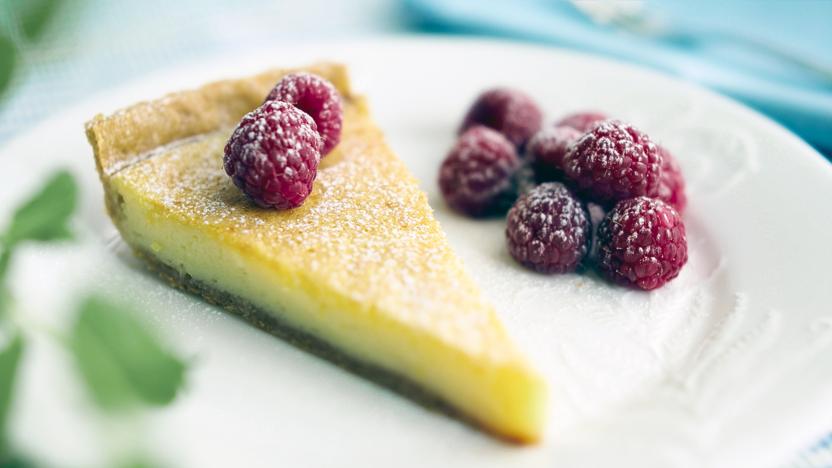
A classic lemon tart is Mary Berry’s absolute favourite and we can see why. She shares her secrets for making sweet pastry filled with a tangy lemon custard that can't be beaten. It's the perfect dessert for a summer get together as it can be made up to two days in advance (but don’t decorate it until just before serving).
Each serving provides 423 kcal, 7.5g protein, 48.2g carbohydrate (of which 32.2g sugars), 22g fat (of which 12.4g saturates), 1g fibre and 0.16g salt.
Ingredients
For the pastry
- 175g/6oz plain flour, plus extra for dusting
- 100g/3½oz cold butter, cut into small cubes, plus extra for greasing
- 25g/1oz icing sugar
- 1 free-range egg yolk
- 1 tbsp cold water
For the filling
- 5 free-range eggs
- 125ml/4fl oz double cream
- 225g/8oz caster sugar
- 4 lemons, juice and zest (approx. 150ml/¼ pint juice)
- icing sugar, for dusting
Method
To make the pastry, put the flour, butter and icing sugar in a food processor. Pulse briefly until the mixture resembles breadcrumbs, then add the egg yolk and water. (Alternatively use your hands to rub the ingredients together until they resemble fine breadcrumbs.)
Pulse again until the mixture sticks together in clumps then tip onto a work surface and gather it into a ball with your hands. Knead the pastry just two or three times to make it smooth. If your butter was a bit too soft, the pastry might be too. If so, wrap it in baking paper and chill for 15 minutes.
Grease a 23cm/9in loose-bottomed, fluted tart tin and dust the base of the tin with flour.
Remove the base from the tin and place the pastry ball in the centre of the base. Flatten it out slightly. Roll out the pastry, still on the base, until it is 10cm/4in larger than the base, turning a quarter-turn ever couple of rolls.
Gently fold the pastry overhanging the tin base in towards the centre. Carefully lift the tin base off the work surface, drop it back into the tin.
Ease the pastry into the corners and up the sides of the tin, pressing the overhang lightly over the rim. If the pastry has cracked at all, simply press it together to seal. Press the pastry into the flutes of the tin then lightly prick the base with a fork, but not quite all the way through.
Place the pastry-lined tin on a baking tray, cover loosely with cling film and chill in the fridge for 30 minutes. Preheat the oven to 200C/180C Fan/Gas 6.
Remove the cling film from the pastry case and line with foil so it supports the sides, then fill with baking beans. Bake blind for 12–15 minutes, until the pastry is set, then lift out the foil and beans.
Carefully trim the excess pastry from the sides using a sharp knife, holding the knife at a sharp angle and slicing away from you. Remove the trimmings from the sheet. Return the empty pastry case to the oven for another 10–12 minutes or until it is pale golden and completely dry. Set aside to cool while you make the filling.
Reduce the oven temperature to 170C/150C Fan/Gas 3.
For the filling, break the eggs into a large bowl and whisk together with a wire whisk. Add the rest of the filling ingredients and whisk again until they are all well combined.
Pour the filling mixture into the cooled baked pastry case. To prevent it spilling as it goes in the oven, pour in most of the filling so it almost fills the tart, then carefully sit the baking sheet and tart on the oven shelf, before adding the rest of the filling.
Bake for about 30–35 minutes or until just set but with a slight wobble in the centre.
Leave to cool slightly then, when the pastry seems firm enough, remove the tart from the tin. The easiest way to do this is to place the base of the tin on an upturned can or jam jar and let the outer ring fall to the work surface.
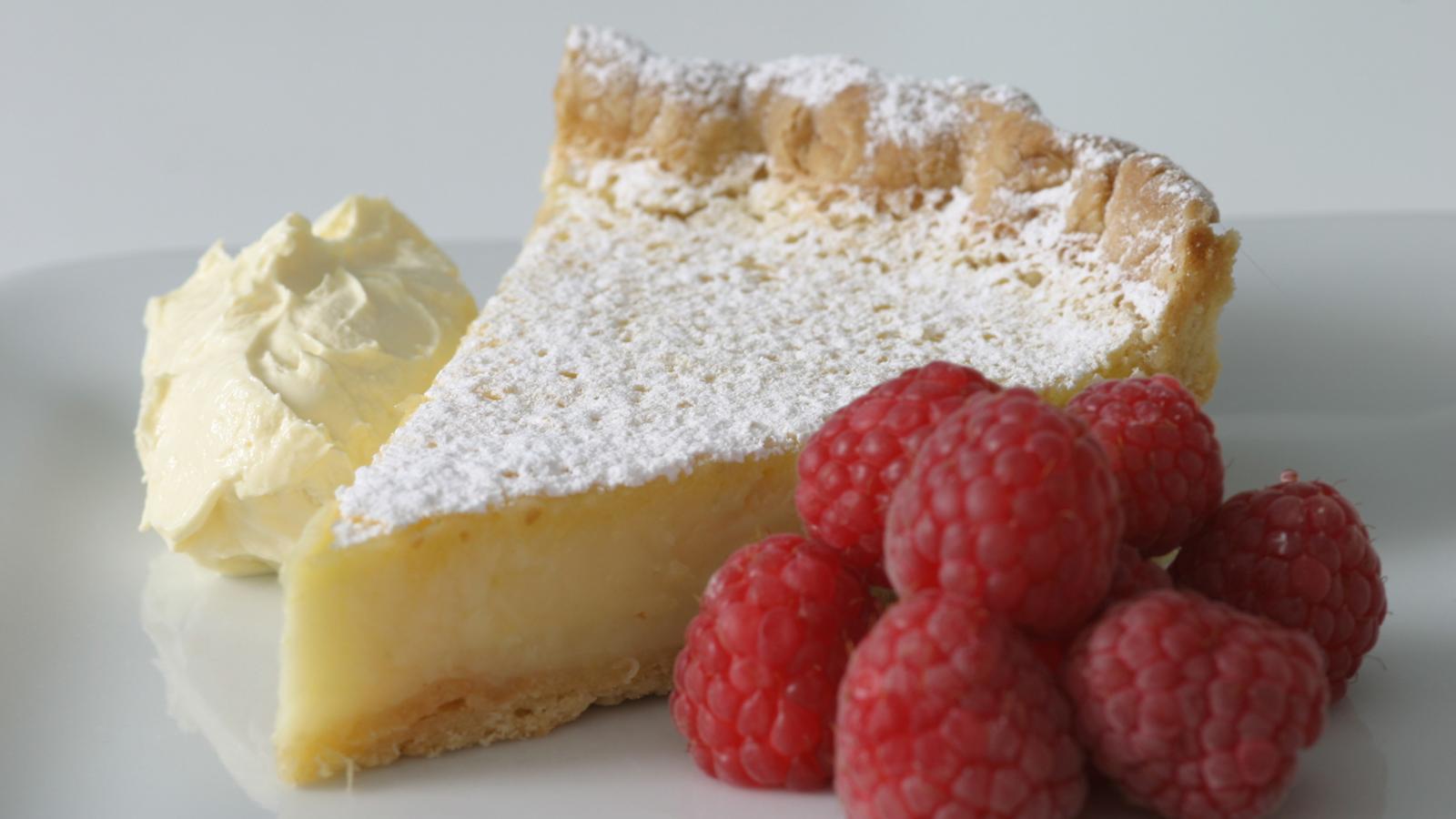
Transfer the tart to a serving plate and serve warm or cold, dusted with sifted icing sugar.
Recipe tips
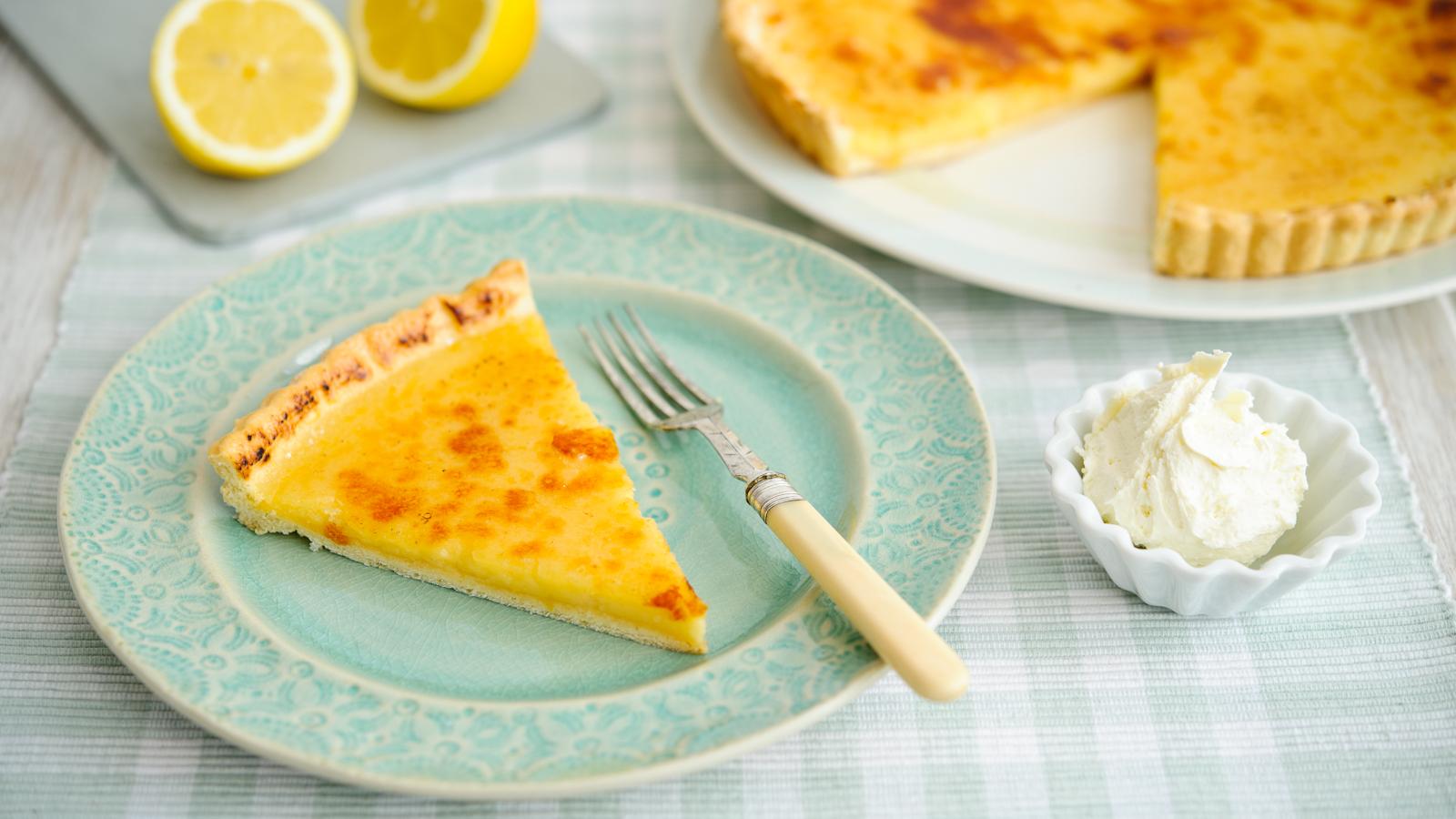
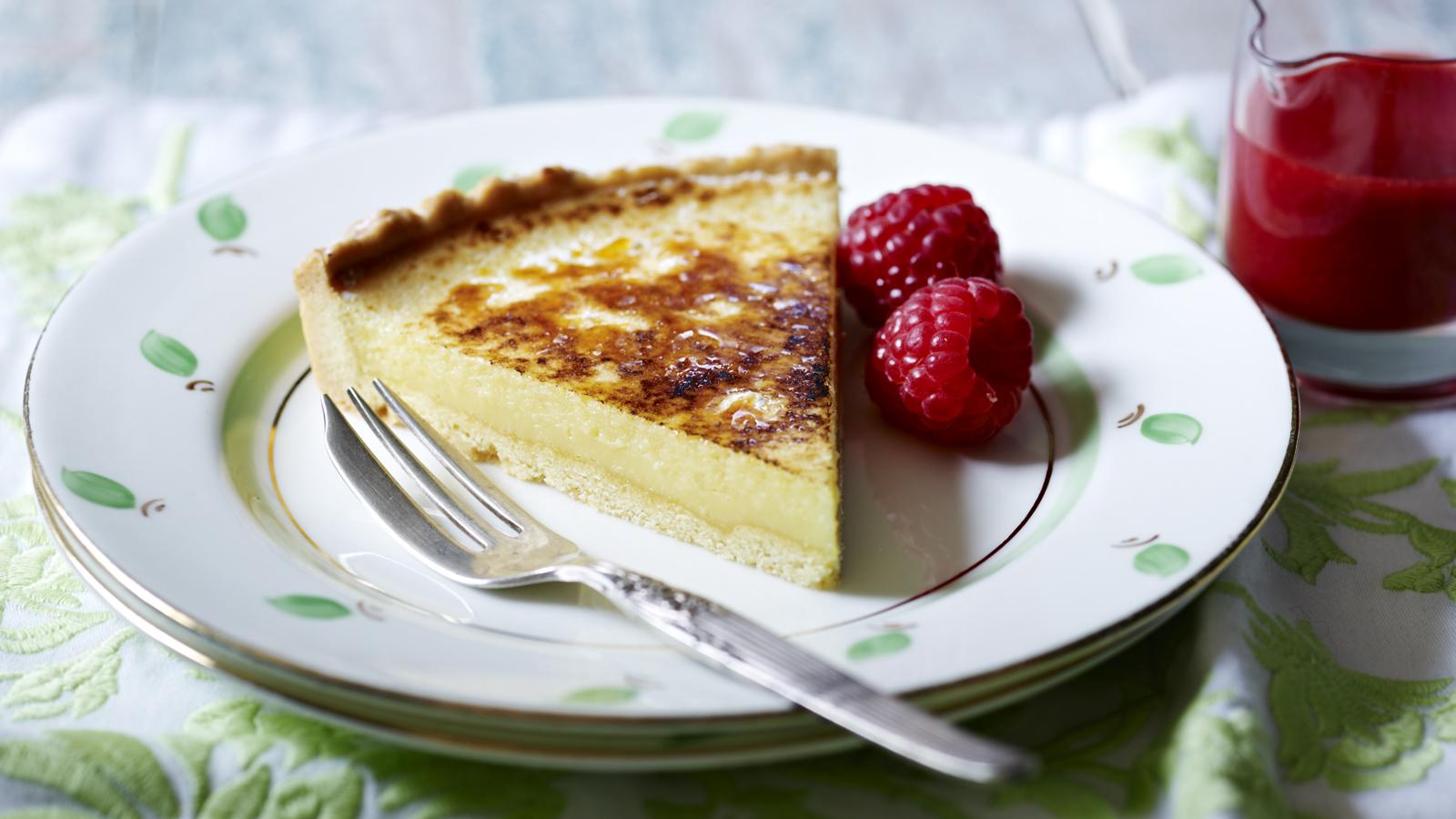
To glaze the lemon tart, dust generously with icing sugar then, using a blow torch, hold the flame just above the sugar and move it around until the sugar has caramelised, being careful not to burn the pastry edges.
To decorate the tart like a French pâtisserie, pipe the word ’citron’ in melted dark chocolate across the top of the cold tart.
Decorate the tart just before serving as the moisture in the tart will make the icing sugar invisible within minutes.
You can cheat this recipe by buying a readymade sweet pastry case. They do tend to be considerably smaller than 23cm/9in though, so we recommend halving the filling ingredients (use 2 large eggs or 3 small eggs, instead of 5 medium eggs).
Making pastry in a food processor is much faster, but take care not to overprocess the dough to avoid tough, chewy pastry. Have the motor running for the absolute minimum time needed.
To sweeten the pastry, Mary prefers to use icing sugar (rather than caster sugar) as it makes a smoother dough. If your icing sugar has been hanging around a while, it's best to pass it through a sieve to remove any lumps.
Rolling out the pastry on the base of the tin helps you roll it out to the right size and makes it easy to lift the pastry into the tin. Watch the recipe video if you are unsure.
Lemons do vary in size and juiciness, but for this recipe you need about 150ml/¼ pint lemon juice.
Don't overcook the filling as it will make it tough and it could form unsightly cracks. Bubbles on the surface of the filling are a sign that it's starting to overcook or your oven temperature is too high.