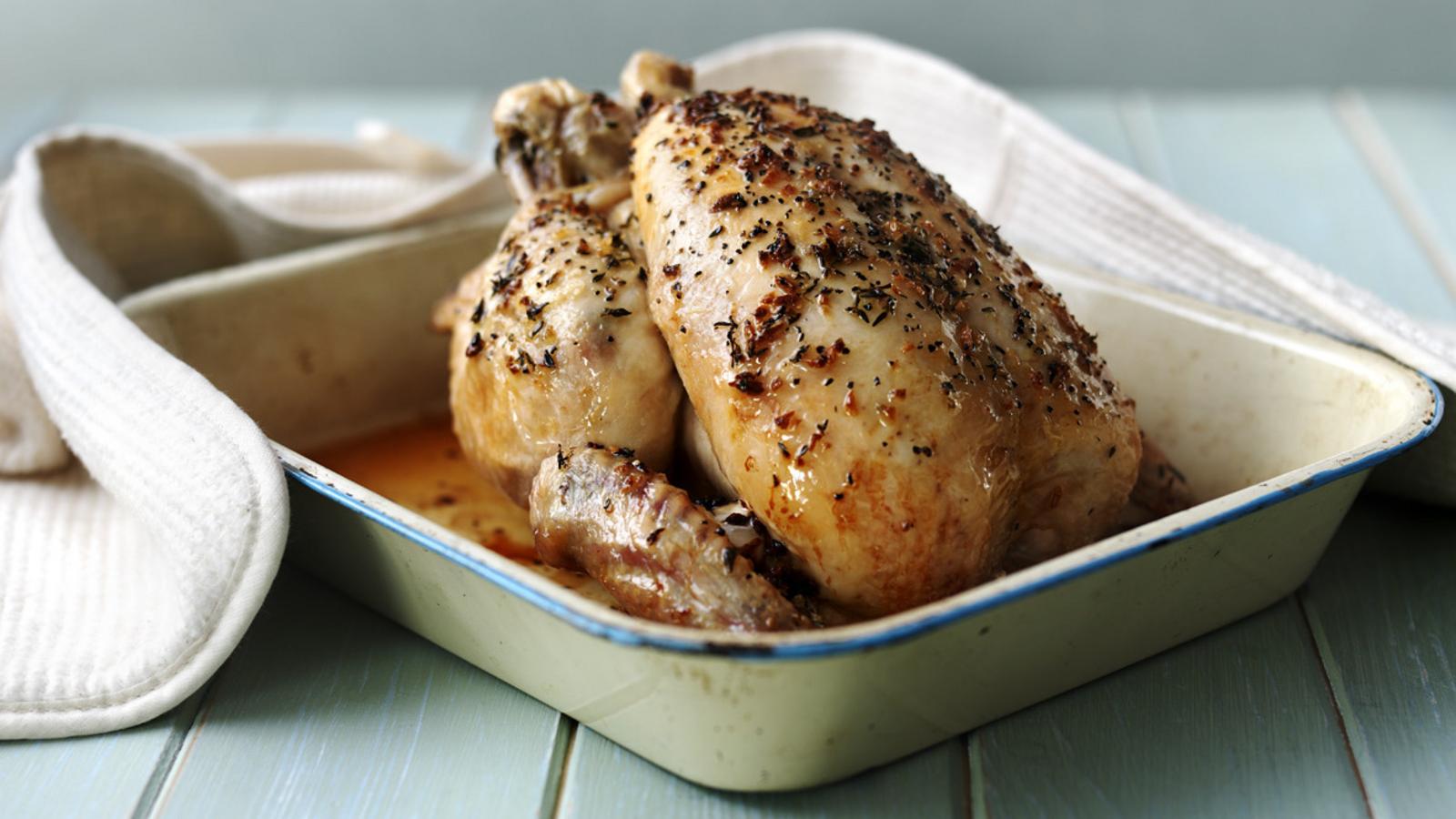
Roast chicken
- Prepare
- less than 30 mins
- Cook
- 1 to 2 hours
- Serve
- Serves 4–6
Roast chicken is the ultimate crowd pleaser and always welcome whatever the weather. Serve with a green salad and some crusty bread in summer or as a roast dinner for winter. Use our roasting calculator to work out the exact times and temperatures for your roast.
Method
Preheat the oven to 200C/180C Fan/Gas 6.
Generously season the chicken inside and out with salt and black pepper.
Slice the lemon in half. If using onion, peel and cut in half. Put the lemon and/or onion inside the cavity of the chicken.
Put the chicken in a roasting tray and rub the oil or soft butter all over the skin.
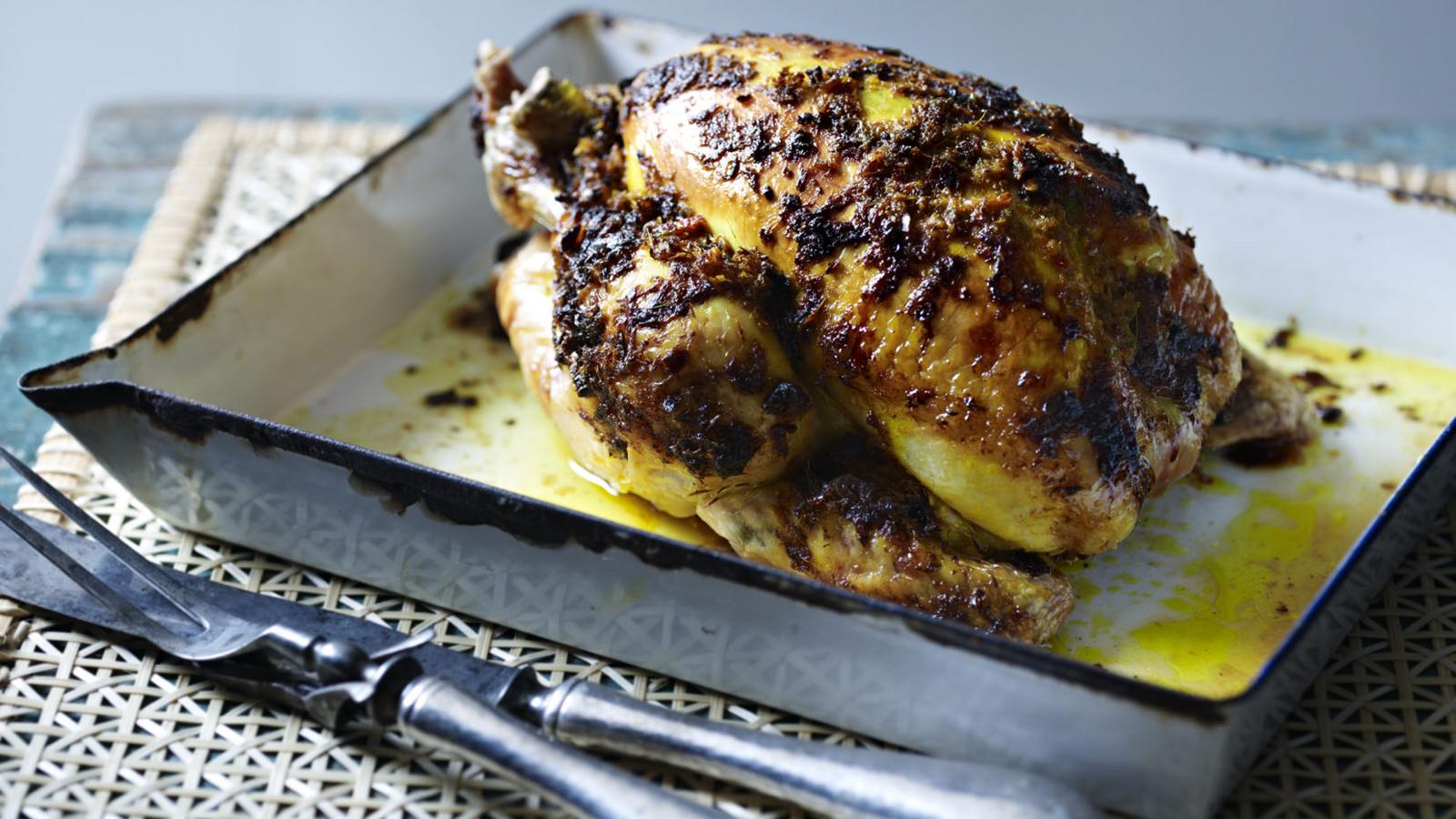
Roast for 20 minutes. Reduce the temperature to 180C/160C Fan/Gas 4 and roast for a further 1 hour, or until the chicken is cooked through. It's fully cooked if the juices run clear when the thickest part of the thigh is pierced with a skewer (or it reaches 75C on a meat thermometer).
Remove from the oven and let the chicken rest for at least 10 minutes.
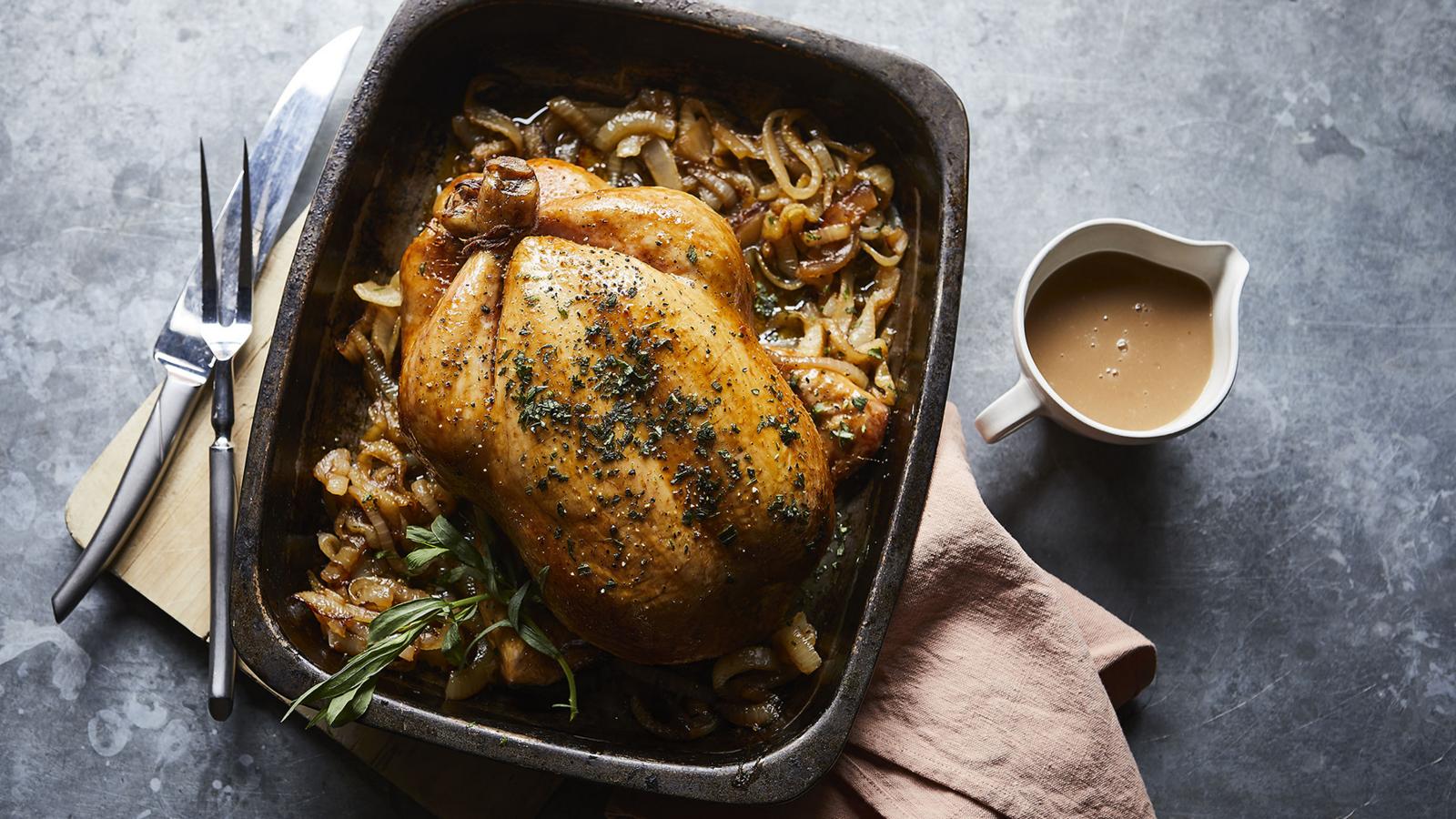
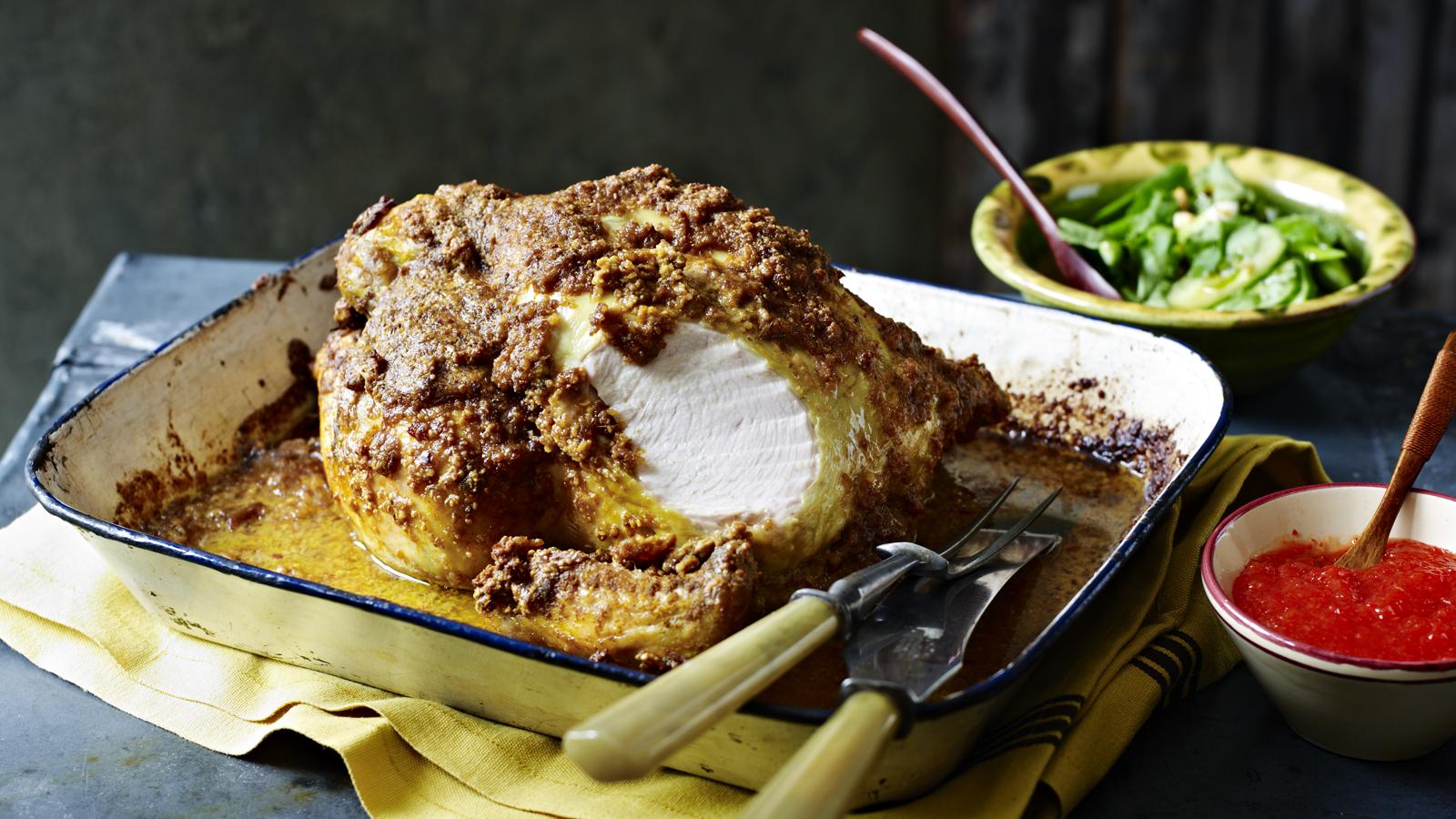
Carve the chicken and serve hot or cold. If making as part of a roast, see the recipe tips (below) for how to make chicken gravy.
Recipe tips
Putting a lemon or onion into the chicken cavity will add flavour and help keep the breast meat moist. Either is fine, or feel free to add half of each.
If you overcook a chicken the breast meat will be a little dry. Exactly how long a chicken takes to cook will vary depending on how the chicken was produced (cheaper chicken tends to have a higher water content which adds to the cooking time), how efficient your oven is and how cold the chicken was immediately prior to cooking. The most precise way to know if your chicken is cooked is by using a meat thermometer inserted into the thickest parts – it will be 75C when cooked. Watch the How-to video for lots of tips on how to check your chicken is cooked and avoid overcooking it.
Most supermarket chickens no longer come with giblets (the liver, heart and gizzard) but do check the cavity to be sure as they come in a plastic bag and you don't want to cook that. If you are lucky enough to have giblets, use them as a trivet when roasting the chicken to add flavour to the gravy or use them to make chicken stock. Place the giblets in a saucepan and cover with water. Add a bay leaf, thyme, peppercorns and ½ onion. Bring to the boil and skim off any scum. Reduce the heat and then simmer for 30 minutes.
To make chicken gravy
If your roasting tin can go straight on the hob, stir the roasting juices over a medium heat, taking time scrape up any sticky bits from the base of the tin. Alternatively, scrape the roasting juices and any caramelised bits into a small saucepan and heat through. Add 1–3 tablespoons plain flour (depending on how thick you like your gravy) and stir well until completely incorporated (it will look like a paste). Gradually add up to 400ml/14fl oz chicken stock (made with 1 stock cube) stirring or whisking all the time until the gravy is smooth and your desired consistency.
If you are cooking roast potatoes with your chicken, the starchy cooking water from par-boiling them is a great addition to gravy as it adds flavour as well as helping to thicken it. Set it aside after draining your spuds and use it to make stock – or add less stock to your gravy and top up with the potato water.
Chicken gravy will naturally be a very light brown colour. If preferred, you can add a dash of soy sauce or gravy browning to make it darker.
For extra tasty gravy, try roasting your chicken on a layer of vegetables. Carrots, onions and celery work well. Peel and cut them into fairly large chunks (so they are easy to remove later) pile in the middle of your roasting tin and place the chicken on top. Roast as normal. A splash of white wine is another nice addition to chicken gravy.
If you roast a chicken and don't want to serve gravy with it, it's worth scraping any fat and tin juices into a little tub which you can freeze ready for the next time you want gravy. The fat will separate from the roasting juices in a layer as it cools and can be used to make extra tasty roast potatoes too.