Easter lemon pavlova
- Prepare
- 30 mins to 1 hour
- Cook
- over 2 hours
- Serve
- Serves 6–8
- Dietary
- Nut-freeVegetarian
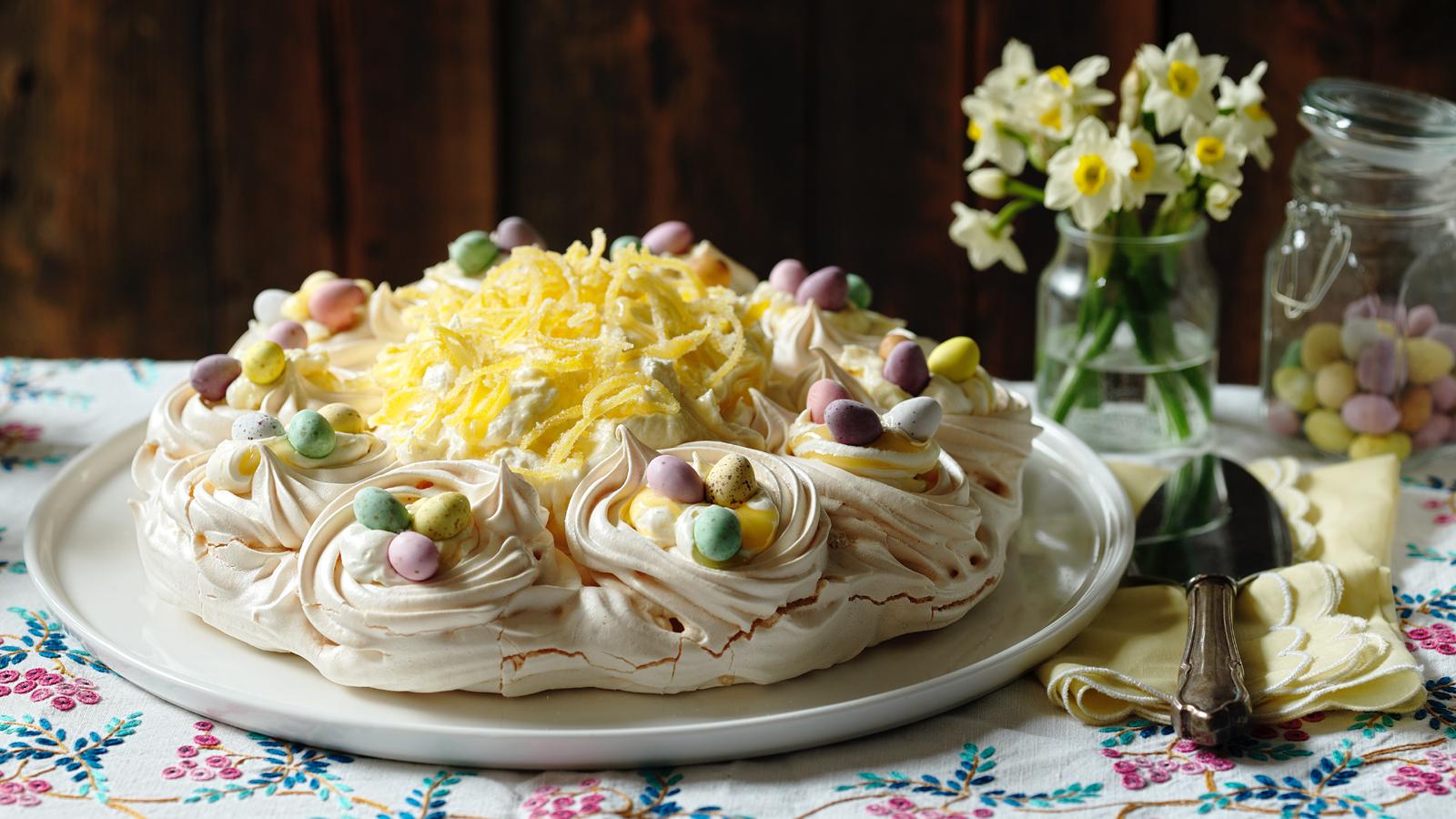
If you’re looking for something different for an Easter dessert, this stunning pavlova from Mary Berry should do the trick: lemon curd pavlova topped with mini-mounds of meringue and chocolate eggs. The recipe makes more lemon curd than you will need, but any excess can be kept in a sterilised jar in the fridge (see recipe tips).
For this recipe you will need an electric mixer and a piping bag fitted with a rose or star nozzle.
Ingredients
For the candied lemon zest
- 100g/3½oz caster sugar, plus extra for coating the zest
- 4 lemons, zest only pared and cut into long thin strips (keep the juice for making the curd))
For the meringue
- 6 free-range egg whites
- 350g/12oz caster sugar
- 2 tsp white wine vinegar
- 2 level tsp cornflour
For the lemon curd filling
- 6 free-range egg yolks
- 350g/12oz caster sugar
- 225g/8oz butter
- 450ml/¾ pint double cream
To serve
- 30 chocolate mini-eggs
Method
To make the candied lemon zest, put 100ml/3½fl oz water and the caster sugar in a pan. Bring to the boil, stirring. Add the zest and boil for 2–3 minutes, or until syrupy. Drain on baking paper, roll in extra caster sugar and leave to dry in a warm place for a couple of hours, or overnight.
Preheat the oven to 160C/140C Fan/Gas 3. Lay a piece of baking paper on a large baking tray and draw a 25cm/10in circle on it.
To make the meringue, put the egg whites into a bowl. Using an electric whisk or in a freestanding mixer, whisk on the fastest speed until the egg whites reach stiff peaks. Gradually, still whisking on maximum speed, add generous teaspoons of the sugar until all the sugar is incorportated and the mixture is stiff, shiny and stands in peaks.
Mix the vinegar and cornflour together until smooth. Stir into the meringue mixture.
Spread half of the meringue mixture onto the baking paper to make a 25cm/10in circle. Fill a piping bag fitted with a rose or star nozzle with the rest of the meringue mixture. Carefully pipe about 10 separate little nests positioned equally around the edge of the circle.
Put the meringue on the middle shelf of the oven, turn the heat down to 150C/130C Fan/Gas 2 and bake for 1½–2 hours, or until it easily comes off the paper (check after one hour). When ready, the pavlova will be a pale creamy colour rather than white. Turn off the oven and leave the pavlova in the residual heat for an hour or overnight to cool and dry.
Meanwhile, make the lemon curd. Place a heatproof bowl over a pan of gently simmering water. Add the egg yolks, sugar and the juice of 4 lemons (leftover from making the candied zest) to the bowl and whisk. Gradually add the butter, whisking continually for about 10 minutes until it starts to thicken (depending on the heat it could take longer, but it's best not to rush this stage as the curd could split). It will be thick enough to coat the back of a spoon when it reaches the correct consistency and will firm up further once cooled.
Whisk the double cream in a large bowl until thickened to soft peaks. Gently swirl it through the cooled lemon curd leaving some streaks of curd.
Spoon the lemon curd and cream mixture into the middle of the pavlova and spread a little over the base of each meringue nest.
Decorate by placing three chocolate mini-eggs in each of the nests around the edge of the dessert. Arrange a mound of candied zest in the middle of the pavlova and serve.
Recipe tips
To sterilise jars, wash the jars in very hot, soapy water or put through the hot cycle of a dishwasher. Place the jars on a baking tray and heat in an oven set to 160C/140C Fan/Gas 3 for 10–15 minutes.
When making the pavlova, it's handy to dab a little of the meringue mixture on the baking paper to help it stick to the baking tray. This prevents the paper moving around as you shape the pavlova.
Related recipes
This recipe is from...
Try as part of this menu
Easter at Mary Berry's. Menu Easter at Mary Berry's
Mary Berry's family-friendly menu for an easy Easter lunch. Starring a slow-cooked, no-bother roast and a stunning make-ahead dessert.
Spring minestrone soup with pesto. By Mary Berry
Light meals & snacks
Posh roasted vegetables. By Mary Berry
Main course
Fennel and potato gratin. By Mary Berry
Side dishes
Easter simnel cake. By Mary Berry
Cakes and baking