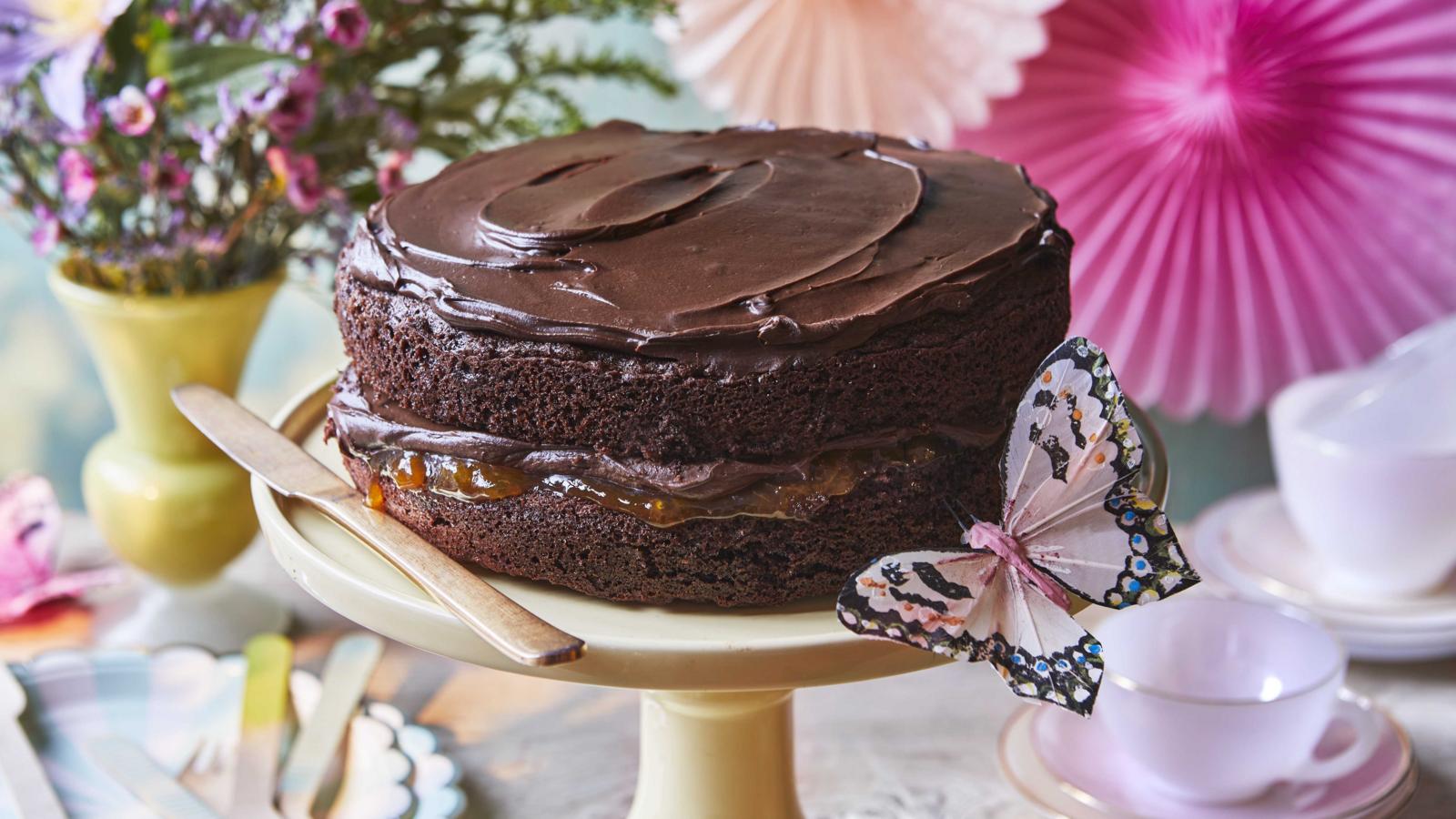
Chocolate sponge cake
- Prepare
- 30 mins to 1 hour
- Cook
- 30 mins to 1 hour
- Serve
- Serves 8
Make a birthday special with Mary Berry's chocolatiest of chocolate sponge cakes. It is super easy to bake and is covered with a rich, dark chocolate ganache.
Each serving provides 491 kcal, 7.6g protein, 69.5g carbohydrate (of which 52.9g sugars), 19.4g fat (of which 11.2g saturates), 4.2g fibre and 0.44g salt.
By Mary Berry
Ingredients
For the chocolate cake
- 50g/1¾oz cocoa powder
- 6 tbsp boiling water
- 3 free-range eggs
- 4 tbsp milk
- 175g/6oz self-raising flour
- 1 rounded tsp baking powder
- 100g/3½oz baking spread or soft butter
- 300g/10½oz golden caster sugar
For the icing and filling
- 150g/5½oz dark chocolate, broken into small pieces
- 150ml/¼ pint double cream
- 3 tbsp apricot jam
Method
Preheat the oven to 180C/160C Fan/Gas 4. Grease two 20cm/8in deep sandwich tins and line the bases with baking paper.
Put the cocoa powder and boiling water in a large bowl and mix well to make a paste. Allow to sit for 1–2 minutes to cool slightly.
Add all the remaining cake ingredients and beat using an electric mixer until thoroughly combined. This can also be done in a food processor, but take care not to over mix as it will make the cake tough.
Divide the cake mixture equally between the prepared tins.
Bake for 25–30 minutes, or until well risen and shrinking away from the sides of the tin.
Meanwhile, put the chocolate and cream in a heatproof bowl. Place the bowl over a saucepan of gently simmering water (do not let the bottom of the bowl touch the water). Stir occasionally, until the chocolate is melted. Remove from the heat and leave to cool for at least 30 minutes until the mixture is thick, but still easily spreadable.
Once baked, remove the cakes from the oven and allow to cool for 10 minutes. Remove the cakes from their tins and place on a wire rack to cool completely.
Once the cakes are cold, spread the top of one cake with apricot jam. Cover with half of the chocolate icing and place the other cake on top. Spread the remainder of the icing on top of the cake.
Recipe tips
Mixing the cocoa powder with boiling water is a process called blooming. It intensifies the flavour of the cocoa powder giving a really chocolatey flavour.
Mary uses the all-in-one method for her cakes. It helps to have very soft butter (or margarine that's suitable for baking) so that you don't overbeat the mixture. Overbeating could result in a tougher cake texture. To soften your butter, cut into small cubes, spread onto a plate, cover lightly with kitchen paper and leave at room temperature for at least 30 minutes (or watch the How-to video below).
Mary's preference for dark chocolate is to use varieties with 40–50 percent cocoa solids. A higher amount of cocoa solids will still work well but makes a deeper, less sweet cake. Whatever you use, make sure you chop it into small even pieces (you could even grate it).
The name sandwich tin is a little confusing as they aren’t anything to do with bread-based sandwiches but are designed for baking round sponge cakes that you ‘sandwich’ together with a filling. It’s worth treating yourself to a set of loose-based sandwich tins with straight vertical sides rather than tapering side produce a better-looking cake that’s also easier to ice. The loose base makes it easier to lift the sponge out.
A rounded teaspoon is a measure of a dry ingredient, such baking powder or a spice, that’s been scooped into a teaspoon leaving a few millimetres rising above the rim of the spoon, rather than a ‘level’ teaspoon where a knife has been taken across the rim to give a flat surface. It’s a useful measure for recipe when a little more than a teaspoon of an ingredient is called for and is roughly equal to 1¼ tsp.
Golden caster sugar is made using unrefined sugar. It’s a pale sandy colour and gives a mild caramel-like flavour to bakes. White caster sugar can be substituted but, if you want a richer flavour, try mixing a little soft light brown sugar with caster sugar.
To help make your sponges evenly sized for a more professional finish, weigh the cake batter in the tins to make sure they are the same before you bake them.
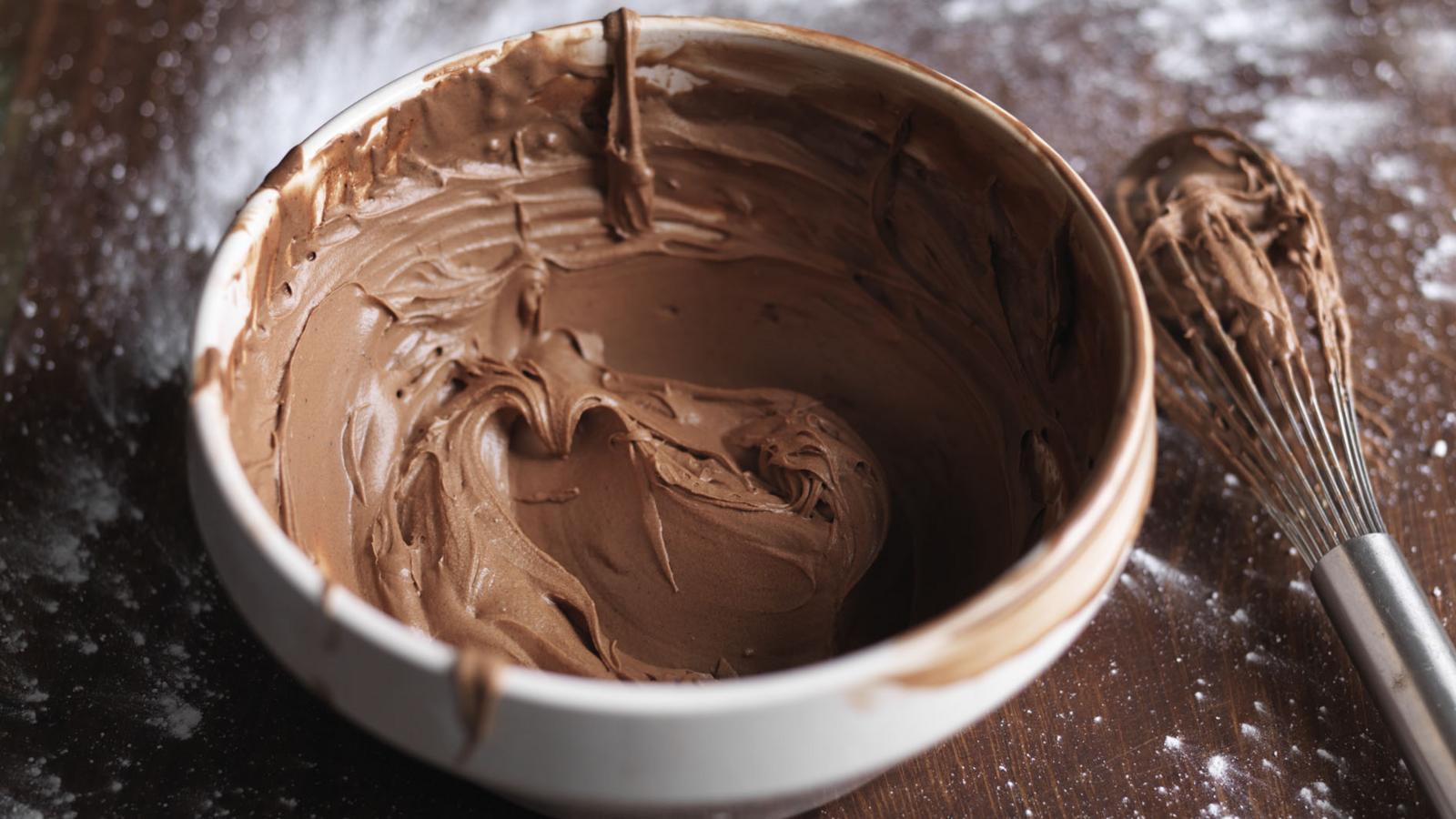
Chocolate ganache makes a super-simple icing for chocolate cakes and looks really impressive. You’ll need to leave it to cool for up to an hour before it’s ready to use. It should be soft, creamy and easily spreadable, but if it’s too soft it will run down the sides of the sponges. It's also crucial the cakes are completely cold before icing, as any residual heat could melt the ganache.
If you don’t have apricot jam, you can use seedless raspberry instead. Or push any raspberry or strawberry jam through a sieve to remove the seeds, adding an extra tablespoon to make up for any loss. The jam isn’t essential to the cake, although it helps balance the flavour of the super-rich chocolate ganache, so feel free to skip it if you prefer.
To make an orange-flavoured chocolate cake, add the finely grated zest of one orange to the cake batter and spread the cake with fine shred marmalade instead of apricot jam.
How to freeze
The sponges for this cake can be frozen ahead if you like. Allow them to cool completely, then place each one on a circle of baking paper and cover with another circle of baking paper – this will help prevent the sponge sticking – before wrapping tightly in two layers of kitchen foil. Label and freeze for up to 1 month.
To thaw, unwrap and place the frozen cakes a wire rack, loosely covered with foil. Leave at room temperature for about an hour before icing.
Related recipes

Try as part of this menu
Spring afternoon tea menu. Menu Spring afternoon tea menu
If there's a special occasion in your springtime calendar, consider creating an afternoon tea spread. These recipes can be made ahead and kept under wraps until you're ready to serve.
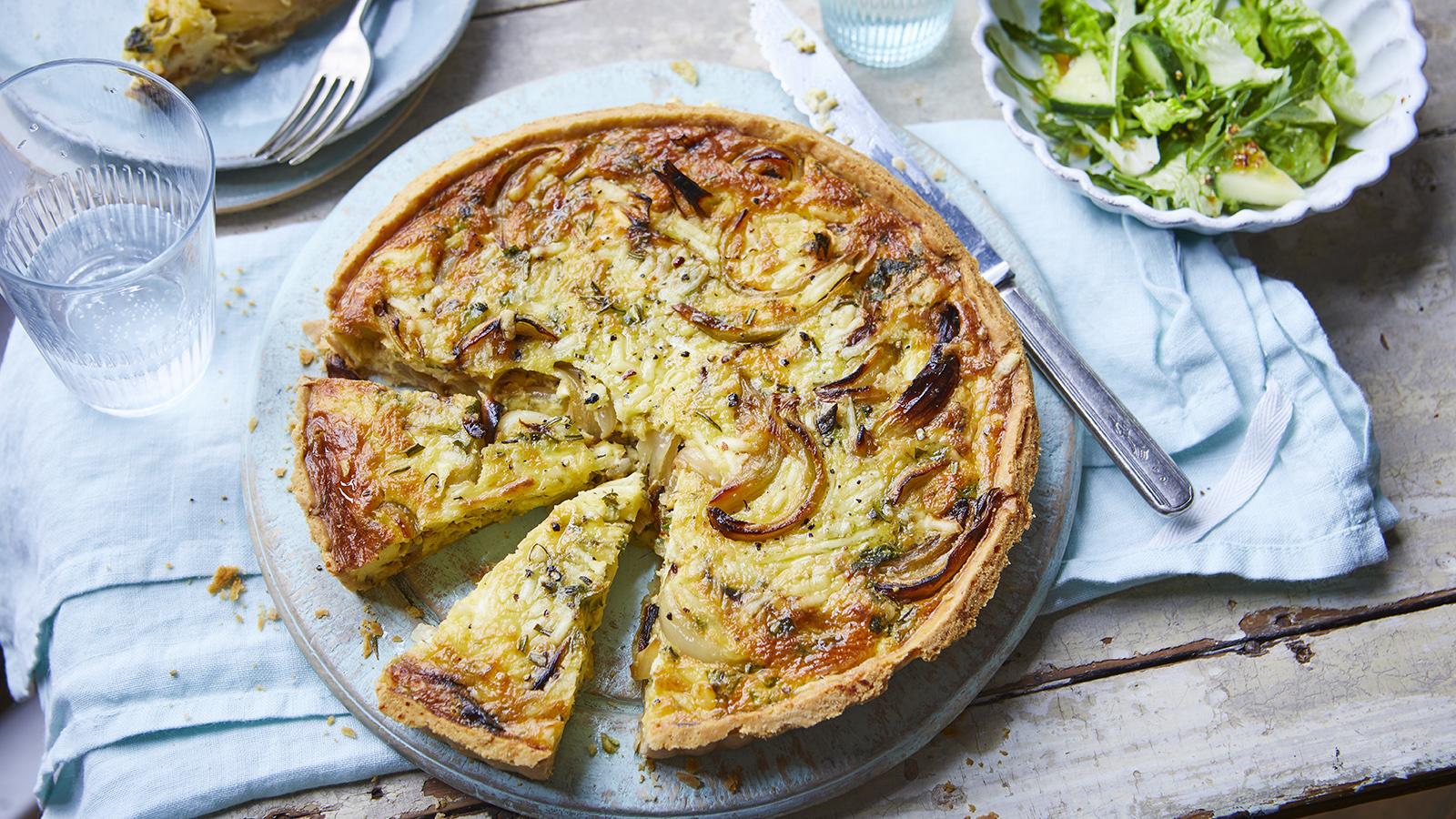
Cheese and onion quiche. By Annie Rigg
Light meals & snacks
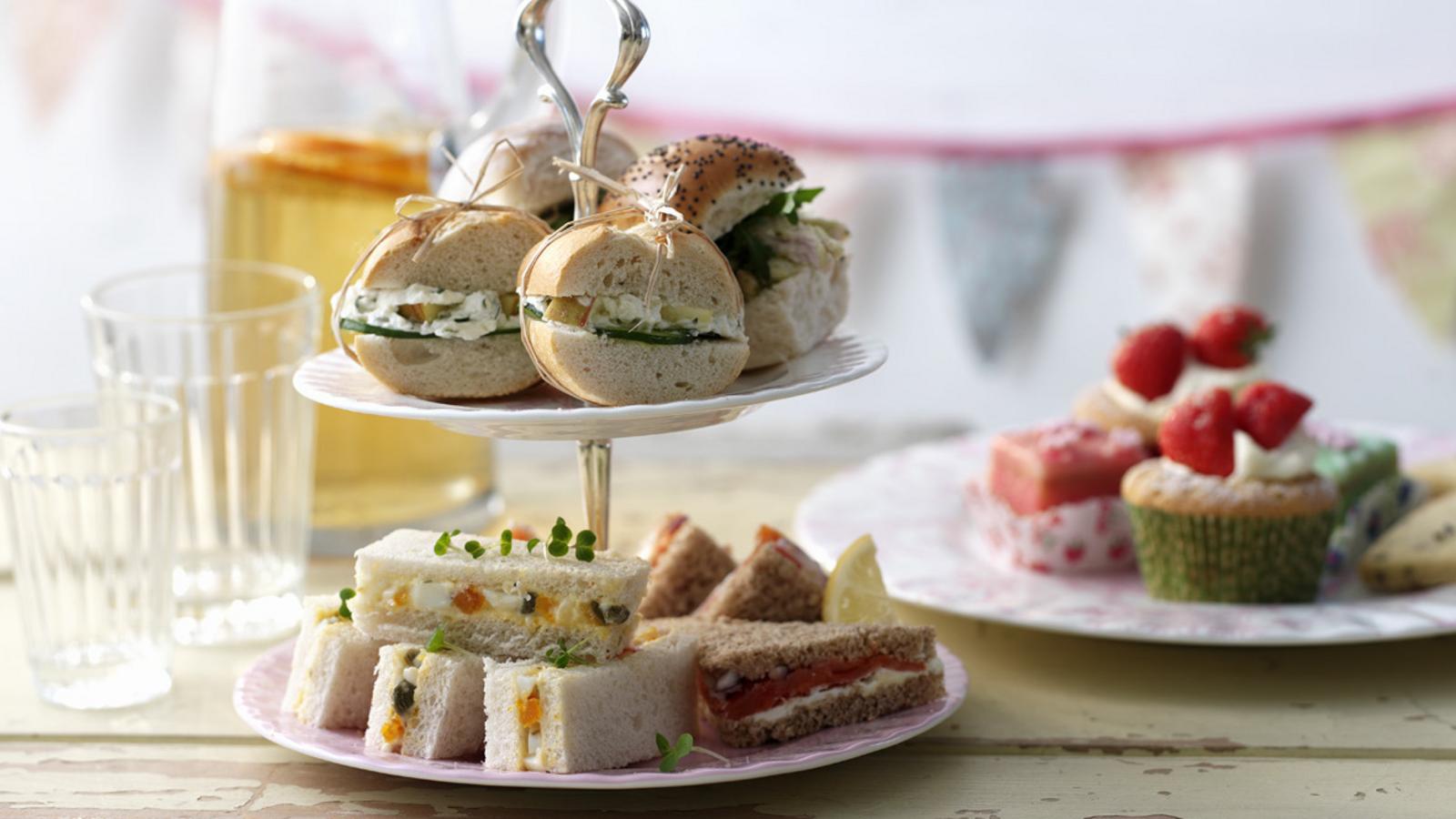
Afternoon tea sandwiches
Light meals & snacks
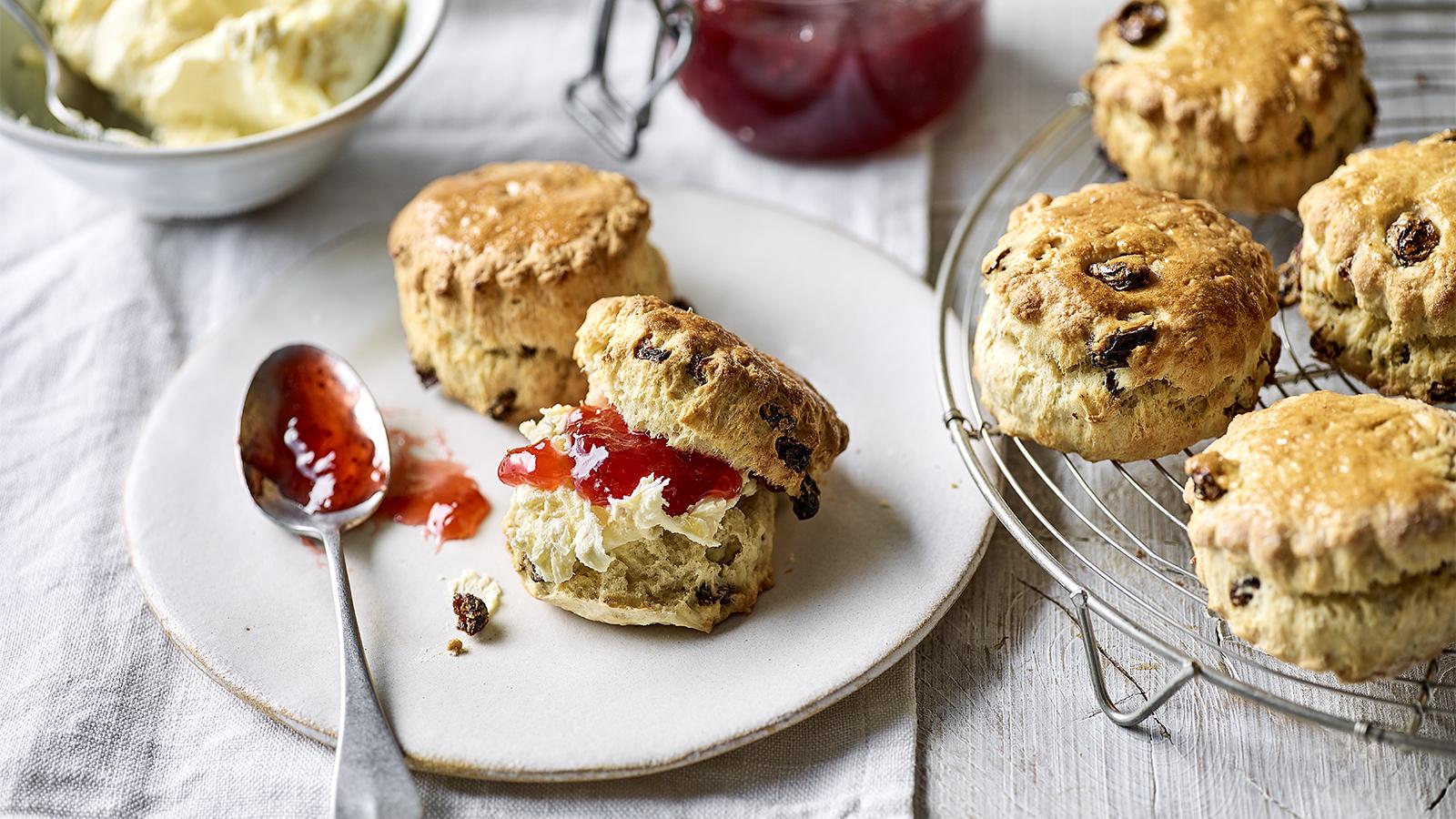
Easy fruit scones. By James Martin
Cakes and baking
Pistachio, lemon and raspberry friands By Liberty Mendez
Cakes and baking