Are these the questions we should ask when buying food?
by Sue Quinn
Many of us check labels to ensure the food we buy is healthy. But how many of us check what we eat is produced in a way that benefits the environment?
Some farming methods actually help reduce carbon emissions, for instance by removing carbon from the atmosphere and improving the quality of the soil. Many smaller-scale farmers use these ‘regenerative farming’ practices, but big food companies are also getting on board. Nestlé has pledged to halve the carbon footprint of its fresh milk supply in the UK by 2025 by helping its dairy farmers adopt regenerative practices. Morrisons has pledged to be the first supermarket to be completely supplied with affordable meat, fruit and vegetables by ‘net zero’ carbon British farms by 2030. Waitrose and M&S have launched programmes to boost their regenerative farming credentials.
So what is ‘regenerative farming’ and how can you tell if the food is produced in this way?
The impact of food on the environment
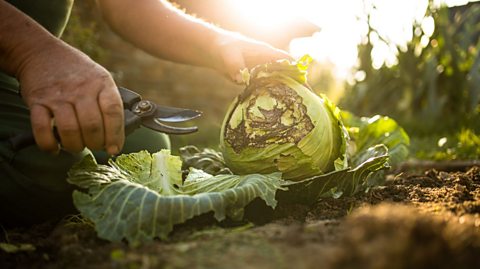
This year the final report of the Government’s National Food Strategy, led by Henry Dimbleby, has been published. It finds that our food supply causes significant environmental harm, including biodiversity loss, deforestation, drought, pollution, erosion, flooding, soil infertility and climate change. Agriculture alone produces 10 percent of the UK’s greenhouse gas emissions.
“The manufacture, production and distribution of food has become an ecological disaster”, the report says. New subsidies proposed by the UK Government would encourage farmers to manage land sustainably and restore biodiversity. But the report finds financial incentives alone will not be enough for the UK Government to fulfil its commitment to achieve net-zero carbon emissions by 2050 and protect 30 percent of land for nature by 2030.
“We will have to produce more food from the remaining [70 percent of] land, without resorting to the kind of intensive farming practices that have already done so much damage”, the report concludes. To achieve this “we will need to draw on diverse methods of agriculture, including regenerative farming practices that work with nature instead of against it”.
How farming can benefit the environment
The term ‘regenerative farming’ generally involves traditional agricultural methods, including zero or minimal use of chemical ‘inputs’ such as fertilisers, herbicides and pesticides – although it has no legal or precise definition. Also known as ‘regen ag’ and agroecology, it goes further than an organic approach because it aims to repair environmental damage.
“It’s based on principles and practices that include increasing biodiversity, building better soils and improving water catchment”, says Ian Wilkinson, founder of FarmED, a not-for-profit food and education centre in the Cotswolds that showcases regenerative farming methods. “The techniques used on every farm and every field are going to be different, but it’s all about rebuilding, and reversing the accumulation of greenhouse gasses and climate change”, he continues.
Questions to ask when buying food

Of the estimated 107,000 farmers in the UK, only just over 4,300 belong to the Landworkers’ Alliance, the Nature Friendly Farming Network or the Pasture-fed Livestock Association, organisations that support regenerative farming. As a result, food grown regeneratively isn’t available everywhere, and is hard to identify because no certification system has been developed (although a number of organisations are working on one.)
Where produce is being sold as ‘sustainable’ or ‘regenerative’, The Sustainable Food Trust recommends asking retailers, including supermarkets, a range of questions before you buy. “Ask them what this means and try to find out where that food has come from”, says The Trust’s Megan Perry. Asking questions about the farming methods used to produce food may not yield the precise answers you want (unless you talk to the farmers). But interest in, and knowledge about, regenerative farming is growing, and shops may be able to investigate and come back to you.
How has produce been grown?

Perry suggests asking “How does the farmer care for the soil and support wildlife?”, and if you feel you can be more specific, “do they use rotations of different crops and livestock rather than monocultures?”
Why? Farmers using a regenerative approach typically avoid or minimise tilling to protect the structure of the soil and its microorganisms. These microorganisms are vital for soil fertility and to protect crops from pests and disease. Good soil structure also helps prevent erosion, flooding and pollution.
Regenerative farmers also typically plant herbal leys, a groundcover of legumes, herbs, wildflowers and grasses. These add nitrogen to the soil (which is vital for plants to grow), encourage wildlife and pollinators, help prevent erosion and flooding, and control weeds. Plants also capture carbon from the atmosphere and transfer it to the soil.
Have pesticides and artificial fertilisers been used?
Perry also suggests asking “Have pesticides or artificial fertilisers been used on fruit or vegetables?”. Regenerative farmers may maximise crop diversity and rotate crops, to reduce the need for chemical inputs and support wildlife. Monocultures (a practice common since the 1960s, where one crop is grown repeatedly on a field) deplete soil’s nutrients and cause a range of environmental problems.
Regenerative farmers may also graze livestock in crop rotation systems for natural fertiliser (artificial fertilisers are responsible for about one percent of all global carbon dioxide emissions) and to encourage plant growth, which pumps more carbon into the soil. Animals may be deployed instead of pesticides to clear fields, and in ‘rewilding’ projects where trees and scrub are allowed to spread over pasture and fields.
Rob Walrond’s family has run Glebe Farm in Somerset for more than 200 years. He suggests finding a fresh produce market or veg box delivery scheme. “If you can’t buy direct from a local producer, and obviously many people can’t, you need to do some research”, he says. “Try to make your supply chain as short as possible.
How has the product been transported?
It’s worth asking “Where has the product come from and can you trace its journey?” How it is transported is important, and food air miles can have 100 times the carbon footprint of miles of transportation by sea. If fruit and vegetables aren’t in season when you buy them, try to find out if they have they been flown in or grown in a hothouse heated by fossil fuels.
Buying meat and animal products
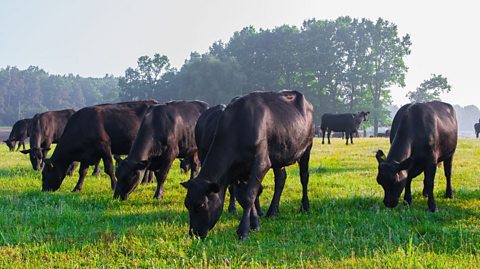
When buying meat, it’s worth asking “what have the animals been fed?”. There are environmental benefits to being pasture-fed, and feeding animals imported grain may be bad for the environment.
Also consider asking if it is a native breed to the UK. Native breeds are more likely to be suited to the local landscape and climate and so may flourish on unimproved ground and display greater resilience to endemic pests and diseases, requiring fewer chemical inputs.
When buying lamb, consider whether you can buy meat from older sheep such as hogget or mutton instead of lamb. One advantage of this is that they will have already been sheared for wool, providing two products.
For meat and dairy, Perry suggests seeking out products that carry The Pasture-Fed Livestock Association’s Pasture for Life label. These are guaranteed to be from animals that have only eaten grass (no grains), and are widely available from butchers’ shops, farmers’ markets or directly from producers through farm shops, online and mail order.
Glen Burrows, from online retailer The Ethical Butcher, visits livestock farmers individually to assess how they’re repairing the environment before he agrees to sell their products. “When we visit the farms we can see and film these methods being used”, he says. “We give full traceability and provenance to everything we sell.” The business sources poultry reared in a rotational ‘grazing’ system, where the birds consume at least 25 percent of their food from the land. In most cases, no soy-based feed (which has been linked to rainforest destruction) is included in their diet.
Burrows recently approved his first supplier through regenagri, a system that measures and monitors regenerative farming practices. “The regenagri standard criteria looks holistically at the entire farming operation, considering the different management strategies and practises used, and assesses the farms regenerative impact”, he says. “Over time we will continue to certify more of our producers in this way.”
Buying flour and grains
Opting for flours made from ancient and heritage grains – including emmer, einkorn, rivet, Khorasan and spelt – instead of high-yielding modern strains, can also benefit the environment. Due to their deep root systems, they can draw moisture and nutrients from far below the soil’s surface, and are more resistant to disease, drought and severe weather. Farmers who use regenerative farming techniques often grow these grains because they don’t require chemical inputs, unlike modern varieties that often depend on fertilisers, herbicides and pesticides to deliver high yields.
A farmer’s perspective
Rob Walrond and his wife Lizzie farm 90 acres of cattle, sheep, pigs and arable land in Somerset, and produce eggs and more than 70 varieties of vegetables. The produce is sold in their farm shop and café, and to local restaurants and shops.
Rob farms organically and embraces other regenerative farming methods. For example, he keeps soil covered with crops as much as possible to protect it from damage and erosion. And he chooses animal breeds and vegetable varieties that originated in Somerset, so they’re suited to the local landscape and climate.
“One of the ways we can make the biggest difference to our health and the environment is to value food more highly… and learn about it”, he says. “For example, eating food that’s seasonal and picked at the right time is healthier, more delicious and better for the planet. And it’s an incredibly joyful thing to enjoy produce when it comes into season, when it’s at its best, instead of eating it all year around.”
A growing movement
Groundswell, an annual regenerative agriculture event held at Lannock Manor Farm in Hertfordshire, was attended by a just few hundred people when it started in 2015. This year, 3,500 people took part including the Secretary of State for Environment, Food and Rural Affairs George Eustice.