Could eating British make our food supply more secure?
by Sue Quinn
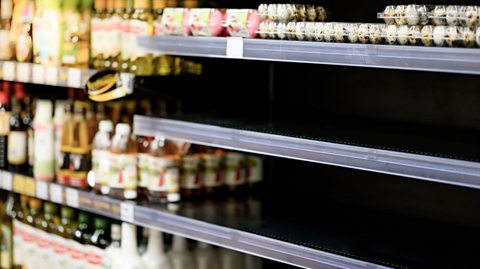
Supermarket warnings of food shortages caused by staff sickness have recently hit the headlines, just a month after concerns about food supplies were raised when borders were temporarily closed in December due to the UK variant of Covid-19. In March 2020, we saw shelves stripped bare of basic items such as flour, eggs and pasta. Not since World War II have food shortages featured so prominently in the news. But could we avoid these worries if we grew and produced more food in the UK?
How much of our food does the UK produce?
The UK produces around 55 percent of the food it consumes (in terms of value), according to the Department for Environment, Food and Rural Affairs (Defra). We import the rest from 160 countries, mainly in the EU (26 percent), but other key sources include Africa, North America, Asia, the rest of Europe and Australasia.
We rely on other countries to fill our fruit bowls and salad drawers. In 2019, around 54 percent of vegetables and 16 percent of fruit supplied in the UK was home grown. Most of the imported veg – notably onions, tomatoes, lettuce, sweet peppers and cucumbers – came from Spain and the Netherlands (a key trading hub). For bananas, the UK looked to Colombia and Costa Rica, for grapes South Africa and Spain, and for apples France, South Africa and New Zealand.
In other parts of our shopping basket, the UK supplied 58 percent of the cheese, 65 percent of the chicken, 86 percent of the beef, and 89 percent of the eggs we eat. In fact, the UK imports more than it exports in every broad food and drink category (for instance, meat, cereals, dairy and eggs, and fish) except beverages, thanks to the global thirst for Scotch whisky.
Why do we choose some imported foods?
We’re used to having access to cheap food and products that don’t grow in our climate, such as avocados and bananas. This partly explains why the UK imports so much, but not entirely.
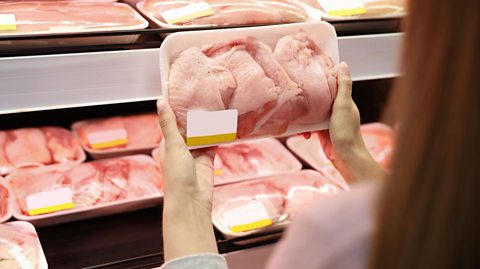
Take chicken, for example. The UK could produce enough to supply its needs, but we Brits prefer breast meat to dark meat, so we import some to satisfy demand. Meanwhile, unwanted dark cuts such as wings, legs and thighs, which make up three-quarters of the bird, are exported.
“We would rather people eat the whole bird, but we can’t change that overnight”, says Shraddha Kaul, Director of External Affairs at the British Poultry Council. But she detects signs Covid-19 might be leading to a subtle shift in attitude. “The pandemic has taught everyone to make the most of what is available, and perhaps we’ll see that with poultry meat.”
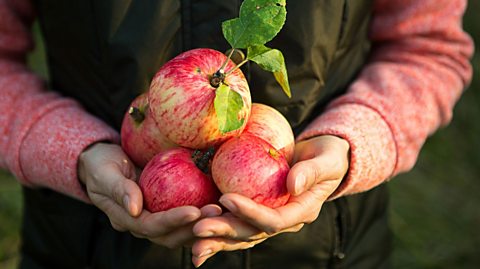
The range of climate conditions across the UK make it ideal for growing apples all year round, yet we import 61 percent of those we eat. According to British Apples and Pears, a trade association, this reliance on imports dates back to 1973 when the UK joined the European Economic Community. Faced with stiff competition from overseas producers in warmer climates growing high-yielding varieties, many British apple orchards went out of production.
Demand for Pink Lady®, a crisp, flavourful Australian variety, has surged and they now account for around 11 percent of apples eaten in the UK thanks in part to a vigorous marketing campaign. But they don’t thrive in our climate, so they’re imported from across the world, including France, South Africa and New Zealand. “The marketing budget that we use for British apples is raised from a levy from the growers and I estimate the Pink Lady® budget is more than double the total British budget”, says Ali Capper, Executive Chair of British Apples & Pears.
Many (but not all) British-grown varieties store well, so consumers could eat local apples year-round, including Gala, Cameo, Red Prince, Magic Star and a new tasty variety called Junami.
Would the food supply be more secure if we grew more?
But would importing less chicken, apples and other foods, and growing or producing more, make our food supplies more secure?
Greater self-sufficiency could help insulate the UK against possible food supply disruptions both here and abroad caused by a number of factors, including drought, flooding and other extreme weather events resulting from climate change, according to Jack Ward, CEO of the British Growers Association. “We know we’re very heavily reliant on imports”, he says.
Ward is conducting an audit of crops grown in the UK to identify ways to improve our self-sufficiency in fruit and veg. “We’re looking for opportunities to grow more of what we need”, he says. “What barriers do we need to shift? And what resources might we need in order to help it along?”
Lower labour costs in Europe mean imported produce is often cheaper than home-grown. And storing more fruit and vegetables, which would be necessary to ensure a good year-round supply, is a cost producers on tight margins can’t necessarily afford.
British farmers and food producers need support to tackle the challenges created by climate change, and other potential risks to supplies, according to Dr Rosalind Sharpe, from the Centre for Food Policy at City, University of London. “A lot of the places we import food from are likely to experience much more climate volatility than we will”, she says. “To that extent it makes sense for us, a temperate country, to conserve and nurture our food production capacity. That’s not only so we can produce food for ourselves, but because we might have to become more of a food exporter.”
Environmentally sustainable farmers and food producers need to be nurtured and valued, and in many instances better paid, she argues. “I think people should support good British farmers and food producers”, she says. “Our food supply wouldn’t be secure without them in an emergency. We need farmers and food growers; we need their skills and knowledge.”
How much of the food we eat should be British?
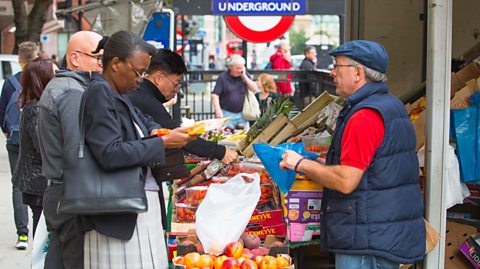
Only eating food grown locally isn’t the best way to secure our food supply either, even if it were possible, says Henry Dimbleby, co-founder of the restaurant chain Leon and head of the government’s National Food Strategy. In his interim report to the government last year, he concluded “some established import routes for food are desirable, and absolute autarky is not”. Is there a percentage of home-grown food the UK should strive for? Or is that kind of target too simplistic for a complex issue? Dimbleby will explore self-sufficiency in his concluding report later this year.
Experts in food security agree the UK will always need to import some food. As highlighted by the pandemic, when domestic supply lines in any country are sorely tested in an emergency they can prove fragile, so it is critical to avoid ‘putting all your eggs in one basket’. And consumers used to eating a wide variety of foods that can’t grow in the British climate aren’t likely to change their shopping and eating habits soon.
But the UK needs some level of self-sufficiency, as a buffer against shortages caused by potential disruptions to food supplies both here and abroad, including industrial reaction, drought, flood, political unrest and war. And for British farmers and food producers to survive, they need the support of British consumers.
Why the UK imports so much food

The UK relies heavily on imported food for complex and interconnected reasons that go back almost 200 years, says Timothy Lang, Professor of Food Policy at City, University of London’s Centre for Food Policy, and author of Feeding Britain. We were almost self-sufficient until the Corn Laws were repealed in 1846. These laws had been introduced partly to protect our agriculture by restricting grain imports. But harvest failures and the Irish potato famine highlighted the risks of relying totally on locally grown staples.
During the two World Wars, self-sufficiency rose again when the Government urged citizens to ‘dig for victory’. But once food became cheaper to import than grow locally, imports rose again and for the past 30 years the proportion of home-grown food to imports consumed in the UK has declined steadily.