What jobs do you do in the newsroom?
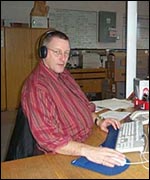
I'm a reporter/producer in the Carlisle newsroom, with a focus on farming issues and life at CUFC.
What’s the most exciting/biggest news story you’ve ever covered?
Foot and mouth has been the most challenging and intense news story of my career – not just journalistically, but as someone with a lot of friends in farming. It’s been a long haul which has moved from an issue of public information to a matter for in-depth investigation…watch this space. That said, the rewards have been immediate. People I’ve never met have hugged me in the street for the work my colleagues have done in helping them through a distressing time. Why do we do this job? THAT’S why….. Perhaps the single story which has brought the most personal satisfaction - in a bizarre way - was the tale of the new landlord of the pub at Slaggyford, a hamlet in the secluded South Tyne Valley. One winter Saturday night, he unveiled the pub’s new skittle alley – the most northerly in its kind in England, he claimed. Thanks to the sense of humour of the locals, this small item of apparently limited interest produced audio which saw it exposed on the airwaves of BBC Radio Cumbria, on most of the local radio network, on 5Live, the World Service and, eventually, on two separate documentaries produced by Kate Adie and Frank Gillard to mark the 30th anniversary of local radio. Result -world listenership of around 60 MILLION for a hamlet with a population of less than 100.
Which famous/well-known people have you spoken to during your career?
I’ve been collecting ministers of agriculture for 16 years, now, and have also interviewed Tony Blair and other senior politicians, leading lights in rugby and cricket, TV personalities, poets and, particularly, naturalists. The job’s brought me into contact with high-profile media celebs like Mark Radcliffe and Jeremy Paxman, as well as personal heroes like Sir David Attenbrough and Denis Norden. But I’ll be honest and say the people I’ve enjoyed meeting most are the no-frills, down-to-earth folk of rural Britain, from Exmoor, wild Wales and, of course, Cumbria. How did you get into radio?
I was approached by a senior figure at BBC Radio Cumbria while working as a sub-editor in local newspapers – had I ever thought of moving into radio, he asked. Eight years later, it’s hard to imagine being anywhere else! Where was your first broadcast?
My first broadcast as such was as a contestant on University Challenge in 1983, but the first one I got paid for was here in Cumbria in 1994. Where else have you worked?
In broadcasting, I’ve worked all over the country during six months as a producer of Radio 4’s Farming Today, and in 1995 I was lucky enough to record two documentaries in Tanzania after winning a travel award from a world development charity – something of a personal hobby-horse. In newspapers, I worked in Cumbria, South Lancashire and Merseyside. What other jobs have you done besides broadcasting?
My first job after leaving school was as an assistant greenkeeper on a golf course – raking 93 bunkers a day for a summer certainly gave me an appetite – then I moved on to work as a public library assistant. I loved it…libraries are wonderful places to work, and a lot of fun. After spells as a builder’s labourer and bar manager, I finally moved into journalism full-time in 1986. Since then it’s been "hack, hack" all the way, save for a few months teaching English as a foreign language to adults in Mexico City. .
How long have you worked at BBC Radio Cumbria and why do you like it?
I like it because the boss tells me to. No, seriously, I find people SO interesting…an old boss of mine once pointed out when we were in a bar full of "ordinary" old men: "Take a good look around, because every one of these people will have done something in their life which you will NEVER do…." That said, I became a journalist because I have a real love of words – a love not always shared by the poor presenters who have to try and read some of my more florid efforts on air! What are your local connections?
Although my family dates back at least 900 years in North Lancashire, there are Cumbrian connections. One ancestor built St Bees lighthouse, another worked below stairs at Lowther Castle, another opened the batting for Cumberland and Westmorland and yet another was master of the otterhounds in South Westmorland a century and a bit ago. And my son, born in Cumbria, refuses to accept that, deep down, he’s really a Lancastrian. Ho hum. What would you be if you weren’t a journalist?
By choice, a professional cricketer – or, more likely these days – rugby union player. The sad reality is I was never good enough to be either. So I suppose I’d be either fifth spear-carrier in grand opera or a log man. What do you do when you’re not broadcasting?
I’m a great one for standing around nattering, but play a bit of tennis, like to cook, and sing very loudly in the car – much to my son’s embarrassment. Philistine. Other interesting information?
Sorry, all the interesting stuff’s NOT for publication. Let’s just leave it by saying I’m probably the only bloke from Lancashire ever to be named after a crown green bowling competition. Nuff said! |