| 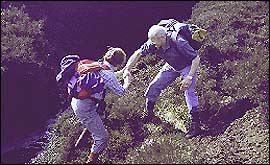 | | On Kinder Scout (photo: Pete Hawkins) |
| | For those who like imposing, rugged landscape there is little to compare to the Dark Peak. |
| | | The Dark Peak lies to the north of the county.
It is an area of stark beauty and a must for any walker who likes a demanding walk.
The moors are the product of man and nature.
The rocks of the Dark Peak are gritstone and shale, acidic rocks laid down in a large river delta that eventually became the Pennines.
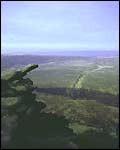 | | The imposing view from Kinder Scout |
Thousands of years of erosion have cut and carved the landscape leaving high vertical cliffs - the famous gritstone edges much loved by rock climbers of all ages and abilities.
The plant life is largely a testament to man's ability to alter a landscape to suit his needs.
The moors should be home to scrub birch woodland and rough grassland but much of the high moors is now dominated by heather, which in turn is food and shelter to the grouse.
Whatever you think of grouse shooting, without it the moors would look very different today.
Ideal conditions for grouse also benefits other ground nesting birds and the plaintive call of the golden plover or the thrilling sound of the curlew give pleasure to many.
Perhaps the most exciting mammal of the high moors, at least one you have a good chance of seeing, is the mountain hare, which is white in winter, and brown in summer.
For the walker, the challenge lies in a walk over the peat that is smeared over the high moors.
Sometimes sodden and cloying, at others dry and crumbling, finding your way across the featureless moors has long demanded confidence and skill.
An ability to read a map and compass can make the difference between a tough but enjoyable walk and a long, demoralising slog.
The moors demand preparation and respect!
 |
| | | |
|
| | Contact Us | BBC Derby
PO Box 104.5
Derby
DE1 3HL
(+44) 01332 361111
derby@bbc.co.uk |
|
|