Kings Lynn to Felixstowe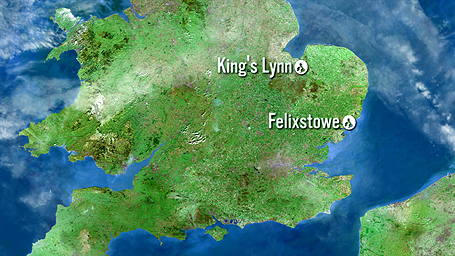
The Coast team journey around the breathtaking shoreline of East Anglia.
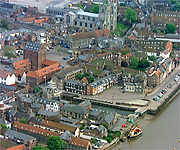 King's Lynn Port King's Lynn Port
In the 12th Century Kings Lynn was a thriving port, with over £6,000 worth of goods passing through.
So important was the port, that the Hanseatic League began operating from here - one of the most important trade organisations at that time.
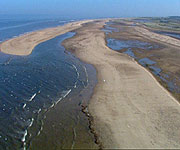 Why is this coastline prone to flooding? Why is this coastline prone to flooding?
The salt marshes and sandy beaches along this stretch of coast are vulnerable to flooding.
In 1953 more that 300 people lost their lives in floods that devastated the area from the Humber Estuary to Deal in Kent. 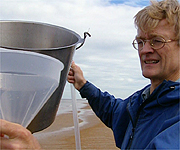 But why is this area susceptible to flooding? In September 2006 Flood Wardens were put on alert. But why is this area susceptible to flooding? In September 2006 Flood Wardens were put on alert.
With the help of tidal expert Philip Woodworth, Nicholas Crane investigates how the combination of weather and tides, expose this area to danger.
Kite Buggying
The idea of Kite Buggying is to use the wind to travel across stretches of sand, gaining speeds of sometimes up to 25mph. Enthusiast Rob Hills shows us how it's done. 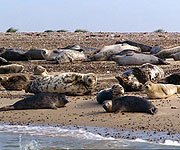 Grey and Common Seals Grey and Common Seals
Long lines of sandy islands and salt marshes are rich with habitats for an abundance of wildlife.
Tim Collins brings Neil Oliver to a stretch of the coast where you often find up to 500 Common and Grey Seals.
Top Secret Military Listening Posts - Y Stations
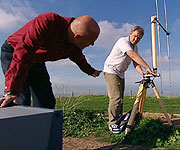 During the Second World War Sheringham Cliffs was the location of a top secret listening post - a Y Station. During the Second World War Sheringham Cliffs was the location of a top secret listening post - a Y Station. Hermione Cockburn uncovers the story of the work that was carried out at these stations and meets up with former Y Station operator, Joy Hale. After the war the stations were deliberately dismantled, so how did they work? With the help of experts Fraser Robertson, Peter Seabrook and Malcolm Howard, Hermione finds out how these radio listening posts helped spy on German forces. 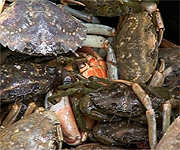 Cromer - Crabbing Competition Cromer - Crabbing Competition
Tony Shipp provides an insight into the annual crabbing competition.
At the end of a competition, the crabs are returned to the sea which means that they can sometimes turn up on more than one occasion. 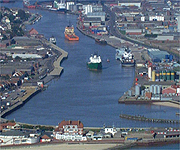 Great Yarmouth Great Yarmouth
Squeezed around the mouth of the river Yar, Yarmouth is famous now as a pleasure playground but it wasn't always for the tourists.
In the early 1900s this port was part of the largest herring fishery in the world...
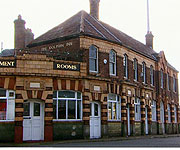 In the programme Sam Smith remembers how this pub was the scene boisterous encounters between the locals and Scottish fishermen who followed the herring down the East Coast. In the programme Sam Smith remembers how this pub was the scene boisterous encounters between the locals and Scottish fishermen who followed the herring down the East Coast.
When the Herring disappeared so did the Scots to be replaced by North Americans looking for oil and gas. These days it is wind turbines that are winding the locals up. Claremont Pier, Lowestoft
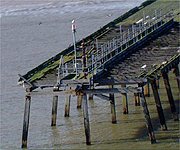 Since the late 1970s, 11 of our seaside piers have demolished. Others like Claremont Pier in Lowestoft, still struggle on. Since the late 1970s, 11 of our seaside piers have demolished. Others like Claremont Pier in Lowestoft, still struggle on. But Mark Horton discovers that the end of the pier has been closed to the public since 1982. In the 50 years between 1860 and 1910, 78 piers were built around the country but today, many of the 54 that still stand are in as bad or worse a condition than Claremont. Southwold
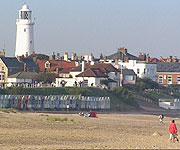 The beautiful town of Southwold inspires amateur artist Alice Roberts to dip into her watercolours. 120 years ago, Southwold was the inspiration for two very different artists. The beautiful town of Southwold inspires amateur artist Alice Roberts to dip into her watercolours. 120 years ago, Southwold was the inspiration for two very different artists. English Impressionist painter Philip Wilson Steer captured the magic and movement of being by the seaside while early photographer, Peter Henry Emerson documented the lives of east-Anglians. Alice investigates their work as she meets Ian Collins author of Making Waves: Artists in Southwold.
'Cobra Mist'
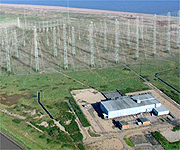 In the cold war year of 1967 the ever-present threat of nuclear war with the Soviet Union loomed large. In the cold war year of 1967 the ever-present threat of nuclear war with the Soviet Union loomed large. This site at Orfordness became home to 'Cobra Mist', an over the horizon radar designed to spy deep into the eastern bloc. Neil Oliver investigations lead to the full glory of this massive radar being recreated using computer generated imagery.
Would you like to know what music was used in this programme?Kings Lynn to Felixstowe: Tuesday 31 July, 8pm on BBC TWO |