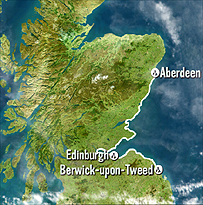
Cardiff to St David's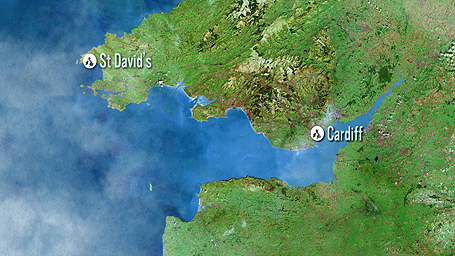
This stretch of coast is rich in industry - both past and present. It has many beautiful and breathtaking sites, with the Gower Peninsula being the first Area of Outstanding Natural Beauty in the UK. Cardiff Bay
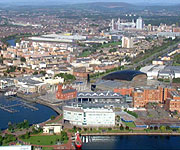 Cardiff has transformed itself. A new marina has remodelled Cardiff Bay's environment. The Bay use to be tidal, but now a £220m barge holds the water in the Bay. Cardiff has transformed itself. A new marina has remodelled Cardiff Bay's environment. The Bay use to be tidal, but now a £220m barge holds the water in the Bay. Neil Oliver meets up with metal sculptor Nia Wyn Jones to find out why people are drawn to the new marina. Barry Island
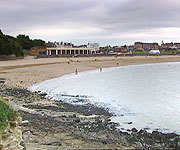 These empty beaches were once filled with holiday makers and day trippers from mining communities. These empty beaches were once filled with holiday makers and day trippers from mining communities. Pits and Sunday Schools would organise annual trips to the beach, with friends and families gathering at meeting places marked by numbers on the wall. Jane Ward shows Neil Oliver holiday snaps from when she came here as a child. Trecco Bay - Billy Miller
The UK's biggest caravan park is in Trecco Bay. Resident, 'Mad Dog' Billy Miller explains the attraction. Porthcawl - Dredging Sandbanks
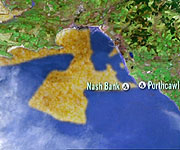 Removing sand from the sea bed is restricted to specific dredging areas. The Nash Bank is 8 miles long and 1 mile wide. Since the 1920's a fifth of this Bank has been consumed. Sand is a finite resource once it's gone, it's gone for good. Removing sand from the sea bed is restricted to specific dredging areas. The Nash Bank is 8 miles long and 1 mile wide. Since the 1920's a fifth of this Bank has been consumed. Sand is a finite resource once it's gone, it's gone for good. Alice Roberts joins Mick Forster aboard the Arco Dart as it dredges sand and gravel from the Nash Bank. Swansea - Copper Capital of the World
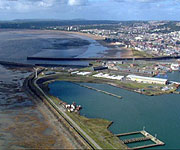 A combination of coal, copper ore and the sea, once made Cardiff the copper capital of the world. A combination of coal, copper ore and the sea, once made Cardiff the copper capital of the world. Mark Horton helps Eddie Daughton rediscover 4000 year old methods of extracting copper. But how did this metal give a tactical advantage to Admiral Nelson at the Battle of Trafalgar? 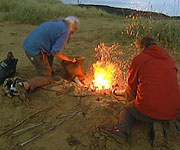 David Jenkins explains why copper bottom ships had improved manoeuvrability that helped Nelson's fleet in their battle with the French. David Jenkins explains why copper bottom ships had improved manoeuvrability that helped Nelson's fleet in their battle with the French.
As local copper ore became exhausted, supplies were brought in from all over the world. Swansea mariners became known as Cape Horner's for braving the seas south of Cape Horn. But eventually the copper communities dwindled as they immigrated to other countries for work. Langland Bay - Seafood Delicacy
The beaches in Langland Bay are home to a seafood delicacy - Lava Bread, made from edible seaweed. Betty Phillips cooks up a dish to help Neil Oliver appreciate this local delicacy. Llanrhidian Marsh - Grazing for Sheep
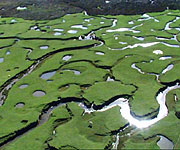 Farmer Rowland Pritchard, grazes his sheep on this salt marsh. Farmer Rowland Pritchard, grazes his sheep on this salt marsh. Depending upon the tide, the sea can come in quickly over the flat marsh area, a great danger for the sheep. Rowland believes it's worth it because the herbs that grow on the Salt Marsh improves the taste of the meat. Pendine Sands - The Fastest Place on Earth
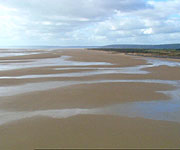 At 7 miles long, Pendine Sands is one of the most impressive beaches in Britain. At 7 miles long, Pendine Sands is one of the most impressive beaches in Britain. Neil Oliver joins Simon Haslett to investigate Pendine's unique qualities. The sand is very fine and flat. Properties which made Pendine a centre for breaking land speed records in the 1920's. John Godfrey Parry Thomas and Malclom Campbell competed against each other to try and beat each others records. 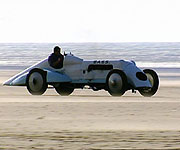 Neil Oliver meets Geraint Owen to find out about how one car, BABS, created history in April 1926 when Parry Thomas set a land speed record of 171mph. Neil Oliver meets Geraint Owen to find out about how one car, BABS, created history in April 1926 when Parry Thomas set a land speed record of 171mph.
But Parry Thomas was killed when he lost control of his car, attempting to improve his record. After the accident the car was buried beneath the Sands. In 1968 the wreckage was excavated by Owen Wyn Owen, who restored it and now occasionally brings it back to Pendine Sands. Caldey Island
To many Caldey Island is a spiritual place. Monks lived here in the 6th Century and now in the 21st Century, Natalie Roberts comes here to recharge her batteries away from her hectic, everyday life. Dolphin Watch
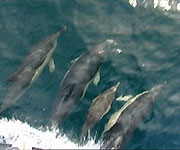 In spring and summer, short beaked common dolphins come to the Welsh coast to raise their young. In spring and summer, short beaked common dolphins come to the Welsh coast to raise their young. Miranda Krestovnikoff joins Cliff Benson and volunteers from the Sea Trust, who survey the number of marine mammals in this area. Whilst out looking for dolphins they come across a sunfish bathing on the surface of the water - one of the biggest boned fish in these waters. Chapel Bay Fort
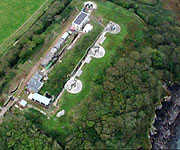 Chapel Bay Fort is a Victorian coastal fort built to protect Milford Haven. Chapel Bay Fort is a Victorian coastal fort built to protect Milford Haven. George Geear bought the fort and he has been restoring it ever since. George takes Neil Oliver on a tour of his handiwork.Neil looks at military technology from nearly 100 years ago including a Depression Range Finder, used to train the forts guns on enemy ships. Milford Haven - Future Gas Port
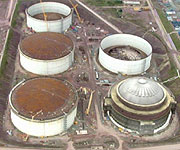 With North Sea Gas supplies running out, Milford Haven is getting ready to become a major site for gas imports. With North Sea Gas supplies running out, Milford Haven is getting ready to become a major site for gas imports. A fifth of the UK's gas will come in here - imported from Qatar in the Gulf. But how are they going to transport it? Nicholas Crane investigates this massive engineering project. 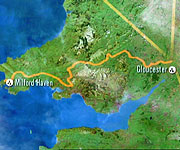 Jo Harris demonstrates why the gas is super-cooled to turn into liquid for transport. Jo Harris demonstrates why the gas is super-cooled to turn into liquid for transport.
Nicholas Crane meets Don Rees who is getting the site ready. Five huge storage tanks have been built to keep the gas chilled. By 2008, 23,000 sections of pipe will have been laid to get the gas to us. Listening to wildlife on the coast
For the last thirty years Tony Pearce has been coming to the coast to listen to the wildlife. He talks about the sounds he's recorded. Coasteering
 Coasteering is a way of getting around the shore any way you can - from scrabbling over rocks to swimming deep gullies. Coasteering is a way of getting around the shore any way you can - from scrabbling over rocks to swimming deep gullies. St David's
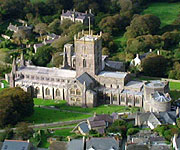
With a population of around 2,000 people, St David's is Wales's largest cathedral set in Britain's smallest city. Would you like to find out what music was used in this programme?
Cardiff to St David's: Sunday 24 June, 8pm on BBC TWO |