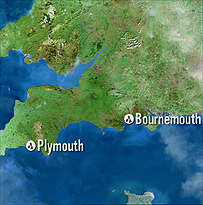
Shetland to Orkney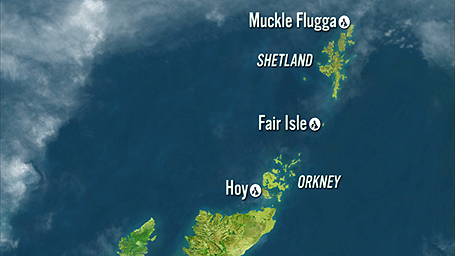
Over 230 islands make up the Northern Isles - The Shetland and Orkney. These magnificent islands are made up of rock stacks, secret inlets and spectacular scenery, surrounded by sometimes extreme sea and weather conditions that have shaped these islands.
Hydrogen car
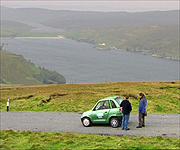 Neil Oliver starts his journey on Unst the most northerly inhabited island in the British Isles. He catches a lift in a hydrogen powered car - the brain child of Ross Gazey. Neil Oliver starts his journey on Unst the most northerly inhabited island in the British Isles. He catches a lift in a hydrogen powered car - the brain child of Ross Gazey. With a top speed of 45pmh, it is powered using electrical power from wind turbines and tap water, but instead of harmful emissions only water comes out of the exhaust. Baltasound - Herring station
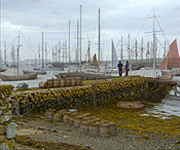 Baltasound was once a thriving town. More than sixteen thousand worked here for the herring season - the majority being women. Baltasound was once a thriving town. More than sixteen thousand worked here for the herring season - the majority being women. In 1905, a quarter of a million barrels of herring were dispatched, but come the 30's bigger, faster, ships bypassed Baltasound signalling an end to the boom times. Neil Oliver joins Ian Napier to find out about the herring fleets. Sandwick Bay - The Pictish Princess
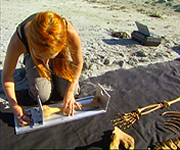 Coastal erosion in Sandwick Bay on Unst has revealed the foundations of a 2,000 year old settlement, and a perfectly preserved skeleton. Coastal erosion in Sandwick Bay on Unst has revealed the foundations of a 2,000 year old settlement, and a perfectly preserved skeleton. Islanders have been working with archaeologist Olivia Lelong to find out what life was like for this ancient community. The Picts lived in Northern Scotland around 1800 years ago -the skeletons bones have been carbon dated as 1800 years old. Alice Roberts examines the skeleton - known to locals as the Pictish Princess, and makes a discovery about this ancient Shetlander. Boulder beaches and tsunamis
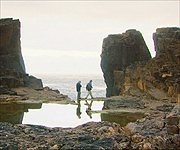 The North West mainland is in the firing line of severe weather and sea conditions. But how has this reshaped this part of the coast? The North West mainland is in the firing line of severe weather and sea conditions. But how has this reshaped this part of the coast? Nicholas Crane joins local geologist Allen Fraser at the 'Grind o' Da Navir' where gigantic storm waves have hewn a spectacular amphitheatre out of the clifftop and created extensive boulder beaches at Eshaness. 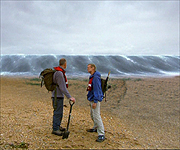 Further inland on the peat banks of Sullom Voe, geomorphologist Adrian Hall shows Nicholas Crane evidence of Shetland's environmental history. Deep within the peat bed is an unusual thick layer of sand and gravel, and locked within it are lumps of peat. What could have ripped up this peat bed and deposited marine sand in an area originally 20 metres above sea level? Further inland on the peat banks of Sullom Voe, geomorphologist Adrian Hall shows Nicholas Crane evidence of Shetland's environmental history. Deep within the peat bed is an unusual thick layer of sand and gravel, and locked within it are lumps of peat. What could have ripped up this peat bed and deposited marine sand in an area originally 20 metres above sea level?
A tsunami - 7000 years ago a gigantic underwater avalanche on the continental slope of Norway generated waves which devastated Shetland and reached as far south as the English Border. Scalloway - Shetland bus
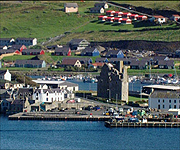 During World War Two, the North Sea provided a life line to Norwegian resistance fighters. During World War Two, the North Sea provided a life line to Norwegian resistance fighters. Scalloway became the base for a secret operation - the Shetland Bus. The Shetland Bus was in fact a fleet of small fishing boats operated by men who sacrificed everything to smuggle people out and agents in to Nazi occupied Norway. 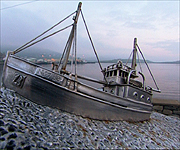 Neil Oliver meets Karen Anderson, whose father was a Norwegian sailor who escaped from Norway in 1941. The men who ventured across the North Sea became heroes and their bravery was celebrated in the 1954 Norwegian feature film Shetlandsgjengen (The Shetland Gang). Garths Ness - Braer disaster
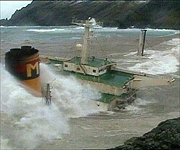 On 5th Jan 1993 an oil tanker broke down 10 miles of the coast of Sumburgh Head. Winds drove it ashore and after six hours she ran aground spewing out 84,000 tonnes of toxic crude oil into the sea. On 5th Jan 1993 an oil tanker broke down 10 miles of the coast of Sumburgh Head. Winds drove it ashore and after six hours she ran aground spewing out 84,000 tonnes of toxic crude oil into the sea. A month long storm hampered the clear up campaign. But the brutality of the waves worked in the island's favour, breaking up the oil and dispersing it out to sea. 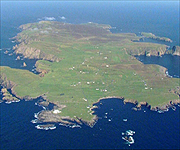 Fair Isle Fair Isle
Home to fewer than 80 people, Fair Isle is three miles long and a mile and a half wide - you're only ever three quarters of a mile from the sea here!
Dave Wheeler, a weather observer on the island for the last 35 years, provides an insight into his job.
Papa Westray - Shortest flight
People from all over world come here to fly less than two miles from Papa Westray to Westray, one of Orkney's more prosperous islands. It takes a few minutes, but has been done in a record breaking 69 seconds. Kirkwall - Charting our coastal waters
260 years ago trade dominated these waters and no accurate sea charts were available making navigation a nightmare. 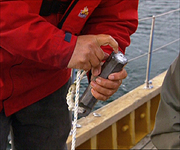 But how did a local school master, Murdoch Mackenzie, make navigating these waters safer? But how did a local school master, Murdoch Mackenzie, make navigating these waters safer?
Traders and merchants financed him to chart Orkney's coast. In 1705 he created the Foley of Charts, using symbols to indicate the bottom of the sea and direction of the tides. Mark Horton joins sailor Sandy Firth, and carries out some of the methods used by Mackenzie to survey the sea. His methods revolutionised maps making around the world and his symbols are still used on charts now. But how have things changed in the 21st Century? 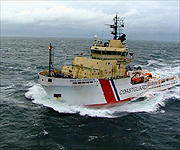 Today, a state of the art survey ship measures depth acoustically. Every second it sends pings of sound out into the water underneath the ship, listening for their return. The quicker the echo the shallower it is. Today, a state of the art survey ship measures depth acoustically. Every second it sends pings of sound out into the water underneath the ship, listening for their return. The quicker the echo the shallower it is.
Mark goes onboard a survey ship with Rob Spillard to investigate claims of incorrectly charted information which has caused an accident. Bay of Skaill - Village of Skara Brae
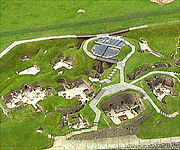 People have been living here since Neolithic times. These stone dwellings were occupied continuously for 6,000 years. The houses were dug into the landscape - builders knew how to get the most out of their materials, shaping the buildings like an igloo. But why it was abandoned is one of the mysteries of Skara Brae. People have been living here since Neolithic times. These stone dwellings were occupied continuously for 6,000 years. The houses were dug into the landscape - builders knew how to get the most out of their materials, shaping the buildings like an igloo. But why it was abandoned is one of the mysteries of Skara Brae. Inga Ness - The elusive octopus
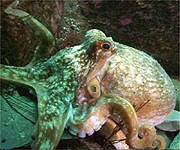 Orkney is a great place to find octopus as the seas are full of its favourite food - lobsters. Orkney is a great place to find octopus as the seas are full of its favourite food - lobsters. But this doesn't help local lobster fishermen. Octopus are getting into their lobster pots and feasting on their catch. The octopus' only bone like structure is its beak, so it can sneak its way into a lobster pot and inject venom to paralyse its victim. 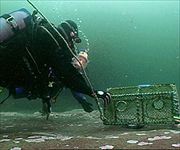 Difficult to spot, octopus can change colour and texture in a matter of seconds to suit their environment - making them a master of disguise. Difficult to spot, octopus can change colour and texture in a matter of seconds to suit their environment - making them a master of disguise.
Miranda Krestovnikoff joins Marine Biologist, Daniel Wise, and dives in Inga Ness to see if they can find the elusive octopus. Billia Croo - Wave energy
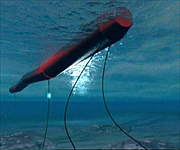 At Billia Croo they are testing new wave and tidal energy systems. Here, there is potential for a substantial supply of green energy by exploiting the energy from the sea. At Billia Croo they are testing new wave and tidal energy systems. Here, there is potential for a substantial supply of green energy by exploiting the energy from the sea. Neil Oliver joins Barry Johnston and looks at one design of wave energy - Pelamis. A long, cylindrical structure with hinge joints. Inside the hinged joints are oil filled pumps, as each wave passes, it forces oil through motors which drive generators, to produce power. Pelamis is now the prototype for four new machines to be deployed next year. Old Man of Hoy
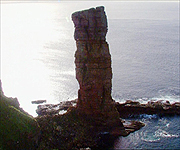 This 450ft tall sea stack use to be attached to the headland but elements slowly eroded the red sandstone to create this pinnacle. This 450ft tall sea stack use to be attached to the headland but elements slowly eroded the red sandstone to create this pinnacle. Neil Oliver joins climbers Andy Cave and Simon Nadin who tackle this landmark. But what makes this stack the one every climber wants to bag?
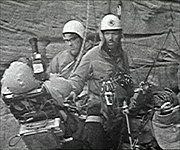 The Old Man of Hoy was first conquered in 1966 by Chris Bonington, Tom Patey and Rusty Baillie. The Old Man of Hoy was first conquered in 1966 by Chris Bonington, Tom Patey and Rusty Baillie.
It was so successful that it was recreated for the BBC in 1967 - the first live programme of its kind. Over 20 million viewers tuned in over three days to watch the climb.
Would you like to find out what music was used in this programme?
Shetland to Orkney: Sunday 3 June, 8pm on BBC TWO |