
I had the pleasure of participating in the BBC Writersroom's inaugural River City writers' residential. For those who don’t know River City, it’s BBC Scotland’s flagship continuing drama. It’s a bit of an anomaly in that it’s a community drama in the vein of familiar continuing dramas like Eastenders or Pobol y Cwm but it is an hour long like the BBC’s other ‘precinct’ based dramas like Casualty and Holby City. It’s a big, bold and brassy show that has viewers hooked north of the border every Tuesday at 8pm, and its unique format makes it a milestone challenge for lots of TV writers.
I know a lot about the show because I lived in its fictional Shieldinch community as a regular character (Leyla Brodie) for 3 and half years, fighting through the full gauntlet of missing children, illicit affairs, alcoholism and hairspray (so much hairspray). It was a pretty monumental stage in my acting career, taking me from the world of collaborative theatre making to the fast paced production run of 52 hours of storytelling a year.

I got to witness first hand the absolute necessity for excellence. I mean it’s one of the old tropes of the industry to diminish the work of people who work in soap land, but you soon realise as budgets are pinched and the demand for massive output continues the talent needed to deliver 14 pages of story each shooting day is a pre-requisite. Hard-work, skill and a love for the show keep fuelling River City and it keeps getting better and better (especially after I left, no connection, honest).
The evolution in my practice as primarily an actor who occasionally made plays into a writer driven to develop work for screen was sparked by the inspirational team of story liners, writers, script editors, story producers and episode producers that collaborate to bring each hour of storytelling to bear. Witnessing that intricate web of specialised roles in that hot house environment has helped me realise how my previously theatre focussed skills intuitively translated to storytelling on screen.
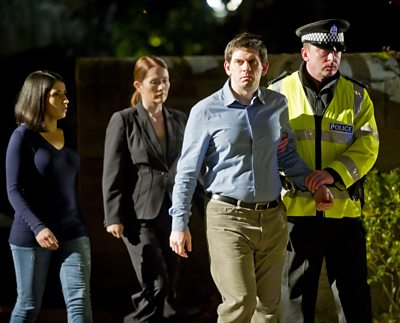
Last week’s residential was suitably fast-paced and intensive and gave us the visceral sensation of writing story and script with no grace cogitation stage and deadlines looming like the titanic. It was the brainchild of former River City writer and now producer Martin McCardie and has helped a dozen or so writers confront whether they can or want to write for River City.
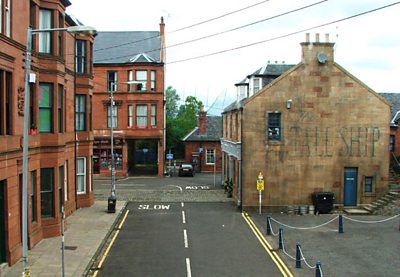
Day one started with a tour around the full sized backlot and interior studio, during which I was trying to push ‘As if we never said goodbye’ from Sunset Boulevard out of my head. For me the geography of Montego Street is seared into my inner compass, but for everyone new to the set it was an insight into the complexity of plotting the who and where of any episode of the show.
Days two and three were a fast paced mixture of speaker-led sessions, writing exercises and round table peer review led by the shows' script editors. Our first brutal exercise for homework was storylining a ‘B’ story strand based on a basic story treatment. When we later got to see a real story doc there was relief all round that the story team usually deliver a lot of the narrative beats for you, although they are open to each writers' take on them. We also experimented with medium, writing the same scene between iconic characters Wee Bob and Lenny Murdoch as a piece of theatre and then as a scene for TV. We then had the pant-soiling surprise that four of those scenes would be randomly selected and performed script-in-hand by the actors who play those characters in the show. It was a pretty telling exercise in how dialogue is exposed or elevated by actors and how fundamentally all continuing drama story needs to be rooted in the truth of the character.
(At the River City Residential Stephen Purdon (Bob Adams) and Frank Gallagher (Lenny Murdoch) acting out the writers' scenes)
As a new writer for TV, I’m pretty keen to write for continuing drama and you should be too. As we see the evolution in our TV landscape with both Netflix and Amazon scouting for TV writing talent in the UK it becomes even more pertinent to understand how vital the continuing drama system is not just to audience satisfaction (through the roof by the way) BUT to writer development. One-off or returning series in the UK are commonly auteur led and for short series runs (3 or 6 episodes at the BBC). Continuing drama runs with elements of a writers' room: collaborative, co-operative and, I guess I mentioned, continuous! It’s that pace, that contemporary talent pushing forward to deliver well-loved characters and brilliant, satisfying storytelling every day that pushes you to keep being better.
As an actor I know earning my River City stripes, contrary to soap naysayers, has made me a better artist, rooted in instinct, brave and collaborative. I know that refining my writing through the eye of the continuing drama needle will do the same.
More about the River City residential from Stef Smith
Find out what's happening at BBC Writersroom Scotland
Visit the River City website and watch the latest episodes on BBC iPlayer
