
If you caught the opening night of the BBC Proms 2014, you would have heard our wonderful BBC National Chorus of Wales performing alongside our BBC Symphony Orchestra colleagues in Elgar’s oratorio ‘The Kingdom’. This week, you will have the opportunity to hear the Chorus in concert with us at St David’s Hall, Cardiff, as we perform what is perhaps Elgar’s greatest oratorio, The Dream of Gerontius.
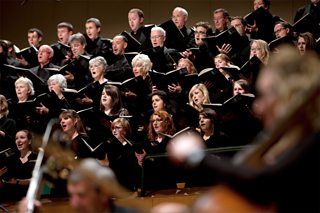
BBC National Chorus of Wales. Photograph © Betina Skovbro
The Dream of Gerontius was composed by Elgar in 1900, just one year after the Enigma Variations (if you don’t know the Enigma Variations, you’ll recognise the Nimrod theme!). The oratorio was a form that Elgar returned to several times over his career (his first was the Light of Life in 1896, then after Gerontius came The Apostles in 1903, and The Kingdom in 1906), but what exactly is an oratorio?
An oratorio is a large scale work normally requiring a large symphonic orchestra, a chorus, and soloists. The work will normally have strong narrative arc, but unlike an opera, it is generally performed without costumes, scenery, or stage direction. Until the mid-seventeenth century, the oratorio was almost exclusively sacred in subject matter, although they became increasingly secular in later times – although not exclusively, as in the case of The Dream of Gerontiusand Elgar’s other oratorios.
The text for Gerontius comes from a poem by Cardinal John Newman. The libretto is highly romantic in language, indeed, may I suggest, a touch gothic in its depiction of a soul’s journey from death to purgatory. This high drama is depicted with great musical indulgence by Elgar; when listening to this work, I always try to bear in mind how progressive Elgar’s harmonies must have sounded to listeners in Victorian England.
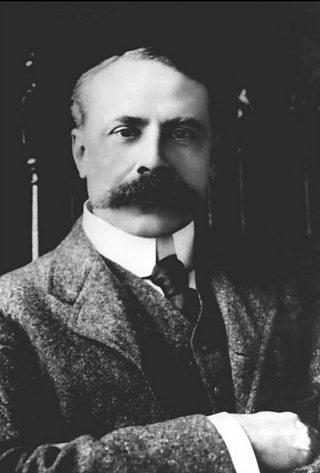
Edward Elgar (1857-1934)
The work was premiered at the Birmingham Music Festival in 1900 and received a rather tepid response (perhaps the audience chairs were not particularly comfy - I always think an Elgar oratorio requires a comfortable chair). However, I doubt greatly that this was simply down to the rather progressive (for the time) nature of the music.
Whilst Elgar was for the majority of his life a rather noncommittal Roman Catholic, the libretto of Gerontius is steeped in high Catholic theology and ideology. Victorian England was dominated by the Church of England, with the popularity of other Protestant denominations on the rise. Thus, to many, the subject matter of Gerontius, and therefore the work as a whole, must have seemed, at best, exotic, at worst, outdated and incomprehensible. This is a shame because it’s pretty epic stuff.
The Chorus plays several roles within the work - friends of the dying man, angelic assistants, a chorus of demons, souls in purgatory - and really does get some of the greatest moments! The role of Gerontius is sung by a tenor voice, the role of the Priest by a bass, and the Angel by a mezzo soprano.
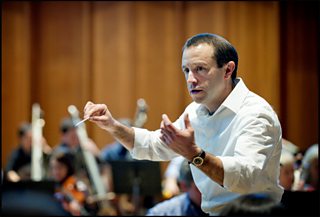
Mark Wigglesworth, the conductor for Friday's performance of The Dream of Gerontius. Photograph © Sim Canetty-Clarke
The orchestral music is quite a play (it feels like the violas play without stopping for the entirety of the work - a good dinner will be required beforehand). To me, the Orchestra’s role is like that of a narrator. In the Prelude to Part One and the Prelude to Part Two, the orchestra sets the tone for what is to come, and introduces various ideas that will be musically explored and developed later. In the absence of set and scenery, the orchestral accompaniment provides both these things throughout.
I make no secret of the fact that I can neither relate to, nor bring myself to like the Elgar of the Pomp and Circumstance Marches, but the Elgar of the two symphonies, of the tone poems, etc. - that Elgar I love. Gerontius is a wonderful example of Elgar’s symphonic writing, with the excitement of a massive choir added. It is quite a spectacle to see and hear, at times overwhelming in its intensity, at times deeply touching. I hope you can join us on Gerontius’ journey to experience it for yourself.
BBC National Orchestra and Chorus of Wales perform Elgar’s The Dream of Gerontius at St David’s Hall, Cardiff, on Friday 7 November, 7.30pm. For more information on the performance, visit the Orchestra’s website. The concert will also be broadcast live on BBC Radio 3.
