
Crime writers who turn detective always do well on TV - particularly in the US. But in real life, of course...
Well, actually, in real life it happens, too.
Take Robert Lewis, writer of three painfully funny novels about south Wales private eye Robin Llewellyn who is not only alcoholic but terminally ill. Llewellyn's last case, Bank of the Black Sheep, begins in a hospice, and although he actually survives that one, it’s clear his career is not going anywhere.
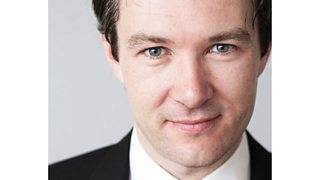
Rob Lewis. Photo by Johnny Ring, provided by Simon & Schuster
When we discussed the novel on Phil the Shelf a couple of years ago, I asked Robert Lewis how he was going to follow it, and he revealed he was switching to non-fiction to investigate the death of biological weapons inspector Dr David Kelly.
Kelly, born in Pontypridd, was found dead on the ominously-named Harrowdown Hill near his home in Oxfordshire, soon after his grilling by a parliamentary foreign affairs select committee. He'd been accused of tipping off the media that a report about possession of weapons of mass destruction by Iraqi leader Saddam Hussein had been 'sexed-up' to help Tony Blair go to war.
The verdict was suicide but, like many people, Robert Lewis was convinced the government inspector had been murdered.
He was back on the Shelf this week to talk about the resulting book, Dark Actors, The Life and Death of Dr David Kelly, and explain why he changed his mind.
Actually, when you read in Dark Actors about the untraceable toxins being developed in South Africa, you realise that murder can't be ruled out entirely.
And, though it's unlikely, there are still mysteries to be solved about David Kelly and the circumstances of his death. What must it have been like to be investigated by the security services to whom he'd so recently been a valued aide... and to know that certain doors had been shut against him, for ever?
You might have seen some major reviews of Dark Actors in the papers. The two I read were by journalists with a background in news, both a touch sniffy about a case this big being opened by a mere crime writer.
However, Robert Lewis' book - smoothly-written, with a feel for atmosphere and an ear for echoes - reveals a massive amount of research, particularly into the recent history of germ warfare. And it shows how much, even 10 years later, the Kelly case is still tented in secrecy - were the pegs hammered in even around Pontypridd, a place not not widely known for being tight-lipped?
It's all very redolent of the world of John le Carré whose latest novel, A Delicate Truth, is discussed on Phil the Shelf.
We also talk to Chris Morgan Jones, author of novels dealing with international financial espionage, and to Dame Stella Rimington, former head of MI5 and now writing thrillers based on her experiences. Based indirectly, of course. Dame Stella has to show all her manuscripts to the guys at MI5, just in case she's said too much.
You can never be too careful with spooks - very easily offended. But the Secret World is a seductive place, so don't be too surprised to find future novels by Robert Lewis set against a more politically-cloistered background. You read it here first.
The new series of Phil the Shelf returned to BBC Radio Wales this week - catch up with the first episode on BBC iPlayer.
