
I’ve carried a donor card since my early teens. My mum shared her birthday with a school friend called Julie; sadly Julie had kidney failure and passed away when she was 10. Mum has often talked about her since and says it was this that prompted her to speak to me about organ donation all those years ago.
When the law changed last year in Wales I was intrigued to see how ‘presumed consent’ would work. By being given a three-part observational documentary series to make on the subject, I’d be able to find out first hand, predominantly working with the Organ Donation and Transplant Teams at the University Hospital of Wales.
Showing Both Sides of an Important Story
The ultimate aim was to show both sides of the story – those waiting for transplants and also those families making the heart-breaking, difficult and incredibly brave decisions to donate their loved ones’ organs on the Intensive Care Unit.
Finding the transplant patients was relatively straightforward. Many of them were already busy publicising the law change hoping that it would mean they may get their life-changing transplants sooner. Initially I met 32-year old Kimberly, who had cystic fibrosis; she was desperately ill and waiting for a double lung transplant.
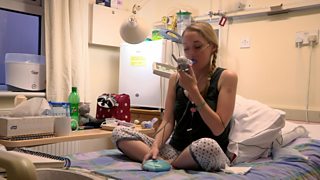
When they agreed that I could follow their stories, it soon became obvious that like them, I would also have to wait for ‘the call’ to come. We set up a system to ensure that if their transplant call came, then I would also get a call. In total I spent around six months being on standby. I don’t like to compare this at all to what it’s like to wait for a transplant but, I suppose I had a tiny taste of what it’s like to constantly wait for the phone to ring.
Being On Call
I found it quite tough. I’m a mum of busy seven-year old twin girls - our weeks and weekends are always full and it was hard not to be able to fully switch off and be present with them. I became paranoid about my phone being on, with the battery fully charged and at exactly the right volume to wake me up during the night if needed. I tried to give myself alternative weekends off and plan trips to places where I could switch off as I wouldn’t be able to get back to Cardiff in time easily and my phone would naturally be out of range.
Sadly, people waiting for transplants can’t put any of these coping mechanisms in place. On top of all the waiting they are really unwell with failing organs, tied to dialysis machines, enduring endless treatment and medication rituals. Spending time with these patients and their families was a privilege. For many of them, their sense of humour helps and also the hope that they all have that their call will eventually come.
I knew that the hardest thing would be to gain access to follow donor families on Intensive Care. However, remarkably, very soon after the law had changed the first family agreed. Karen was approached by the medical staff and said that I could film her 67-year old dad, Bill’s, organ donation. Bill had suffered a devastating stroke and Karen explained how his brother who was also Bill’s best friend had received a kidney transplant which transformed his life. As a result of this, Bill had recently opted in to the new system in Wales. It was extremely difficult to remain composed as the family said their final goodbyes to him.
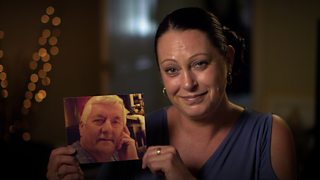
Two more families also agreed that I could follow their loved ones’ organ donations. So across the three episodes we learn not just that Bill saved two people with the gift of his kidneys, but also that 41-year old Steven saved three people with his kidneys and liver as did 60-year old Stuart. I will always remain humbled that their loved ones - Karen, Vicky and Angie were so open with me at the most difficult time in their lives.
“Someone’s generous gift can transform another’s life”
What was also incredible for me was seeing first-hand how someone’s generous gift can transform another’s life. I filmed with 32-year old Kimberly in Harefield Hospital just two weeks after her lung transplant. In front of me was a very different person, who needed no assistance with oxygen. Kimberly’s cystic fibrosis meant that the best her lung capacity has ever been was 30%. I had to choke back happy tears when she underwent a test which revealed that with her new lungs, just two weeks post-transplant, she now had a capacity of almost 70%!
It’s been an extremely emotional series to make; I’ve cried so many happy and sad tears whilst making it. Some while I’ve been with the patients, many sat in edit suites and lots privately. When people let you in to their lives at difficult times it’s quite overwhelming and impossible to not become emotionally attached. Apart from my daughters, the series is the proudest I’ve been of anything I’ve made. I hope that it’ll make people think about organ donation and share their wishes about it with their families whatever they are. My girls already know all about Kimberly, Anwar, Jade, Robin and Kim and I’m sure their grandmother will tell them all about her friend Julie when the time comes.
The third episode of The Greatest Gift airs on Tuesday, 20th December at 10.40pm, BBC One Wales. Episodes 1 and 2 are available on BBC iPlayer now.
