
Few people in Wales will have ever heard of Morgan Jones. Yet in the late nineteenth century, this farmer's son from Tregynon near Newtown in Powys became a major hero in the State of Texas and built many of the railways - railroads as the Americans called them - that opened up in the arid deserts of the southern states. He was a self-made man with a dream and the drive to make it come true.
Morgan Jones was born on 7 October 1839, the son of farmers Morgan and Mary Jones. From an early age, however, it was clear that farming was not for him. Coming into the world at the beginning of the railway age, he quickly became fascinated by the iron rails that, in the 1830s and 1840s, were rapidly spreading across Britain.
Morgan left home at the age of twelve and took up an engineering apprenticeship with Cambrian Railway, then one of the largest railway companies in Wales. On completion of this apprenticeship, in 1866 he decided that the opportunities for an ambitious young man were bigger and better in America and so he sailed for the USA.
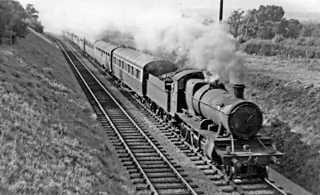
The Cambrian Railway line near Newtown, Powys
Cambrian Railway image © Copyright Ben Brooksbank and licensed for reuse under this Creative Commons Licence.
On arrival in America, Morgan Jones presented his credentials to Grenville Dodge of the Union Pacific Railway and so impressed the company's chief engineer that he was immediately made foreman of a construction crew. They and Morgan were soon involved in extending the Union Pacific Line to meet that of the Central Pacific and so create the country's first transcontinental railway system.
It was rough, tough work with navvies of many different nationalities who only respected men who could work as hard as them. This Morgan Jones could certainly do. He was renowned for his ability to get alongside his men, enduring the hardships that they endured, fighting and battling against heat, storms and snow.
It was hard, dangerous work but, at last, in 1869 the juncture of the two railway systems was completed. Morgan's part in the enterprise was celebrated and acknowledged by everyone - navvies and railway company officials alike. Now it was time for him to move up a level, organising and planning as well as actually doing the hard manual work.
Over the next fifty years, Morgan Jones built himself a soaring reputation as a man who would take on jobs and meet construction deadlines that would terrify other people. He oversaw and built railways, large and small, right across the USA, lines as significant as the Southern Transcontinental or as tiny as the Wichita Falls Railway.
Perhaps his most famous achievement was taking on and completing the Texas and Pacific Railway which, due to the failing of its backers, had stalled just sixteen miles east of Fort Worth. With limited time before Texas legislature revoked the charter of the company, Morgan Jones toiled day and night to finish construction.
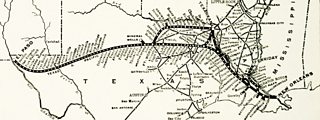
The Texas and Pacific Railway Line
So important was the railway to the economy of the region that businesses in Fort Worth released their employees to work at its construction while wives and sweethearts regularly brought food and drink out to the railway gangs rather than have them stop, even for a moment. Morgan Jones did not go to bed for several weeks, catching a few minutes of sleep here and there, wherever he could.
At last the job was finished and the town of Fort Worth celebrated in style. Morgan Jones was hailed as a hero, not just as the man who had built a railway but, literally, as the saviour of what was now a vibrant and dynamic city.
Given the honorary title of Colonel, Morgan Jones went on to build other railways across Texas. He was assisted by his nephews (and fellow Welshmen) Morgan C Jones and Percy Jones. Almost all of his railways were built without state or government aid.
In September 1909 he opened the Abilene and Southern Railway, the line running between the old cowboy town of Abilene and the newer community of Ballinger. Despite economic downturns in the fortunes of the country, despite horrendous weather, it was a necessary task and, after its opening, the railway flourished, bringing huge prosperity to this vast cattle breeding area. Freight services on the line continued until 1966.
Morgan Jones diversified his interests over the years. He moved into farming and ranching, even into banking. However, it was the building and running of railways that was always his first and greatest love.
A modest man, despite his fame and success, Morgan never released a photograph of himself and never gave an interview to the press. He was a regular attender at the Episcopal Church of the Heavenly Rest and this was where he spent his free time - not that there was much of it after all his business affairs were completed.
Morgan Jones died in Abilene on 11 April 1926. He was 86 years old, a venerable and much-loved figure who had made a significant and important impact on the history and culture of his adopted country. Not a bad epithet for a farmer's boy from Newtown.
