Archives for July 2010

Roger Bolton talks to Kirsty Young about Desert Island Discs

Blog comments are currently unavailable. Find out more.

Post categories:

Roger BoltonRoger Bolton13:55, Friday, 30 July 2010

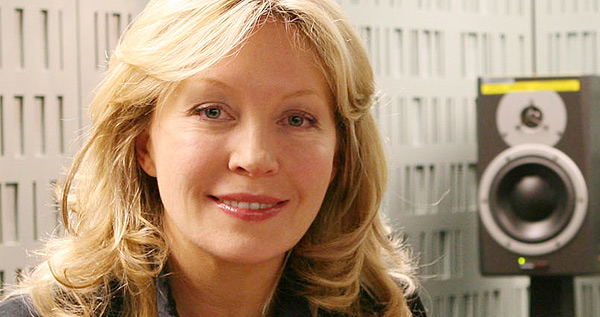
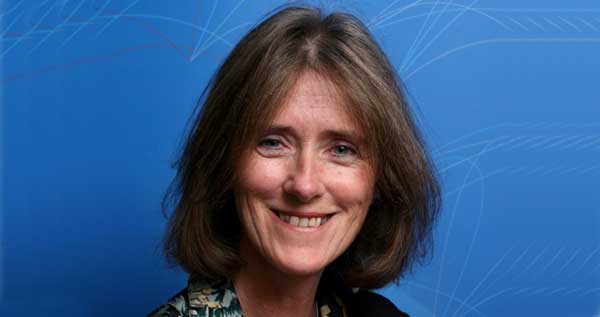
Kirsty Young in the studio

Editor's note: this week's item from Feedback, Radio 4's accountability programme, is an interview with Kirsty Young, presenter of one of Radio 4's best-loved programmes: Desert Island Discs.

In the days of Roy Plomley the production of Desert Island Discs was a relaxed, some would say civilised, affair. Guest and presenter would meet for lunch, often at a London club, before departing for Broadcasting House and the recording studio.

Guests could be secure in the knowledge that Mr Plomley would not probe too deeply. Sexual indiscretions, for example, were not on the menu. What was required was an interesting choice of music and a number of well-told anecdotes.

Nowadays it seems to me a more hazardous outing for the interviewee.

To be sure it is still a great honour to be a castaway. Many are willing but few are chosen. And who could be more charming and welcoming than Kirsty Young?

But behind the presenter's smile is an acute intelligence and a lethal ability to elicit more than her guest wants to reveal.

The result is frequently a good news story, most recently when the fearless columnist and author Lynn Barber gave an astonishingly frank insight into her bedroom activities at university.

But the guests aren't all journalists and Hollywood stars like Tim Robbins. A much praised recent edition featured Dr Gwen Adshead, the forensic psychiatrist at Broadmoor, which looks after the most dangerous and damaged offenders.

Ms Young does however have some critics. Listener Rebecca Roots, for example, believes that Kirsty is getting too lax over the choice of the luxury which the guests are allowed to take to the island.

It is meant to be of no practical use, but Dame Fanny Waterman, director of the Leeds Piano Competition got away with taking a grand piano which she admitted she'd use to store food and as shade.

When I went to talk to Kirsty Young in her non luxurious dressing room at TV Centre I asked her if she pleaded guilty to the charge of failing to enforce the strict rules about luxuries?

In order to see this content you need to have both Javascript enabled and Flash installed. Visit BBC Webwise for full instructions

By the way, on next week's Feedback I'll be talking to the Controller of Radio 3 Roger Wright about his network and about planning the Proms.

If you have any questions you want asked, please let me know.

Roger Bolton presents Feedback on BBC Radio 4

  • Listen again to the whole programme, get in touch with Feedback, find out how to join the listener panel or subscribe to the podcast on the Feedback web page.
  • Desert Island Discs is now available as a podcast, which you can download to your pc or media player. If you're quick you can still catch last week's programme with Lynn Barber.
Roger Bolton talks to Steve Herrmann about the redesigned news homepage

Blog comments are currently unavailable. Find out more.

Post categories: , , , 

Roger BoltonRoger Bolton13:55, Friday, 23 July 2010

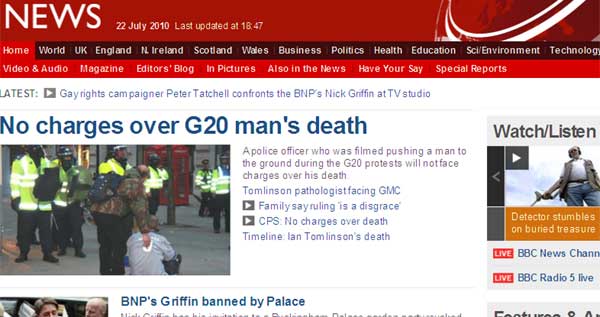
BBC News homepage

Editor's note: this week's item from Feedback, Radio 4's accountability programme, concerns the redesign of one of the BBC's biggest web sites - SB.

Most of the comments - OK, complaints - we get on Feedback are about programmes (and of course trails, and grammar and pronunciation and presenters like Jonathan Ross and the attempted execution of 6 Music, and management pay, and travel expenses!).

Before the beginning of this month I would have said that I couldn't remember when we last had a complaint about the BBC News website. Like so many of you, I've been a great fan, and my family, and particularly my student daughters, have found the site invaluable not least for the context it provides to foreign news stories.

Now all seems to have changed utterly with what Steve Hermann the editor of the BBC News website calls "the biggest rethink of the design of the site since 2003."

As Mr Hermann said on the News Editors blog "Most of you commenting here... have been critical." Well here at Feedback all the correspondence we have received has been critical. The concerns range from alleged difficulties of navigation, wastage of space, the new banner which is "immoveable", "ridiculous classification" and unwanted ads. Faced with this barrage of criticism we asked Steve Herrmann to come onto Feedback and I began our interview by asking him why he believed such a major revamp was necessary:

In order to see this content you need to have both Javascript enabled and Flash installed. Visit BBC Webwise for full instructions

So please keep letting Mr Hermann and Feedback know what you think about the redesign and any tweaks that may be made. By the way next week on Feedback I'll be talking to Kirsty Young about how she prepares for her Desert Island Discs interviews and trying to discover if she dislikes any of the guests, and we hope someone from the Today programme will be coming on to talk about the ever-shortening weather forecasts at 3 minutes to 8. No, make that 2 minutes to 8. No...

Roger Bolton presents Feedback on BBC Radio 4

  • Listen again to the whole programme, get in touch with Feedback, find out how to join the listener panel or subscribe to the podcast on the Feedback web page.
  • Visit the BBC News web site and see the new design for yourself.

Ballads from the Old Bailey

Blog comments are currently unavailable. Find out more.

Post categories: , , , , , , , 

Elizabeth Burke13:34, Thursday, 22 July 2010

Workhouse cruelty 600

If only we could hear voices from the past: the other couples whispering in our bedroom, the other children shouting up the stairs. As a radio producer I often think about what the past sounded like. That's why I was excited when I realised there is a way of hearing those voices: the records of criminal trials in the Old Bailey. Thanks to the court short-hand writers we have records of everyday speech from the 18th century: teenagers, servants and prostitutes and scholars and highwaymen, all recorded.

I had no idea this rich resource existed until I worked with Amanda Vickery on her last Radio 4 series, 'A History of Private Life'. She brought me vivid material - ordinary people describing their everyday lives - and some of it from the Old Bailey archives. From that came the idea for this series. Amanda is a leading social and cultural historian, and we have used the archive to explore everyday life in London, the streets, the parks, the shops, children's homes. The programme in which poor children speak about their lives is very moving.

I'm indebted to the two wonderful founders of the Old Bailey Online, Professor Tim Hitchcock (University of Hertfordshire) and Professor Bob Shoemaker (University of Sheffield), who helped me at every stage of the production process, explaining everything I didn't understand. Queries about the courts - what did a judge say when he sentenced someone to death? - were answered by Professor Peter King (Open University) & Professor John Styles (University of Hertfordshire). Musician and scholar Jeremy Barlow tracked down ballads, and singers Gwyn Herbert and Tom Guthrie, and fiddler Sharon Lindo, brought them to life. We did try to sing outside for a more authentic sound but were bedevilled by planes, sirens, and local workmen joining in... Jon Calver recorded the music, Hannah Marshall found the locations, Jo Coombs helped develop the format, and David Smith mixed the sound.

We needed a lot of readers to bring these voices from the Old Bailey to life: some are actors, but some are the modern counterparts of the people speaking in the 18th century. So, the children's speech (in next week's programme about children appearing as witnesses, victims and defendents) is read by local school children; the voice of the wonderfully camp Italian scholar in the last programme is read for us by an Italian lawyer working in London, and so on. And the really interesting thing was how easily and quickly it came to life: 18th century speech is astonishingly modern.

Elizabeth Burke is producer of Voices from the Old Bailey

Here are two ballads from the period, recorded for the series: both are touching and the second is rather frank in its description of the hardships of the time:

In order to see this content you need to have both Javascript enabled and Flash installed. Visit BBC Webwise for full instructions

In order to see this content you need to have both Javascript enabled and Flash installed. Visit BBC Webwise for full instructions

Roger Bolton on the London Season

Blog comments are currently unavailable. Find out more.

Post categories: , , 

Steve BowbrickSteve Bowbrick13:55, Friday, 16 July 2010

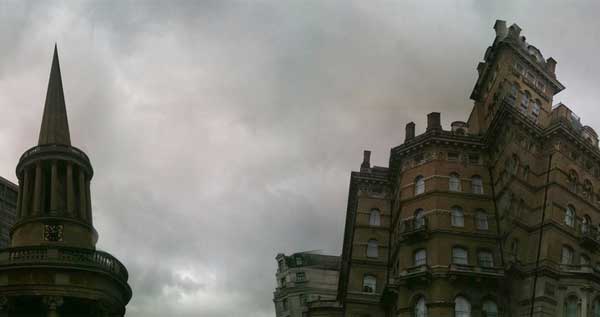
Langham Place panorama 600

If Dr Johnson was right in saying that "When a man is tired of London, he is tired of life", then a lot of Feedback listeners are pretty exhausted. The cause is the two week London Season which has just finished on Radio 4. Let me give you a flavour of the reaction of some out of London listeners.

"This programme (The London Story) summed up the kind of smug self satisfied attitude that makes Londoners so unpopular throughout the rest of the UK. The entire programme amounted to a 45 minute pat on the back about how wonderful it is to live there."
"I keep hearing adverts for a Radio 4 season where they will be focusing on London. Most of us thought that they had been doing this for the last 50 years."
"The new London series is just another symptom of the fundamentally metropolitan outlook of Radio 4 and the BBC in general."

One listener even wrote "Bring me the head of Radio 4, Roger." Well that won't be necessary because Mark Damazer has already announced he is stepping down and going off to run an Oxford College.

His successor, Gwynneth Williams was announced on Thursday and she of course starts with a clean slate. New Controllers of Radio 4 are usually asked to try and increase the listenership outside the south east, the numbers decline the further north you go, and you may have noticed more on air regional accents in recent years. (Mine is basically Cumbrian, corrupted by years living in the Great Wen).

It would appear from the reactions of Feedback listeners that there is a lot more to do.

In order to see this content you need to have both Javascript enabled and Flash installed. Visit BBC Webwise for full instructions

Roger Bolton presents Feedback on BBC Radio 4

  • Listen again to the whole programme, get in touch with Feedback, find out how to join the listener panel or subscribe to the podcast on the Feedback web page.
  • Visit the London: Another Country? homepage for details of all the programmes in the season and to listen to those that are still available.
  • Radio 4 hosted a live chat here on the blog and on Twitter for the Greatest City debate. You can read the conversation here and the tweets here.
  • Some listeners enjoyed London: Another Country? Scroll through tweets about the season for a fairly even mixture of pro and anti.
  • The picture is by Steve Bowbrick.

Bringing the voices of the Old Bailey to life

Blog comments are currently unavailable. Find out more.

Post categories: , , , , 

Amanda VickeryAmanda Vickery15:45, Thursday, 15 July 2010

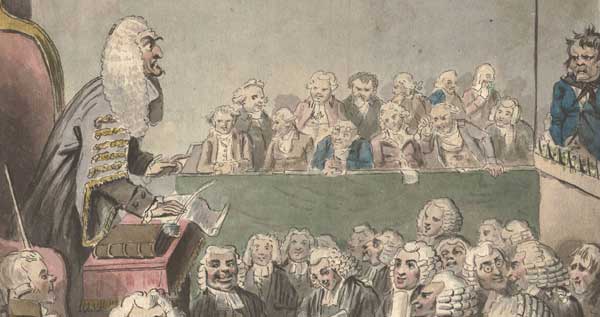
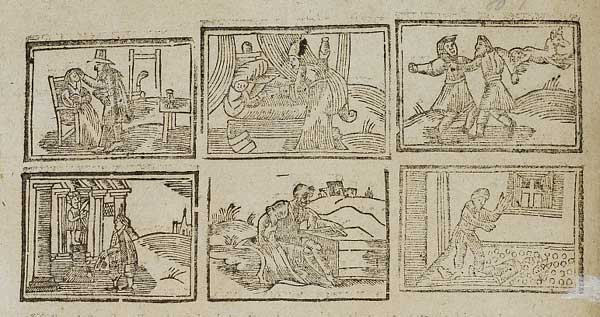
Scene from the Old Bailey, eighteenth Century

The job of the historian is to make the long dead speak again - we take dusty, unpromising documents and breathe life back into the faded hand-writing. It can be a magical craft, akin to necromancy - trying to communicate with the spirits of the dead. Scribbled love letters, desperate diaries, accounts and lists are all grist to my mill.

But what of the vast majority of people in the past who could not write? The unlettered and unsung. Beneath the tip of the iceberg of literacy, lies the hulking majority who could not record their struggles and successes on paper for posterity. But there was one special place where the words of the poor and the illiterate were recorded verbatim - the criminal court. Read court transcripts and you can hear at last the hubbub of the people.

This is why historians are so excited about court records. At the Old Bailey fifty thousand cases were heard in the eighteenth century alone. A great cast of characters had their day in court, the snooping neighbour, the innocent by-stander, the local gossips, as well as the beleaguered victim and accused criminal. Some are witty, some wily and some wistful - but all reveal the very rhythm of life in the salty vernacular - all taken down in shorthand by the clerks.

The Old Bailey was the principal court for London and Middlesex, but it tried cases from much further afield. London doubled in size over the eighteenth-century from half a million to a million souls. The metropolis drew people like a magnet, from all over the UK, from Ireland, but also from Africa, America and South Asia, as well as continental Europe. It was Europe`s biggest capital, a heaving city of migrants, particularly young women looking for work. The whole country flowed through the city: half of the entire urban population experienced London life at some point in their lives. So, the Old Bailey records are not in any way narrowly London-centred, they are a window on a booming nation.

Historians use the records of the Old Bailey to study criminal justice and the criminal underclass, but you can also use them to recreate work and play, relationships and attitudes, street-life and shopping, the list goes on and on. I am awed by the magical access they give to a world we have lost - and could recapture in no other way. I use them in this series, to offer pin-sharp impressions of ordinary people - under pressure, acting out the most dramatic episode of their existence, sometimes arguing for their very lives.

I first used the Old Bailey Online for my book Behind Closed Doors: At Home in Georgian England to re-imagine the interiors of London lodgings. I looked at theft cases to chart the pans, tea pots and boxes ordinary people had in their possession, and at burglary cases to think about privacy, rebuilding the boundaries that Georgian people, rich and poor alike, sought to defend. However as I read the cases I was struck again and again by the panorama of characters and the juiciness and grip of their stories. Here is the first script for that perennial staple - the court room drama. The dialogue is so fresh. It was just asking to be made into radio.

Professor Amanda Vickery writes and presents Voices from the Old Bailey

Radio 4 will be in terrific hands

Blog comments are currently unavailable. Find out more.

Post categories:

Mark DamazerMark Damazer13:30, Thursday, 15 July 2010

Mark Damazer on his Blackberry

I have known Gwyneth Williams for nearly 15 years - as a marvellous programme maker and editor and Head of Radio Current Affairs. She is full of flair - brimming with ideas of her own while encouraging others to bring their own best ideas to the table. She has an inherent elegance and a steely persistence.

It is a hugely potent combination. More or less her entire professional career has been in and around Radio 4. She knows the network, the programmes, the people and the audience. She has been in charge of some of the most important pieces of Radio 4 turf and she edited the Reith Lectures for many years.

I am sad to be going in many ways but know that Radio 4 will be not merely safe - but in dedicated and creative hands. Gwyn will do wonderful things and get others to do likewise. Hooray.

Mark Damazer is Controller of BBC Radio 4

A new Controller for Radio 4

Blog comments are currently unavailable. Find out more.

Post categories:

Tim DavieTim Davie12:00, Thursday, 15 July 2010

Gwyneth Williams, new Controller of BBC Radio 4

Over the past two months I've been searching for a new Controller for Radio 4 and Radio 7. This is no simple task; Radio 4 is a unique cultural institution with a passionate audience and incredibly talented staff. Leading it is a huge honour. As I wrote here at the start of the process, Mark Damazer - Radio 4's current Controller - has managed to sustain buoyant audiences without compromising the quality of programmes, so I am well aware of the importance of finding the right person to follow in the exceptional Mr Damazer's footsteps.

I saw some outstanding candidates during the recruitment process; brilliant leaders from a broad range of backgrounds, all with hugely impressive experience. This week we entered the final stage of the lengthy process and today we announced on Radio 4 that the successful candidate is Gwyneth Williams, until recently Director of BBC World Service English.

Gwyneth is an editorial leader of the highest calibre and a passionate supporter of Radio 4. She brings vast broadcasting experience, tremendous intelligence and a fresh perspective to the role. I was impressed by her creativity, enthusiasm and ideas for building the network's intellectual quality while maintaining its relevance.

This is one of the biggest jobs in broadcasting and I believe I have found the right person to succeed Mark Damazer. I look forward to working with her in building on Mark's success and leading Radio 4 to even greater things over coming years.

Tim Davie is Director of BBC Audio & Music

Hitler's Muslim Legions

Blog comments are currently unavailable. Find out more.

Post categories: , , , , 

Steve BowbrickSteve Bowbrick18:13, Wednesday, 14 July 2010

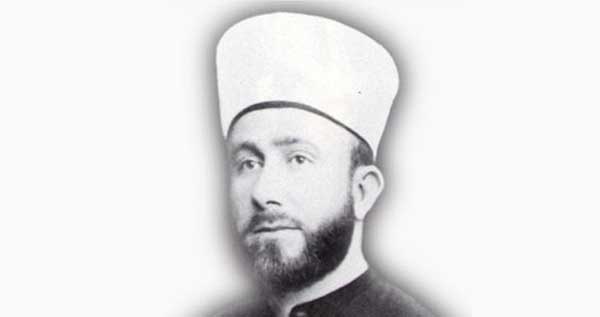
Mohammad Amin al-Husayni 600

Editor's note: Sometimes the decision to commission a programme about events from recent history is a complicated one. Samir Shah lays out the many factors that contributed to one such decision - SB.

Fascination with the Second World War and Nazism is one of the abiding characteristics of post war Britain. By 2010, you'd think that almost every conceivable topic and angle has been covered. But not so. Programmes on television and radio continue to be made and books by distinguished historians about the period continue to come off the printing presses. Recently one such caught my eye. It was by Jonathan Trigg and entitled 'Hitler's Jihadis.' I knew nothing of this story and wondered how it came about, how many were involved, how this could be reconciled with Hitler's Aryan fantasies. Questions came tumbling out and I turned that into a proposal for a radio documentary.

Later this month Radio 4 will broadcast a programme called Hitler's Muslim Legions. A clue as to the care and attention taken in producing this programme was the discussion surrounding the title. Was it right to juxtapose Hitler and Muslims like this? Is the word legions appropriate - especially the use of the plural?

The story reveals that over 70,000 Muslims fought for Hitler, many in the Waffen SS. There are photographs of Himmler visiting these Muslim soldiers and an extraordinary photograph of Hitler in conversation with the Grand Mufti of Jerusalem (although not a figure of lasting significance, he was central to the recruitment of Bosnian Muslims). The title is undoubtedly accurate.

However the debate illustrates some of the care taken in making what is nevertheless a challenging documentary. As story it fits comfortably within a tradition on Radio 4 of exploring little known aspects of the war: Document, for example, reported how thousands of Sikhs renounced allegiances with Britain and instead fought for Hitler; Secret Warriors looked at the involvement of British Jews in the 1947 War of Independence and militant activity against British forces; France's Forgotten Concentration Camps investigated French collaboration with the Germans; Crossing Continents (Reopening Lithuania's old wounds) reported on allegations that Holocaust survivors had committed war crimes. So the basic idea for the programme was not exceptional.

What of the story itself? Well, with over 70,000 people involved, it was clearly a significant enough number for it to be of import. However, of course, many more Muslims fought for the Allies - and this is made clear in the programme. But there are other fascinating aspects of the story: how did they reconcile their vision of a master race made of Aryans with using Muslims to fight for them? And what motivated the Muslims to join up? The answers reveal much about the contradictions and absurdities of Nazism. The motivations of the Muslims themselves ("starve or join") are telling about the realities of war.

Inevitably a little-known story such as this restricts the cast list of contributors. In fact we found a number of serious historians who did know something of the story. What was surprising - well, perhaps not altogether surprising - was the paucity of Muslim scholarship. We did try a range of Muslim academics and organisations and all but one felt they did not know enough about the subject to contribute . But the programme did pull off a coup - an eyewitness account: a German, now in his 80s, lived and worked with Muslim soldiers when he was 19.

Indeed, thanks to the journalistic diligence of the producer Jenny Chryss and the measured commentary of seasoned reporter, Julian O'Halloran, Hitler's Muslim Legions throws an illuminating light on a remarkable chapter in the continuing story of the Second World War.

Samir Shah is Executive Producer of Hitler's Muslim Legions

London: World City?

Blog comments are currently unavailable. Find out more.

Post categories: , , , 

Tony TraversTony Travers16:14, Monday, 12 July 2010

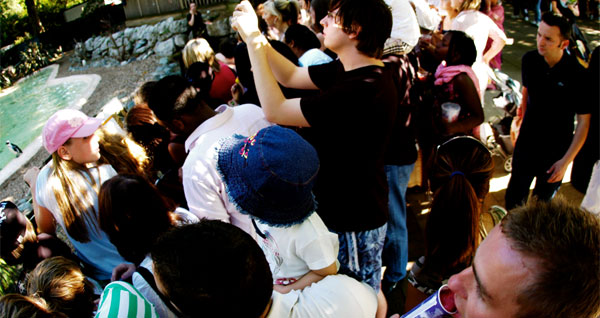
London Zoo 600

Editor's note: Tony Travers is Director of LSE London, a research centre at the London School of Economics and a contributor to Radio 4's London: Another Country. Here, he responds to this morning's #GreatestCity debate with a short essay about London's status as a 'world city' - SB

London can be a difficult place - the scale of vast cities can challenge human comprehension. It is also incredibly spread out, with its eight million people covering about 700 square miles of land. But what makes it so rewarding is its extraordinary mixture of people and history, combined with a relentless capacity to rejuvenate and re-create itself.

Between two and three million of today's Londoners were born overseas - the number is inevitably imprecise. There are dozens of national and/or ethnic groups from each continent. Having so many people from different countries makes the city almost unique. Given the short period over which many of them have arrived and their epic diversity, London remains tolerant and, overwhelmingly, peaceful.

Such numbers of people from so many different starting-points inevitably creates opportunities for an endless series of experiences and experiments for anyone who lives in or visits the city. London is also a big Scottish, Welsh, Irish and English town, creating powerful (if complex) links to the rest of the UK.

The city's history is etched in its buildings and streets. Dozens of beautiful books are published each year about London, making it possible to access more and more detail about what happened in the past in these same buildings and streets. Films are also an easily-accessed way of reliving modern history: for anyone who wants to be reminded what 'docklands' looked like before Canary Wharf and about the way in which developers can change the face of the city The Long Good Friday is an entertaining way to do so.

In recent years, the creation of a directly-elected mayor for London has further enhanced the city's image and importance. Given this power and epic size, it is hardly surprising people elsewhere in the UK often see London as too dominant and too powerful. However, once London had been allowed - during the 1920s and 1930s - to become a city of eight million people within a super-region of almost 20 million, there was no way back. The economic benefits of being so populous and with such a large entrepreneurial economy within a relatively small geographical area have given London massive economic importance both within Britain and overseas.

In recent years, an academic literature has emerged about 'world' or 'global' cities. London has always featured as one of the top two or three locations within any list of such places. In terms of its economic importance, its links to the rest of the world, its political/social tolerance and the extraordinary 'world within a city' make-up of its population, it can rationally be compared with Paris, New York, Tokyo, Mumbai or Shanghai.

Other British urban centres have significantly redeveloped in the past 20 years, narrowing the gap between them and London. The UK has a large number of major cities, creating an 'urban system' where each can benefit from the other. Complementary development rather than negative competition is undoubtedly the best way for all to succeed. City life is not for everyone, but for those who do like it the rewards can be enjoyed 24 hours a day, seven days a week. London is, and has always been, a place of opportunity.

Tony Travers is an academic specialising in London and a contributor to Kwame Kwei-Armah's The London Story

The Greatest City Debate

Blog comments are currently unavailable. Find out more.

Post categories: , , , , , , 

Steve BowbrickSteve Bowbrick08:30, Monday, 12 July 2010

Cities 600

The #GreatestCity debate took place this morning at 0900 and hundreds of you joined in here on the blog, on Twitter and on Facebook. Four World Cities squared up for the big fight. Laurie Taylor chaired, four city lovers made the case for their favourites - London, Mumbai, New York and Istanbul - and an audience in the Radio Theatre (in the heart of London, it goes without saying) decided. And the winner was Mumbai.

You can now 'replay' the chat while listening to the programme on the iPlayer.

And once you've listened, please do us a favour and leave a comment on this blog post (using your BBC login) to tell us what you thought of the chat and the programme.

Steve Bowbrick is editor of the Radio 4 blog

Four World Cities - which is greatest?

Blog comments are currently unavailable. Find out more.

Post categories: , , , , , , 

Steve BowbrickSteve Bowbrick11:19, Sunday, 11 July 2010

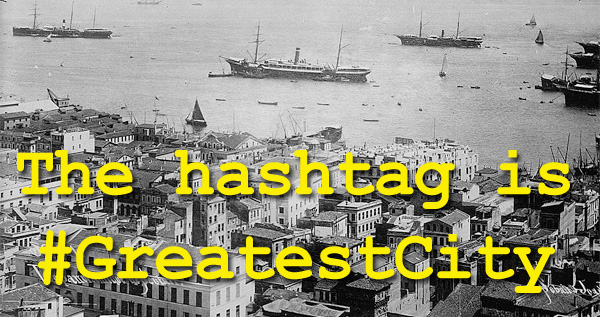
Istanbul 600

Laurie Taylor wants to know which of these four cities is the planet's greatest: Istanbul, Mumbai, New York or London. The big debate is on Radio 4 tomorrow morning (Monday 12 July) at 0900 but we want your opinion now. Leave a comment here on the blog or tweet using the hashtag #GreatestCity, then - here's the important bit - come back to the blog during the programme and join a live chat with other listeners and contributors to the London Season (we're hoping, for instance, that London expert Tony Travers from LSE will be able to join us). See you there!

Steve Bowbrick is editor of the Radio 4 blog

Roger Bolton on saving 6 Music

Blog comments are currently unavailable. Find out more.

Post categories: , , , , 

Roger BoltonRoger Bolton13:45, Friday, 9 July 2010

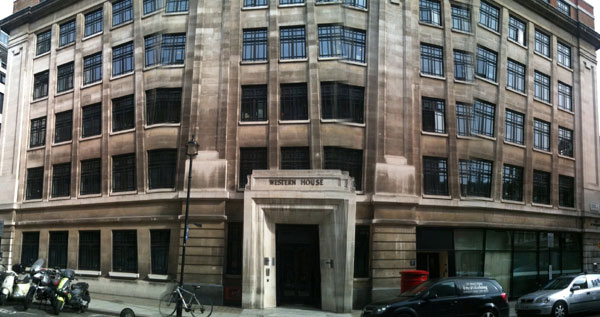
Western House 600

Editor's note. Every week we're publishing one item from Radio 4's accountability programme Feedback. This week's item is of more general interest and concerns the campaign to save 6 Music - SB

"What is the point of protesting to the BBC? No producer or manager ever admits that they are wrong."

Judging by the Feedback inbox I know that is the view of many of our listeners, but not of Peter Crocker.

He is passionate about 6 Music and was incandescent when he heard of the BBC Management"s proposal to shut it down. But he did not just shout at the radio or his computer or kick the cat.

He wrote to Feedback and we invited him onto the programme back in March. This kick-started a process which ended up with him having a breakfast meeting with the Chairman of the BBC Trust Sir Michael Lyons.

Peter Crocker is a modest chap and keen to point out that many many others were involved in the campaign to 'save' 6 Music and insists his role was a minor one. Nevertheless we couldn"t resist inviting him back into the Feedback studio to describe his part in the campaign, why he thought it had been successful, and what lessons there are for listeners concerned about what they see as mistaken management decisions.

Perhaps British cats will have cause to celebrate his initiative.

Listen to my interview with Peter Crocker here:

In order to see this content you need to have both Javascript enabled and Flash installed. Visit BBC Webwise for full instructions

Roger Bolton presents Feedback on BBC Radio 4

Archbishop Vincent Nichols chooses an object for AHOW

Blog comments are currently unavailable. Find out more.

Post categories: , , , 

Paul SargeantPaul Sargeant16:59, Friday, 2 July 2010

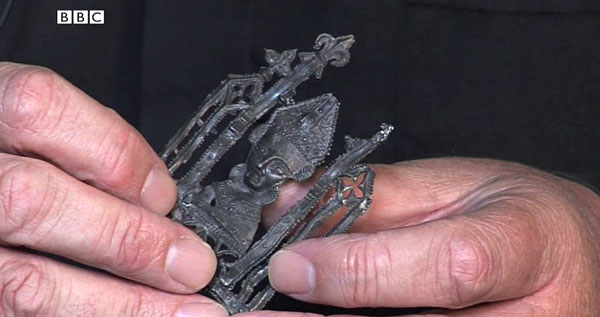
Archbishop Vincent Nichols' pilgrim badge

One of the most exciting things about A History of the World project is the way that it has been picked up by other BBC programmes, from Radio 4's own Making History or BBC Scotland's Radio Café through to CBBC's Relic: Guardians of the Museum and many local radio teams working with museums in their area. Each of them seems to find something in the idea of a history through objects that sparks their interest.

Next week the theme for A History of the World in 100 Objects is 'Meeting the Gods' - looking at religious objects from around the world between AD 1200 and 1400.

However, Radio 4 has already been looking at the idea of objects and belief thanks to another one of our partners the Sunday programme, which has been asking a variety of people about objects that speak to them about their faith or beliefs. They've already spoken to Sir Ben Kingsley, Richard Curtis, David Morrissey and Andrew Motion and this week it's the Archbishop of Westminster, Vincent Nichols.

Now he's going to have an amazing religious object, right? Some priceless relic from the church vaults, like the Holy Thorn Reliquary which we will feature on Monday morning.

No. Instead he has chosen a crudely moulded pewter badge pulled from the muddy slime on a bank of the Thames. It's certainly old, but as he says, "It's neither precious nor scarce." But, as with many of the objects in our series, a modest object can tell a fascinating story. Here's a preview of why he's chosen it:

In order to see this content you need to have both Javascript enabled and Flash installed. Visit BBC Webwise for full instructions

That's what I love about A History of the World: a cheap piece of pewter suddenly opens up into the story of a dutiful pilgrimage undertaken in a wholly Catholic kingdom of England. In previous weeks, the stories of a Sin Eater's grave and a witch's pot opened up other stories of faith and superstition.

Sunday Worship has also been getting involved with more modern tales and added a memorial hymn sheet from the 1960 mining disaster in Six Bells colliery, Wales, and a community quilt patched by women in Christian missions.

I think the mission quilt, which is still being sewn, highlights an interesting aspect of many of the spiritual objects that have been added to the A History of the World website: they are imbued with potential as well as history.

All the objects on the site have a historical dimension that helps us look into the past but the way that people describe these spiritual objects you see that they also pull powerfully in the opposite direction, into the future. These buddhas, rosaries, pilgrim badges and quilts seem to be more than just physical souvenirs they have faith and hope invested in them.

Perhaps other objects in our lives do the same: the pair of football boots that will make you dip the ball like Ronaldo or the new swimsuit that promises the perfect summer. Do we all have faith objects, irrespective of our religious beliefs or lack of them?


We've got over 3,000 objects on the site now from museums and listeners and perhaps there are others in there that are about the future as much as the past. You can add your object to the collection and give us your piece of history or hope.


And don't miss the Sunday programme's interview with Archbishop Nichols or next week's programmes looking at objects from Christ's crown of thorns to the statues on Easter Island.

Paul Sargeant is editor of the A History of the World blog

Roger Bolton talks to Sir Michael Lyons

Blog comments are currently unavailable. Find out more.

Post categories: , , , 

Roger BoltonRoger Bolton14:00, Friday, 2 July 2010

Lyons 600

Editor's note. Feedback, Radio 4's weekly accountability programme, is back on-air - and we'll be publishing an item from the programme each week here on the blog for your reactions. This week Roger Bolton scooped an on-the-spot interview with Sir Michael Lyons right after he announced the new regime for executive and presenter pay. He was at a Voice of the Listener and Viewer conference in London - SB

When the Conservatives were in opposition they did not hide their view that the BBC Trust had failed and would be replaced when they came into office.

Now they are in government, in coalition with the Liberal democrats, they seem, if not to have changed their minds, then to regard the future of the Trust as something that can be left to a later date, while they deal with more pressing matters.

So Sir Michael Lyons, the Trust's Chairman, is back in business and determined to show the Government that he is in charge and that he understands that those who spend the public money have to be parsimonious, more efficient and more transparent.

I heard him make his first major post election speech on Wednesday evening at a seminar of the organisation Voice of the Listener and Viewer, which is passionate about keeping the BBC on the path of public service broadcasting.

The seminar took place in a room in the Society of Antiquaries in London, which is dominated by a stern portrait of the Tudor Queen, Bloody Mary, who ordered quite a lot of beheadings not to say burnings in her time.

Indeed some of her victims were hung, drawn and quartered.

Sir Michael appeared undaunted by her steely glare, but his audience was full of other formidable ladies, and men of course.

After an excerpt from his speech you'll hear me talking with some VLV members and then my interview with Sir Michael:

In order to see this content you need to have both Javascript enabled and Flash installed. Visit BBC Webwise for full instructions

Roger Bolton presents Feedback on BBC Radio 4

More from this blog...

Categories

These are some of the popular topics this blog covers.