

The sanctity of the Commons
- 28 Nov 08, 05:23 PM
The arrest of Damian Green and the forced search of his parliamentary office have caused anger and concern on all sides of politics. From Tony Benn to David Davis and Nick Clegg, there is fury at the police's violation of the sanctity of the Commons and the challenge to the duty of an opposition member to hold the government to account.
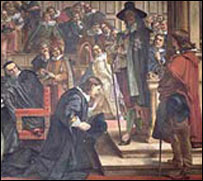 I am grateful to a colleague for pointing me to the defiant words of Speaker Lenthall to Charles I in 1642.
They were uttered when the king tried to have five MPs arrested in the Commons. On his knees before the sovereign, the Speaker explained why he would not co-operate, explaining that his duty was to the House and not to the king.
May it please your majesty, I have neither eyes to see nor tongue to speak in this place but as this house is pleased to direct me whose servant I am here; and humbly beg your majesty's pardon that I cannot give any other answer than this
P.S.: My earlier post seems to have generated anger from those who were appalled at the arrest of Damian Green.
Having covered the cash-for-honours case (rather more vigorously than the government was comfortable with), I was merely trying to answer the two questions which were asked then and are being asked now: why did the police feel the need to arrest Damian Green and to raid his house?
Incidentally, I thought that comparing Green with Churchill might just have hinted that I saw the gravity of the situation.