
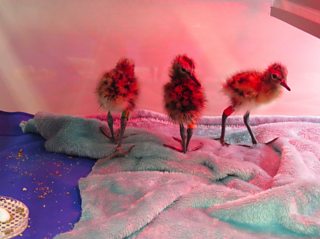
Conservationists breathed a huge sigh of relief when the first black-tailed godwit of the season emerged from its mud-encased egg, all feet and beak.
Not that long ago, that very egg, along with other clutches, had been freed from sodden farmland after unseasonably late spring downpours forced the godwits from the safety of nearby wetlands.
The eggs were in a dreadful way. Resembling muddy potatoes, experts braced themselves for the worst.
Last year, conservationists from WWT and RSPB formed a partnership – Project Godwit - to save these magnificent wader birds. To give them a helping hand, they began collecting eggs for rear and release – a process known as head-starting.
The scheme has proved so successful, that eight of the hand-reared birds released into the wild in 2017 have recently returned to the same site on the Fens after a winter in Europe. This East Anglian habitat is extremely important for the future of the populations of these birds, as it’s one of very few sites in the UK where the bird will breed.
But with their habitat at the Fens submerged by extreme showers this year, these rare ground-nesting birds chose to lay their eggs on unsuitable farmland. With mud widespread and tall crops able to easily conceal predators, Project Godwit jumped into action and teamed up with farmers to rescue 32 eggs.
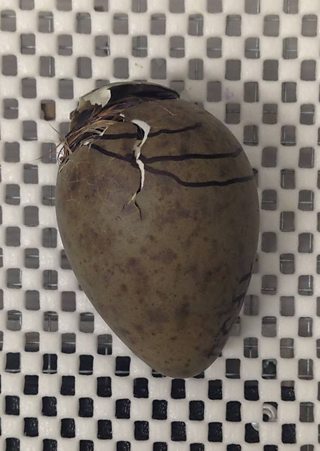
It’s no wonder the conservationists were celebrating when the eggs began to crack with life. Fewer than fifty pairs of godwits breed in the UK, meaning every egg that successfully hatches could be critical for the future of the population.
To date, 21 of the 32 eggs collected from farmland are now walking, chirping chicks. They are growing very fast and due to be released into the wild by mid-June. If all goes well, they’ll even join their friends in Europe and avoid a British winter. After the start they’ve had in life that seems only fair.
Head-starting was already planned in the area as part of a five-year EU funded project with permission from Natural England. It’s just one aspect of Project Godwit which also focuses on monitoring, habitat management and trialling conservation techniques.
The Nene and Ouse Washes in the Fens are the two main breeding sites for black-tailed godwits in the UK. They were created in the 17th century to be a flood storage area, protecting surrounding farmland and residential areas from flooding when river levels are high. They also provide internationally important wetland habitat for an array of wildlife.
The change in climate, as well as pressures from increased run-off from housing developments upstream, means excess water is flooding the Washes in spring and early summer when ground-nesting birds use the area. WWT and the RSPB are helping to address this by providing alternative nesting sites – flood-free areas of wetland habitat created adjacent to the Washes.
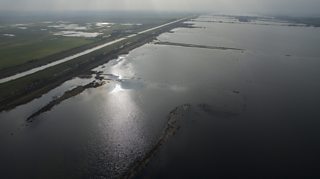
Excess water is flooding the Washes in spring and early summer when ground-nesting birds use the area
Project Godwit is a partnership between RSPB and WWT with major funding from the EU LIFE Nature Programme, HSBC’s 150th Anniversary Fund, Natural England and the Heritage Lottery Fund, through the Back from the Brink programme and Leica UK. The project aims to secure the future of breeding black-tailed godwits in the UK.
Conservationists are encouraging birders to look out for these special birds. Sightings can be registered at projectgodwit.org.uk
