By Lorna Bointon, British Divers Marine Life Rescue marine Mammal Medic & Sea Watch Foundation Regional Coordinator
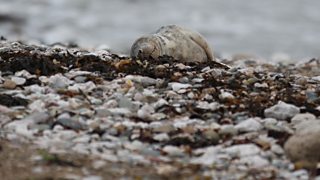
Image by R Bointon
The Three ‘R’s…..
Rescue
Have you ever come across an injured animal and not known what to do? We’ve probably all experienced that feeling of helplessness when we find a fledgling out of its nest or encounter a vulnerable animal. Sometimes the best action is to watch and wait before getting involved. However, in cases of injured or ill animals, or abandonment of young animals unable to care for themselves, we need to call upon the services of an experienced rescue organisation.
The British Divers Marine Life Rescue (BDMLR) is an organisation that rescues injured or ill marine mammals around the UK’s coast.
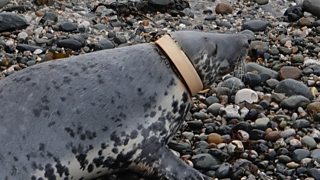
Plastic and other waste is a real issue for marine wildlife. Image Adge lane
The seal pupping season is June to July for common (or harbour) seals and August to December for grey seals. This can be a very busy time for the BDMLR.
Before a rescue takes place and, if the seal pup appears to be healthy with no sign of injury, the pup will be observed from a safe distance for several hours to determine whether the mother is in the vicinity.
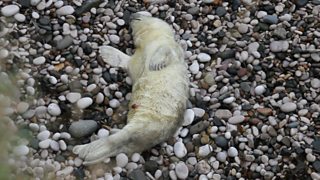
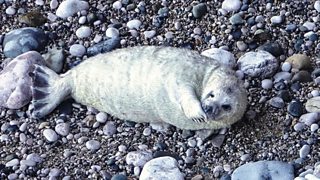
A grey seal pup with lanugo, showing umbilicus. Image R Bointon
During the weaning period, a grey seal pup will gain weight on its mother’s fat rich milk and begin to moult its white ‘baby’ fur. The pup will remain with its mother for up to three weeks and during this time it is important that they are not disturbed and that the mother/pup bond is not broken.
Excuse me! Image Adge Lane
In some cases, if dealing with a weaned juvenile, seals can be assessed and given treatment by a veterinarian on the scene and then immediately released into the sea.
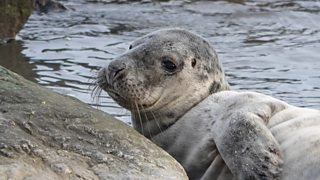
Sometimes seals haul out where they may get disturbed by walkers and dogs. Image Adge Lane
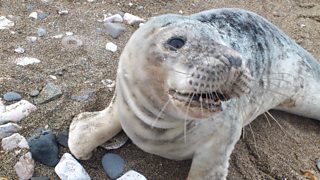
This feisty juvenile was monitored over a period of time before receiving veterinary assessment at the scene and then being released into the sea. Image R Bointon
Around 90% of calls to the BDMLR are about seal pups. A number of these calls are related to human disturbance. In some cases, dog attacks on seals have resulted in severe injuries or death. It is important to act responsibly at sites where seals have hauled out to rest or digest their food and especially during the pupping or moulting seasons.
If a seal needs veterinary treatment along with a period of care and rehabilitation it will be transported to a centre that specialises in marine mammal care, sometimes in a relay if over a long distance.
In some cases this has necessitated a trip in an aeroplane!
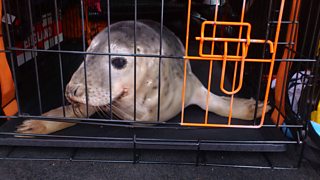
Injured grey seal juvenile transported as part of a relay for BDMLR Wales. Image R Bointon
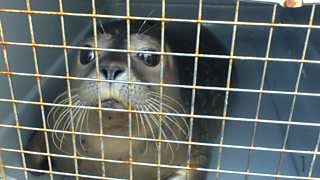
Harbour/Common seal on its way for rehabilitation before release. Image R Bointon
Rehabilitation
Sometimes, due to illness, injury or abandonment, seals may need to be given specialist care. An initial assessment includes taking the weight and assessing body condition, sexing the animal and taking the temperature. The animal may also require medication, such as painkillers or antibiotics to be administered. The animals may also need to be tube fed until they are capable of independent feeding.
The seal pup may then remain at a specialist centre until it has reached an optimum weight for release.
Marine mammal health and welfare is the driving force of BDMLR. As the numbers of calls have increased, so have the numbers of seal pups requiring urgent care. This has placed a huge demand on BDMLR’s resources. To continue vital work, caring for sick and injured seal pups, plans are being implemented to open a brand new, purpose-built seal pup hospital in Cornwall to double the capacity of the existing seal pup facility. This hospital acts as an essential overflow, providing temporary, emergency care for seal pups until spaces become available at larger centres.
The first few days or weeks of a pup’s rehabilitation are the riskiest and the time when the level of care required will be at its most intense. The new Cornwall seal pup hospital has been carefully designed to ensure an optimal environment for the pups during their first stage of rehabilitation.
Release
After undergoing a period of rehabilitation, the seals are released into their natural environment. The release site is usually the location from where the animal has been rescued but, if not appropriate, a different site will be carefully chosen. The release site is determined by factors such as habitat type, food availability and weather conditions.
Again, this may require a relay if the release site is a long distance away from the rehabilitation centre.
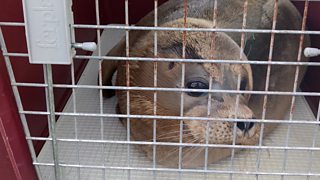
A common seal transported as part of a relay with BDMLR Midlands. Image R Bointon
Going the distance
Seals that have been rescued by the BDMLR, transported for treatment and rehabilitation and then released are tagged with a unique ID code. Seals can travel long distances between sites, sometimes hundreds of miles. Recently, a flipper tag was spotted by eagle-eyed observer, Adge Lane, in North Wales. After some investigation by Sue Sayer of the Cornwall Seal Group Research Trust, it was found that the female grey seal had travelled up to North Wales from South West England where, four years previously, she had been rescued as a starving pup in Newquay, Cornwall before being rehabilitated and released!
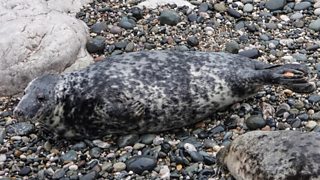
Signed, sealed and delivered. Image by Adge Lane
If you are concerned about the health or wellbeing of a seal, please call the BDMLR hotline 01825 765546. http://www.bdmlr.org.uk
If you want to help build a new seal hospital, please visit https://www.crowdfunder.co.uk/help-build-a-new-seal-pup-hospital
Note: some photographs have been taken by a volunteer surveyor from a distance using a superzoom camera whilst the seal was unaware and undisturbed. Some photographs have been taken as part of BDMLR assessment by a BDMLR medic.
