Ten birds you might not know are endangered

Dr. Viola Ross-Smith
British Trust for Ornithology
More than a quarter of the UK's birds are now on the Red List for endangered species. Dr. Viola Ross-Smith from the British Trust for Ornithology explains why, some of them may surprise you...
The latest Birds of Conservation Concern report is published today, updating the last version from 2009. This report places species on Green, Amber and Red Lists to denote increasing levels of conservation need. Species are assessed against many criteria, which means not all species on the Amber and Red Lists are currently very rare. A species can be numerous, but find itself on the Red List because of recent population declines, as is the case for House Sparrows. Species can also be included on the Amber List if the population is localised at ten or fewer sites and/or if the UK holds an important proportion of the international population, meaning that the species as a whole could be at risk if the UK population fell sharply, or if an important site became unsuitable.
Here are some species (some newly added to these lists, some not) that you might be surprised to learn are of conservation concern.
Red Listed Species
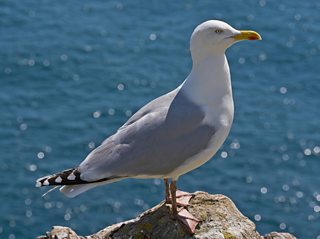
Herring Gull. Credit: Maria Hiles
Herring Gull
Population size: 139,200 apparently occupied nests in 1998-2002 with a 17% decline since. In summer, Herring Gulls can seem to be everywhere – bravely and noisily swooping down to take scraps of food in coastal towns and loudly calling from nest sites. However, the breeding population of this species has declined by 60% since 1969, and the wintering population has fallen by 53-60% over the last 25 years. As the UK holds 20-30% of the wintering population of Herring Gulls in Europe (when birds breeding in other countries come to Britain because of its mild climate), such declines have a big impact on the species as a whole. The reasons for these population changes are thought to include disease, especially botulism, decreases in food availability and the prevalence of ground predators like Mink eating eggs and chicks at breeding colonies, such that the breeding population is not replaced by new recruits once adult gulls grow old and die.
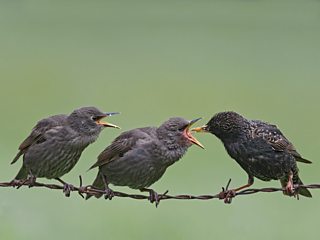
Starlings. Credit: Mike Hudson
Starling
Population size: 1.9 million pairs in 2009. Starlings are famous for gathering in huge flocks, moving in sync to form startling ‘murmurations’ in the winter months, which could make this species’ position hard to understand. However, Starling breeding numbers have fallen by 70% in the 25 years to 2014, and 83% since 1969. This decline is thought to be driven by a reduction in the survival rates of juvenile birds, which may in turn be caused by changes in food availability and habitat as a result of agricultural intensification. So, although there are still large numbers of Starlings present in the UK, if this trend continues, there soon won’t be, placing this species firmly on the Red List.
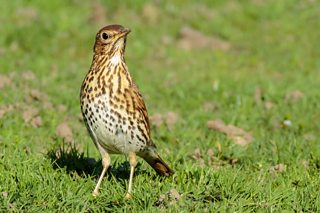
Song Thrush. Credit: Keith Milner
Song Thrush
Population size: 1.2 million territories in 2009. The Song Thrush’s beautiful song, with a huge variety of repeated motifs, rings out loud and clear over other birds in the dawn chorus, making this species very distinctive by sound. The Song Thrush is also quite a bold species, and is certainly one of our better known birds. However, its breeding numbers have fallen by 59% since 1969, in a change driven by a reduction in survival of juvenile birds. The cause of this fall in survival is not properly understood, but it might be linked to changes in farming practices and pesticide use. Like the Starling, there are still many Song Thrushes gracing our skies, but the rate of decline is fast and worrying.
Amber Listed Species
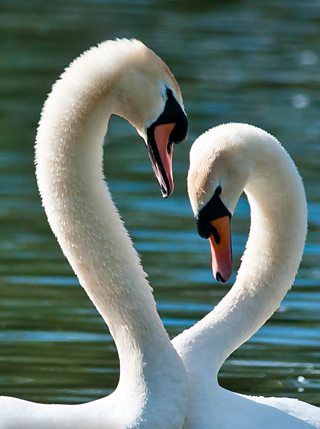
Mute Swans. Credit: Doug Price
Mute Swan
Population size: 6,400 pairs in summer (2009), 79,000 individuals in winter (2011). The unmistakable Mute Swan is the UK’s largest breeding bird, and can be found majestically gliding, or hissing and flapping, on many a waterway. However, as the UK holds 20-30% of the wintering population of the species on the northwest Europe flyway, there would be big implications for the species as a whole if our Mute Swan numbers began to fall, leading this species to be moved from the Green to the Amber List this year.
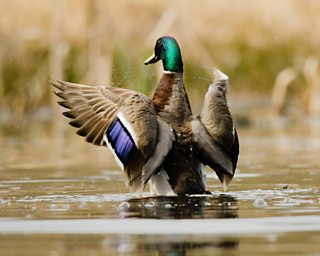
Mallard. Credit: Ric Jackson
Mallard
Population size: 61,000-146,000 pairs in 2009. Mallards are probably our most familiar ducks, living alongside us on waterways in even the largest cities. However, there have been falls in the wintering population of this species, which is down by 38% over the last 25 years. The reasons for this are not yet well understood. The Mallard is another example of a species we perhaps take for granted, but need to keep an eye on.
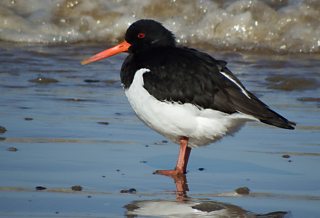
Oystercatcher. Credit: Antony Taylor
Oystercatcher
Population size: 110,000 pairs in 2009. Oystercatchers are among our more distinctive waders, with their pied plumage, red bills, legs and eye, large size and piercing call. Although mostly associated with coastal and estuarine regions, Oystercatchers are also found inland, and such a widespread bird might not appear to be in trouble. However, it is listed as ‘Vulnerable’ on the European Red List, and as the UK holds 30-40% of both the European breeding and wintering populations, a loss of our Oystercatchers would have large knock-on effects for the species as a whole. More than 50% of the wintering population is also restricted to ten or fewer sites, increasing the vulnerability of this species if birds at just one of these sites are lost.
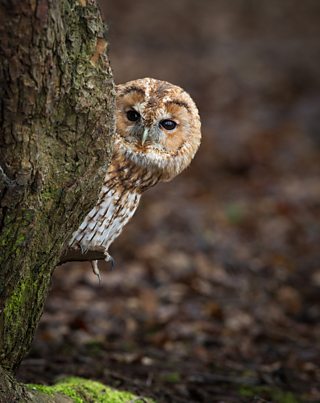
Tawny Owl. Credit: Peter Orr
Tawny Owl
Population size: 50,000 pairs in 2005. The Tawny Owl’s “twit-twoo” call (which is actually a male and a female calling to each other) is one of the more familiar sounds of the British countryside by night. However, this duet is getting harder to hear, as the Tawny Owl population is in a sustained decline. The number of breeding birds has fallen by 31% over the last 25 years, but worryingly, the reasons for this trend are not yet well understood.
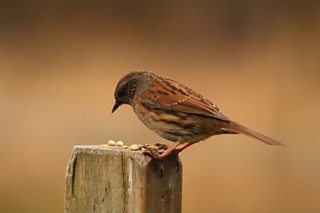
Dunnock. Credit: Laurence Whitaker
Dunnock
Population size: 2.5 million territories in 2009. The quintessential ‘little brown bird’, the Dunnock is a familiar species to many. Its ‘squeaky wheel’ song is heard widely in the spring, and its breeding behaviour has been subject of many pioneering studies. However, this species’ breeding population has fallen by 38% since 1969, brought about by a reduction in overwinter survival, which is thought to be mostly driven by agricultural intensification leading in turn to a drop in food availability in the winter.
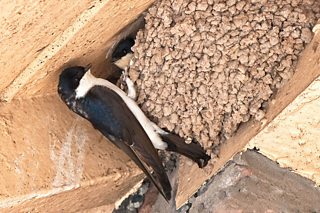
House Martin. Credit: Duncan Cooke
House Martin
Population size: 510,000 pairs in 2009. House Martins live alongside us during the summer months, nesting in the eaves of our hones, but after that, these acrobatics fliers are a mystery – we don’t know where they spend the winter, and this makes it difficult to know how best to target conservation initiatives. What we do know, however, is that Britain’s House Martin population is contracting, with a decline of 33% over the 25 years to 2014 and 49% longer term. Declines have been particularly pronounced in urban areas, perhaps indicating that loss of nesting sites in this environment is a factor.
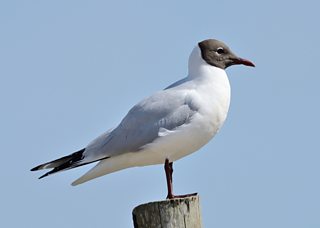
Black-headed Gull. Credit: Shane Jones
Black-headed gull
Population size: 138,000 apparently occupied nests in 1998-2002. This small gull is a common site in many urban areas in the winter, when birds move inland to parks and rivers to find food. At this time of year, they lack their distinctive dark hoods, but they congregate in noisy, lively and bold flocks, making them conspicuous. It is this wintering population that leads to this species’ position on the Amber List (the breeding population is actually increasing), as numbers have fallen by 33-41% over the last 25 years. Further research is needed to determine the causes of this population change.
