Ben Dalgleish is a 17 year old wildlife photographer from Staffordshire. Read how he balances his love for nature with his school life, and how he got into taking such wonderful photographs.
I can remember as a younger boy watching hedgehogs. I would spend hours glued to the back door watching their behaviour as they pottered around the garden. As a ten-year-old boy I was fascinated by their spikes and ability to see in the darkness. However, as the summer months came to an end, and winter drew closer, my time watching the hedgehogs slowly disappeared as they began to hibernate. Soon after this, I lost my love for wildlife for several years simply, because I could no longer watch the hedgehogs.
I reconnected with my love of nature when testing my new digital camera and telephoto lens that I received as a Christmas present in 2013. My parents took me to a local nature reserve on Christmas Day. I was eager to try out my camera, but at that time birds were just a subject for me to test the camera upon. Soon after the visit I realised that my local nature reserve was a haven for birds, wildflowers, and mammals that could provide me with a diverse range of wildlife to photograph. I began to spend more of my spare time taking photos on the reserve. As I watched the wildlife around me I learnt their behaviour, where they fed, what food they preferred, and where they nested. I also discovered the best places to photograph them. Armed with this information, my images gradually became better. From this short amount of time exploring nature wildlife photography clicked for me and sparked an exciting hobby and passion.
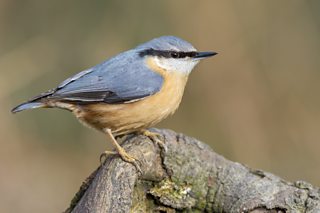
Nuthatch. Credit: Ben Dalgleish
Why I photograph wildlife
Growing up I was a very shy child and never expressed myself creatively. I was one to enjoy my own company and keep myself to myself, and very rarely made new friends. However, wildlife photography has given me the confidence to interact with new people. In the past three years of photographing wildlife I have made fantastic friends with whom I share the same interests and I also have shared memories with them, which I will cherish forever.
Credit: Ben Dalgleish
Within all my wildlife images I always aim to get a reaction from the viewer by creating a narrative and in so doing, to leave the viewer asking questions. One image where I achieved this was when I photographed Fallow Deer, Dama dama, after the rutting season. The deer rut can be very intense and brutal, and while photographing this one Fallow Deer I noticed wounds around his head. By creating tight, close-up portraits I was able to capture those wounds to show the extreme struggles that the males go through in order to find the right mate, which also ensures that the strongest genes are passed through into the herd. I was very fortunate as this image was used by BBC Springwatch to celebrate reaching 300,000 followers on their Facebook social media platform. As a bonus, it was also published in my local newspaper.
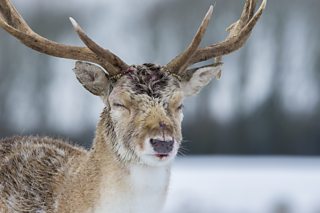
Fallow deer. Credit: Ben Dalgleish
What I love most about wildlife photography is the moment you realise you have captured the image you have spent days, weeks, months or even years trying to achieve. For me, nothing beats that feeling. In the summer of 2015 I decided to scout for the perfect location where I could observe and photograph Common Kingfisher, Alcedo atthis. After weeks of observations, patiently waiting, and using my field craft, it all finally paid off. By concealing myself into the reeds I managed to photograph two adult Kingfishers and their three young without a hide from only 10ft away. The satisfaction was overwhelming. To be so close to such a shy and elusive bird without a hide and also capture the images I had wanted was truly incredible.
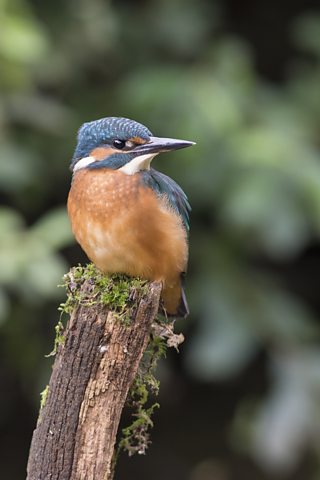
Kingfisher. Credit: Ben Dalgleish
Another aspect of photography that I enjoy is capturing images of wildlife that the majority of people do not get the chance to see, or did not even know existed around them. It allows to me to give people an insight into the amazing wildlife that is local to them and in particular, Adders, Vipera berus. After showing Sixth Form friends and teachers my Adder images, they could not believe that they were wild and free. People can be very sceptical and wary of Adders as they are venomous snakes, but once you understand the ecology, and their behaviour, there is little chance of being harmed. For some people they are an animal that eludes them. Luckily, I live near a thriving population, which gives me the ability to observe and photograph adders whenever I choose.
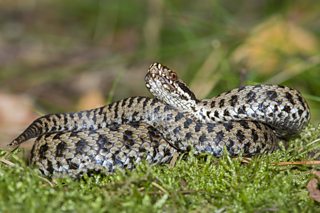
Adder. Credit: Ben Dalgleish
Throughout my three years of photographing wildlife, owls have become one of my favourite birds to observe and photograph. Two owls in particular that I favour are the Tawny Owl, Strix aluco and the Barn Owl, Tyto alba. What interests me most about Tawny Owls is how individual their feather plumage is: for example, I monitor and photograph six different Tawny Owl sites within a 10 mile radius of my home, and each owl's plumage varies in colour from morphs of brown, through to rufous, and then grey. I am very lucky to monitor a grey Tawny Owl. This owl is very special to me because of its special colouring. Tawnies that are grey are unlike any other described species of Tawny Owl. What sets them apart from the rest is their facial disk. They have unusual, yet distinctive narrow circular bands of alternating light and brown feathers and this has never been seen on any of the rufous or brown Tawny Owls. Photographing these owls can become extremely challenging as at times they can be elusive and a great challenge. However, when all the elements roll together into one - and you are in the right place at the right time - the outcome is amazing.
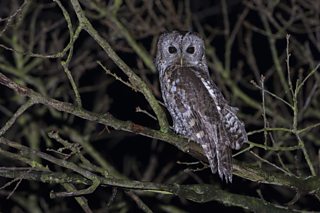
Tawny owl. Credit: Ben Dalgleish
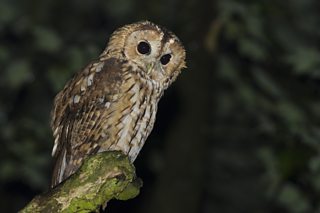
Tawny owl. Credit: Ben Dalgleish
Barn Owls stand out to me because of their beauty and elegance. Watching them hunt in a meadow while the sun is setting is simply breath-taking. I feel privileged to have a pair just minutes from my home, and throughout the spring and summer months of 2015 I spent all of my free time watching them. For me, observing them was much more fun and exhilarating than photographing them. At times I would rest my camera down, sit in the field, take in the scenery, and watch them hunting. One of my best encounters with the pair of Barn Owls was photographing them returning to the nest with prey for the young. I tried all different angles but I wasn’t capturing a ‘WOW’ image that stood out. As the sun was setting I began losing the light and time, I rushed to reposition myself as one of the owls was flying very slowly back to the nest with a shrew gripped within its talons. Without thinking I took several photos and that is when a ‘WOW’ image lit my LCD screen.
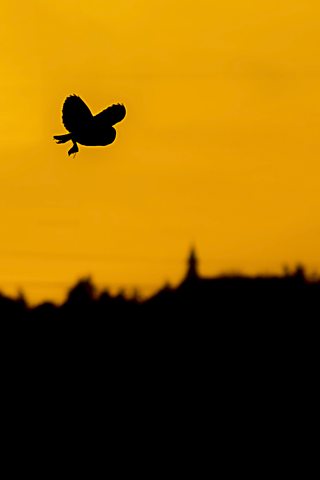
Barn owl. Credit: Ben Dalgleish
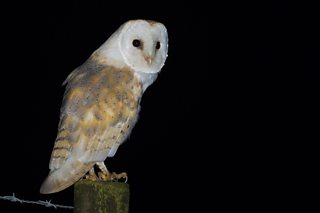
Barn owl. Credit: Ben Dalgeish
How I balance photography with Sixth Form
Balancing my Sixth Form life with wildlife photography can become challenging and frustrating at times, but I am fortunate to have a school that understands how much my photography means to me. They have always supported me when I have trips away and have never said no. For example, I have had several chances to visit Scotland in January and on each occasion they allowed me time away from school. Without being this time off I would have missed many wonderful photographic opportunities to capture wildlife of which I have always dreamed.
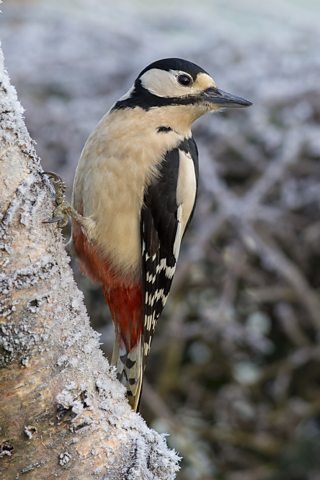
Great spotted woodpecker. Credit: Ben Dalgleish
One of the best things about being in Sixth Form whilst being a wildlife photographer is the school holidays. These holidays always coincide with the seasons when the wildlife is at its peak and changing drastically. The holidays allow me to capture the intimate moments of spring when the target species begin courting, through to when they are raising young, and then on to the harsh bitter winters they may face. It allows me to document the wildlife throughout the year without missing such important intimate moments.
Wildlife photography has become an expensive hobby with the rising cost of professional camera gear, as well as the expense of getting to and from locations. I am extremely lucky to have an amazing family and a girlfriend who have supported me all the way. Without their support I would not be the wildlife photographer I am today, and I most certainly would not have managed to capture the wildlife I have or seen. I am very grateful for everything that they have done for me.
