
By Bex Lynam, The Wildlife Trusts
Spotting a humpback whale is high on the wildlife-watching dream list for many people around the world, but few would expect to be able to fulfil that dream here in the UK, let alone in winter. Our waters are not recognised as a humpback hotspot, but every year sightings are being recorded…and they’re increasing.
Whale ahoy!
In 2020, The Wildlife Trusts know of around 39 humpback whale sightings off the coast of Cornwall, compared to 19 the previous year. These ocean giants were spotted numerous times in December alone, off the west coast of Cornwall and the Isles of Scilly. In January 2021, there were 15 reported sightings just from Cornwall, whilst at least one humpback spent Christmas and New Year around the Isles of Scilly!
Many people may be completely unaware that humpback whales have also been seen repeatedly off the east coast of the UK, for at least the last 10 years. In September, people were enthralled by the acrobatic breaching and fin-slapping activities of a couple of humpbacks, just 7km from Flamborough Head on the Yorkshire coast. Sightings even closer to land have also been recorded off the Norfolk coast in recent years.
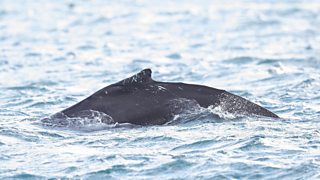
Humpack whale dorsal fin Isles of scilly Jan 2021. Image by Joe Pender
Mysteries of the deep
Humpback whales can reach 17 metres in length and weigh 35 tonnes, that’s as heavy as three fire engines! They sport a slender set of pectoral fins, which can reach a third of that body length. Their big bushy blow often gives their presence away when they surface to breathe. As they submerge once again, you see the slow roll of a hooked dorsal fin on that huge, darkly coloured body. When the animal dives, a fluke (tail) appears momentarily, giving us a glimpse of the unique pattern it carries for each individual.
Humpback whales make huge migrations of up to 16,000 miles each year and the males famously produce a highly complex song. They spend half the year in polar waters fattening up and then travel to warmer, tropical waters where they breed, socialise and raise their young during its first months of life. Yet for all that we have learned about them, there is still so much we don’t know.
Across the country, Wildlife Trust volunteers train members of the public to carry out surveys from the coastline. This is how we collect data on humpback whales and other cetaceans (whales, dolphins and porpoises) using our coastal waters. Our marine life is exposed to multiple threats and so gaining a better understanding of population size and behaviour is crucial to conserving these animals.
Save the whales
Humpbacks were hunted to the brink of extinction before a moratorium on whaling was introduced in 1966. Now it’s believed the population has made a partial recovery, though they are not nearly back to their former levels of abundance.
Local resident and wildlife expert Lucy McRobert witnessed the Christmas humpbacks off the Isles of Scilly for herself. “Thanks to photographs, 'our' whale was positively identified as an animal seen off Mount's Bay, Cornwall last year, nicknamed 'Pi'.” she says, “Hundreds of people on Scilly turned out to enjoy the spectacle."
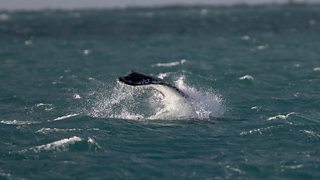
Humpback whale Isles of Scilly January 2021. Image by Joe Pender
"New Year's Eve and Day brought an even bigger treat, as around four fin whales cruised past the islands to the north and south. More humpbacks were seen further offshore, with sightings from West Cornwall numbering three or four animals, too!"
If you’ve spotted a humpback whale, or another whale, porpoise or dolphin your local Wildlife Trust would love to hear from you. If you spot the humpbacks in Cornwall you can report them here. Can you provide a good quality picture to go with it? The more data we have, the more we can do to protect them.
