Get Tracking! Discover the wildlife on your doorstep

Centre for Alternative Technology
Dulcie Fairweather from the Centre for Alternative Technology gives us her top tips for discovering winter wildlife where you are.
During lockdown last spring, many of us really got to know the wildlife on our own doorsteps, finding moments of joy and solace in the wonders of nature.
Whilst making that connection might seem a bit more difficult in winter, this can actually be a fantastic season for spotting the signs of our wild neighbours.
If you’re lucky enough to have a garden, now is a great time to explore it from new angles, and even a brief walk in your local park can help you spot places to return to when we’re all able to linger longer.
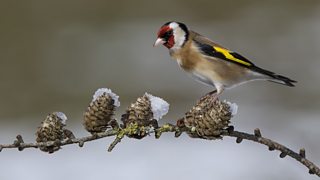
Winter is a great time for spotting species like goldfinch among bare branches. Image by Gavin Vella
1. Tune in
To really connect with nature, we need to pay close attention to our surroundings.
Take just a few minutes in your garden or at your window to sit still and be aware of your own senses. Tune in to the sights, sounds and smells of nature: bird calls, tree scents and small movements.
2. Get down
Changing your perspective and becoming more familiar with ground level can help you to discover natural treasures such as droppings, feathers, bones, fur and shells.
Sometimes the signs will be right in front of you – some species, such as fox, mark their territory by placing scat in prominent places along the borders.
Feeding signs are also good indicators of winter wildlife; look out for chewed nuts, discarded pine cones and stripped bark from nearby trees.
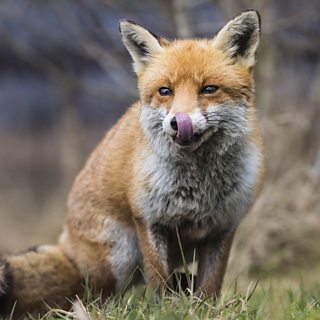
Foxes mark their territories with scat, making them easy to find. Image by Dulcie Fairweather
3. Stay on track
Winter is an ideal time to spot tracks in mud and snow, great for practising your tracking skills.
If you’d like to go one step further, making your own print tracker is a really fun way to try to capture a distinctive set of footprints.
Fill a baking tray with sand and smooth the surface, then place some suitable food in the middle of the tray and leave overnight.
The exciting part is checking the tray the next morning for wildlife prints – use a track guide to identify what has enjoyed the feast.

Head out into the snow to look for fresh footprints. Image by Russell Bain
4. Follow the trail
Animals will often use the same paths again and again. Badger runs, for example, are well defined from frequent travel between setts, latrines and food sources.
Leaving a small stick in a gap in a fence or hedge will let you see if it is disturbed by an animal passing through.
Sometimes you might find a clump of fur from where they’ve scrambled past – badger hair can often be found where a run passes under wire fences.
5. Listen out
You don’t always have to go searching for clues – the sights and sounds of some winter wildlife can be hard to miss.
Great spotted woodpeckers make no secret of their whereabouts as they claim their territories in winter through intense drumming, while tawny owl calls (too-wit! too-woo!) can be heard more in winter than at other times of year.
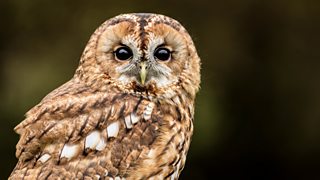
Tawny owls are more vocal at this time of year - listen out for their too-wit too-woo! Image by Dulcie Fairweather
6. Look up
Our bare winter landscape gives us a clearer look at one of nature’s most delicate structures: nests. Easier to spot when the trees have shed their leaves, each species has its own style, location and materials.
7. Discover the dark
Moth traps are a fantastic way of discovering a whole new secret world.
Whilst you can buy a trap, it’s cheaper – and fun – to make your own using a bucket, a funnel and a fluorescent bulb.
If you want to keep it really simple, try hanging a white sheet on a washing line and shining a torch behind it. Turn off all your other lights – and wait…
Look out for the aptly-named winter moth, one of a few moth species that remain active in winter. They’re important for great tits and blue tits, who feed their young on the caterpillars, timing their breeding to coincide with the moth’s lifecycle.
8. Bring nature to you
If you aren’t able to head out in search of wildlife, why not encourage them to come to you?
If you have a garden or backyard, you can make it more wildlife friendly with messy edges, plants for pollinators, or a small pond. Or a windowsill can be a place to plant flowers or hang a bird feeder.
Not only will this allow you to practice your wildlife spotting skills from the comfort of your own home, you’ll also be giving nature a much-needed helping hand through the cold winter months.
Ultimately, if you keep your eyes open and your mind inquisitive you will be rewarded with a glimpse of the wildlife on your doorstep – a little spark of nature’s magic to help brighten the winter months.
