
RSPB Arne covers around 550 hectares, this represents almost 1% of lowland heath in England. It is thought that we have lost 80% of our heaths since 1800. Now only 58,000 hectares remain. This decline is mirrored in other countries so that now, globally, this habitat is rarer than tropical rainforest. Many of these are fragmented and isolated from each other by roads, housing or other habitat types, forming barriers impassable to many of these species.
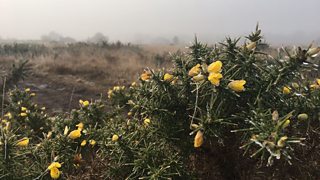
Happily, most of the remaining heaths are now in the hands of organisations sympathetic to their needs and are being well looked after.
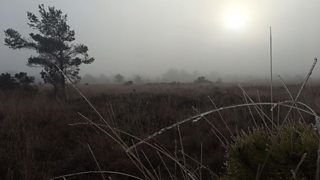
When we think of heathland we often think of the wild expanses of beautiful flowering heathers and gorse, but there is so much more to the heaths. What is called ‘heath’ is in fact a complex mosaic of habitats, including grassland, bogs, ponds, mires, scrub, wooded edges, trees and, of course, the heather heath itself. But even within the term ‘heath’ are concealed three broad habitat types: dry heath, humid heath and wet heath. Each of these is characterised by its own community of animals and plants. A good example are the four species of heather found in Dorset: bell heather likes the dry heath, while cross-leaved heath prefers humid heath and the scarce Dorset heath is found in the wet heath. The fourth; ling or common heather is less fussy and can be found throughout all but the wettest of heaths.
The complexity of habitats has resulted in a fantastic diversity of animals and plants, including our very own carnivorous plants. We have probably heard of the sundew, but did we know that there are three different species on the heaths? What about the tiny pale butterwort with its beautiful pink flowers that feeds on small insects?
Heathland is a very good place to be a carnivorous plant. Thousands of invertebrate species call the heath their home, of these over 250 are rare invertebrate species associated with heathland, many of these found nowhere else in the country.
At RSPB Arne, 22 species of dragonfly and at least 18 species of grasshoppers and crickets have been recorded, among them the striking large marsh grasshopper. The female of this comes in three colour forms; green, brown and even pink!
Even this diversity pales when we look to spiders or hymenoptera (bees, wasps and ants) 237 species of spiders have been recorded at RSPB Arne, including the wasp spider, a recent colonist to Britain and the huge raft spider, most commonly found on ponds but it does leave the water to find prey.
But even the spiders are not safe; the spider-hunting wasps actually go in search of these top invertebrate predators to paralyse them, drag them into their burrow so that their larvae have something to feast on.
Many of our solitary bees and wasps, which constitute well over 90% of our species and are not going to invade your picnic and are even less likely to sting you, make burrows in the heathland soil; the spiny mason wasp even builds ‘chimneys’ over the entrance. Why they do this is not known. It is well worth staking out a collection of holes in the ground to gain a glimpse of these animals’ fascinating lives.
Talking of fascinating lives, you may know that blue butterflies’ larvae develop in ants’ nests and we have the stunning silver-studded blue on our heaths, but did you know that the scarce seven-spot ladybird does the same thing in nests of wood ants?
We can’t talk about heathland without mentioning that we have all six native species of reptiles at RSPB Arne, including the elusive smooth snake and sand lizard. In breeding season, the male sand lizard pulls out all the stops to attract a mate and turns a spectacular green colour. The females dig egg-laying burrows in ground not unlike that occupied by bees and wasps. So when keeping an eye out for the insects you may well spot a sand lizard excavating her burrow.
The heaths at RSPB Arne are of course also home to a large number of bird species and the Dorset heaths are of international importance for breeding woodlarks, nightjars and Dartford warblers. RSPB Arne was the last place Dartford warblers clung on in the early 1960s when the population in the UK was reduced to six pairs. We now have 70 territories at Arne alone and the national population is estimated to be around 3,000.
The fluting, almost melancholy, song of the woodlark on a chilly morning in March and the bizarre churring song of the nightjar on a warm June evening must be the most iconic heathland sounds. Both species are found at RSPB Arne; nightjars abundantly while woodlarks are much more elusive.
Even though the RSPB has been at RSPB Arne for 50 Years, we still continue to discover new species here. The recent bio-blitz found 667 individual species, 336 of which were new to the reserve, and 37 on the Species of Conservation Concern Red List.
This included Brandt’s bat, which was the first time this species had been recorded on our reserves and the lichen Bacidia subturgidula, which has only been recorded previously from three places in the world.
2,565 species call RSPB Arne their home. That we know of, there may be many more awaiting discovery.
