What's in a name?
Post categories: The Curious Owl
 |09:13 UK time, Monday, 28 February 2011
Out bird watching last week I tweeted to ask if there is a good pub near WWT Slimbridge, and someone answered that there is one beyond "the slim bridge". After six years visiting this reserve I'd never made this connection, and it got me thinking about how important these links can be.
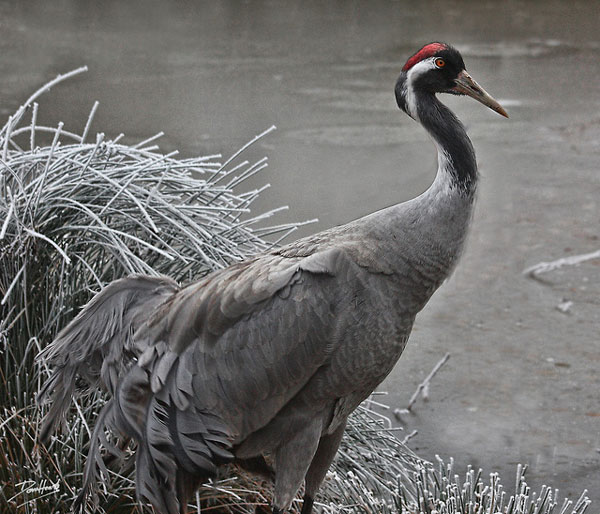
Home of the famous crane school, Slimbridge has an intriguing presentation about the history of cranes in Britain. It says that cranes were once widespread in the UK and that evidence for this can be found in the hundreds of place names that reference the bird, as well as illustrated manuscripts and even ancient royal menus.
Cultural connections, it seems, can tell us a lot about wildlife. Perhaps we should pay more attention to them.
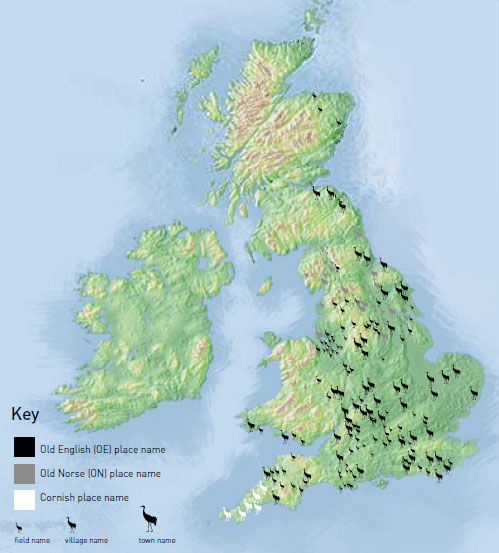
Map of place names in the UK related to cranes © WWT
Like cranes, many British animals that have previously gone extinct are being considered for reintroduction, but there's a problem; accurate records of where many once lived don't exist, which you need to know if you want them to successfully re-establish. Putting beavers back into the Thames is unlikely to work if they never lived there in the first place.
But there is a way to find out how populations of less well-documented species once fared.
Take the burbot, a freshwater fish from the cod family, for example. There are no recorded catches of it in the UK since the 1970s. River pollution probably killed it off, which means it's now both a Biodiversity Action Plan species and part of the IUCN's species recovery plan. Scientists hope that the big improvement in river cleanliness in recent years means that successful reintroduction is possible. But as it's a species with low commercial value, records don't give us a reliable timeline of its original decline.
This is where place names come in.
In the past, the burbot must have been important enough for people to name places after it. Cambridge's Downing Street (close to the River Cam) was previously Burbolt Lane. Barbot Hill Road and Barbot Hall in Rotherham are both thought to indicate the presence of the burbot in the River Rother. With this information it's possible for scientists to establish which rivers successfully provided ecological niches for the fish in the past.
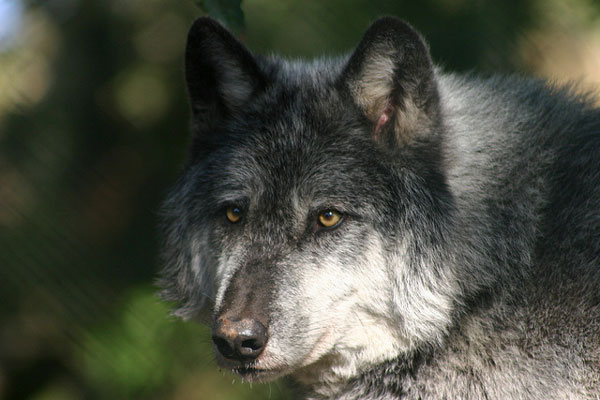
Ulva, Woolcombe, Woolley, Brackley, Cae Blaidd, Wolfridge, Wollpits.
Wolves have given their name to many UK landscape features. Image © Joanne Coupe.
Iconic species such as wolves and beavers have also given their names to places in England. This data has been used to suggest that the former were still widespread in England, but beavers were already in decline, when the Anglo-Saxons named our countryside.
And it's not just roads and buildings. Poets have described white-tailed eagles circling the dead on battlefields. Old newspapers and hospital records report interactions between humans and wolves, while angling records can show where freshwater fish once lived. Such anecdotal information can be of immense use to scientists.
Perhaps it's worth remembering the next time you go for a drink at the Old Haart, or take a walk through Wolfelee of Cranford. It's also a salutary lesson for today's wildlife. Unless we respect them, study them, and embrace them into our culture, we may lose them for good and never know where they once lived.
Sam Dixon for The Curious Owl, a sideways look at British nature.

Comment number 1.
At 17:47 28th Feb 2011, TheRealDerelict wrote:Beavers and the Thames may not be so far-fetched. There is the Beverley Brook https://en.wikipedia.org/wiki/Beverley_Brook that runs down through what is now Richmond Park eventually hitting the Thames at Barn Elms. I don't know whereabouts along its length the beavers would have been but much of it would once have been flat and marshy. The most recent native beaver (if historical records are to be believed) came from Bolton Percy in the same year as the French Revolution when a bounty was paid for its head. See https://www.independent.co.uk/environment/nature/beavers-return-in-full-force-1705306.html
Complain about this comment (Comment number 1)
Comment number 2.
At 19:51 2nd Mar 2011, aggressive onion vendor wrote:very true, we must defend natural habitats against greedy short term exploitation and funding cuts, also a question; where was the last wolf in england killed?
i'd heard it was 'humphrey head at morecambe bay.
Beautiful photographs.
Complain about this comment (Comment number 2)
Comment number 3.
At 13:08 4th Mar 2011, mathew f wrote:All this etymology was marvellously collated in 'Pedigree: Words from Nature' (New Naturalist 56 (1973))... and I'm working on my own story on the plethora of names of London ('a wild (or 'the wild one's') place') that express her lost and hidden glorious nature - beavers, cranes, kites, pike, eels, poplars, and elms. With over 1000 road names and over 100 districts in London directly and indirectly reflecting the historical ecology, it's proving to be fascinating, and one way in which we can link into the public's fascination with place. I'm originally from Croydon - 'the valley where the wild saffron grows' (or, as we think, autumn-crocus, grown for its starch).
Complain about this comment (Comment number 3)