River restoration: does it bring back wildlife?
Post categories: The Curious Owl
 |15:48 UK time, Friday, 25 February 2011
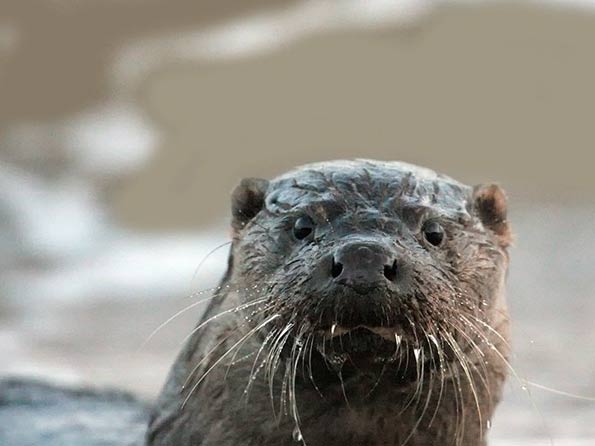
River restoration is often held up to be one of the success stories of UK conservation. The newspapers report that there are increasing numbers of sea trout, otters and salmon in our rivers. But do these reports mask a different story? Have efforts to improve our waterways so far been a waste of money? Jeremy Biggs from Pond Conservation thinks so, and has been in touch to put his point across.
The conservation story begins in the 1990s. Biologists started to think about how best to repair damage caused by the post-war drive to increase food production. Many rivers had been straightened and deepened, as Jeremy puts it, “their natural habitat ripped out by diggers, to become more than land drains.”
The solution seemed simple. Put back the meander bends and side channels and make the river shallow again. All the wildlife would return.
During this time, Jeremy says he was a “big enthusiast”. Indeed he helped start one of the biggest projects. “But,” he says, “things didn’t work out the way we expected. An increasing number of European and American freshwater biologists have now also realised that restoring rivers is a lot harder than it looks. In fact putting back the bends and increasing habitat diversity in the channel doesn’t deliver the expected wildlife benefits.”
He points to the findings of a study from 2010 to back this up: “Out of 26 restoration schemes studied, none increased the variety of invertebrate animals – which ought to be amongst the first creatures to respond to habitat improvement.”
“The truth is that although we understand well enough what happens when we mess up rivers, ponds and streams,” he continues, “we’ve got much less idea how to put things right again. Usually a big part of the problem is that even if we put the river channel habitat back, we are still left with the problems of water pollution.”
An example of this, he says, is the Thames. Lots of time, effort and money has been spent cleaning it up, improving sewage works and in places putting back the habitat. “But the river’s water plants in the county of Berkshire - once rich and diverse - have been described by eminent botanist Mick Crawley as ‘one of the most comprehensively degraded’ in the county,” he says. “Despite endless re-introduction, it’s finally been admitted that the Thames is no longer suitable for salmon, and there are signs that another sensitive fish, the barbel, is struggling.”
His conclusion:
Fixing rivers is incredibly expensive, so we need to find out if we can make it work. We also need to spend more on the things we really are sure make a difference. More cost-effective initiatives might include putting back clean water ponds and protecting the remaining top notch rivers. At present, we spend too much cash making mediocre rivers slightly, or not at all, better.
I spoke to Helen Perkins, the Wildlife Trusts' Water For Wildlife Project Manager, to see if she was more optimistic. She broadly agrees with Jeremy’s main points, although she does say that the existing practice has helped some species, for example the water vole. But overall, she says, “we need to look more at the catchment scale not the short section of river.” What that means is looking at the bigger picture - for example the uplands and the erosion and peat that is washed into rivers from there – not just the river itself.
There are signs that the government is shifting towards this way of thinking, she says. She’s hopeful that the government’s Natural Environment White Paper, due out in spring, will reflect this and enable efforts “to turn England’s degraded rivers and streams into fully functioning ecosystems that are rich in wildlife.”
But what about the cost? We’re not exactly awash (excuse the pun) with cash at the moment. Helen admits that some careful prioritizing will need to be done. But also points out that water companies have funded Wildlife Trusts' work in the past and it will be in their interest to continue doing so. Catchment scale work is by definition more expensive than short section work, so with almost certain funding cuts choosing the right areas will be vitally important.

Comment number 1.
At 19:58 30th May 2011, Denise wrote:Love everything on the Otters!
Heard my first Cuckoo last week, been a long time since I have!
Had a beautiful moth in the garden, looked it up and the closest I can find is a cinzabar, but it was more triangles of black and red from edge to edge, get slowworms in the garden along with the frogs.
Complain about this comment (Comment number 1)