Guide: The butterflies and moths of high summer
 |12:31 UK time, Monday, 26 July 2010
Guest blogger: Stephen Moss is a naturalist, author and TV producer at the BBC Natural History Unit. He is currently working on Birds Britannia, a series on birds and the British for BBC Four.
With a month or so left until autumn arrives, it's time to check out some of our finest insects - the butterflies and moths of high summer. Too late to look for orange tips or elephant hawkmoths, but there's still plenty to see.
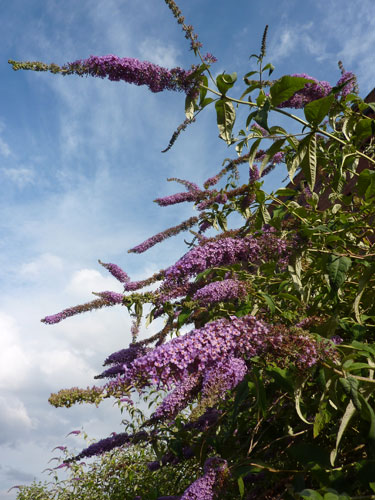
- Peacocks on buddleia: 'the butterfly bush', a brash purple import from the Himalayas, is a magnet for hungry insects, especially on warm, sunny days. Look for the stunning peacock, and if you can, check out its dark underwings, so different from the 'eyes' on the top. Small tortoisheshells also love buddleia, as do painted ladies, though sadly this year they are few and far between. And if you're really lucky, as I was recently, you may even see a hummingbird hawkmoth - which really does live up to its name as it buzzes between the blooms in search of nectar!
- The grassland browns: high summer sees the emergence of several of the 'browns' - not perhaps our most striking butterflies, but still beautiful in their own way. Meadow brown is the commonest - indeed the most widespread - UK butterfly; but also look for the smaller, orange and brown gatekeeper (once known as the hedge brown); and the marbled white (actually a brown!), all of which can be seen in sunny areas of rough grassland in many parts of lowland Britain. At the woodland edge look out for speckled wood and the darker ringlet, almost black on top, with its distinctive 'hula hoop' underwing pattern.
- Red admirals on fallen fruit: as autumn approaches, look out for red admirals feeding on the rotting fruit - they get so 'drunk' with the fermenting juices they let you get really close - a great opportunity to take photos.
- Moth night: if you want to see which moths live in your garden, just leave the bathroom window open and the light on! Alternatively try a sheet and a torch just after dusk. But beware - with 2,500 different species you may have your work cut out identifying them...
Buddleia: The butterfly bush
Keep an eye out in sunny areas of rough grassland

Me on a butterfly hunt
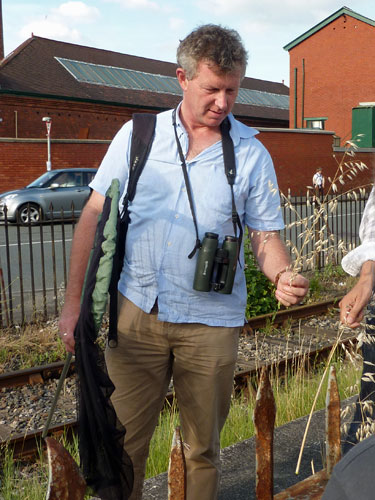
Good luck!
Editor's note: take part in Butterfly Conservation's Big Butterfly Count, a nationwide survey aimed at helping us assess the health of our environment, which runs until 1st August 2010. And while you're at it why not take a snap of the little beauties. For inspiration, take a look at the blog post of our favourite butterfly photos from the BBC Nature Summerwatch Flickr group.

Comment number 1.
At 15:40 26th Jul 2010, krystalwist wrote:I'm taking part in the Big Butterfly Count and i'm having a hard time telling the difference between the common blue and the silver studded blue. Can anyone help?
Complain about this comment (Comment number 1)
Comment number 2.
At 17:50 26th Jul 2010, Ella Davies BBC wrote:@krystalwist - We had the exact same problem checking a photo for our Flickr blog!
The following questions should help you ID your sighting:
Is the margin (white outer fringe) of the hindwing free from black dots?
Is there a thin black border to the uppersides of the wings?
On the underside – are there plain black marks without shiny scales near the margin?
On the underside forewing – are there two black spots near the bottom?
If you answer yes to most of these questions you are probably looking at a common blue. Silver-studded blues are named for the brilliant blue scales in the black marks on the underside of their wings and live largely on heathland.
There's more help to ID butterflies on Butterfly Conservation's website:
https://www.butterfly-conservation.org/butterfly_identifier/17/identify_a_butterfly.html
Complain about this comment (Comment number 2)
Comment number 3.
At 19:46 28th Jul 2010, janey100 wrote:We have seen lots of butterflies, including 3 red admirals that flew in the kitchen window, and moths today, we have also seen around 30+ tiger striped caterpillars on plants in our garden in East Yorkshire.
Complain about this comment (Comment number 3)
Comment number 4.
At 20:42 28th Jul 2010, femme71 wrote:At the weekend I found four puss moth caterpillars devouring my willow tree. I put them in a box with plenty of leaves and now they have made cocoons on a piece of bark. Does anyone know how long it will be before they turn into moths and should I keep them somewhere warm?
Complain about this comment (Comment number 4)
Comment number 5.
At 11:29 30th Jul 2010, mark wrote:I am not much of a moth/butterfly spotter but yesterday in my back yard I saw what I thought was a tiny hummingbird.
After looking it up on the internet I now believe it was a hummingbird hawkmoth
I have never seen one of those before.It was a nice surprise
Complain about this comment (Comment number 5)
Comment number 6.
At 15:44 30th Jul 2010, famula71 wrote:seen in my garden recently and not in my new butterfly and moth book,small cerise with black edging moth,not a six spot burnet????
Complain about this comment (Comment number 6)
Comment number 7.
At 16:29 30th Jul 2010, Ella Davies BBC wrote:@janey100 Those tiger striped caterpillars are quite likely to be cinnabar moths :)
@famula71 have you tried the identifier here for your mystery moth:
https://www.butterfly-conservation.org/moth_identifier/37/identify_a_day_flying_moth.html
Great sightings everyone! You can see how the Nature UK team got on with our butterfly count here:
https://www.bbc.co.uk/blogs/natureuk/2010/07/the-nature-uk-teams-big-butter.shtml
Ella
Complain about this comment (Comment number 7)
Comment number 8.
At 21:48 31st Jul 2010, famula71 wrote:thanks Ella,looks like a cinnabar moth with variations.
Complain about this comment (Comment number 8)
Comment number 9.
At 01:46 16th Aug 2010, ashleyhr wrote:I've had several recent sightings, in an urban garden between Bromley and Croydon (but featuring a large buddleia) of a wonderful Jersey Tiger moth - which I managed to photograph three times (I've just tried e mailing them to [email protected] and [email protected]). My understanding is that the moth's main UK strongholds are Jersey, as you'd expect - along with Devon, Dorset, Somerset and the Isle of Wight. So if you live there, or in south London, keep a look out!
Complain about this comment (Comment number 9)
Comment number 10.
At 16:06 11th Sep 2010, Rosemary Lowe wrote:For a couple of years now I have seen tiny day flying moths? in my garden, these always appear to be on herbs such as thyme. It is fairly dark brown with tiny dots and dashes around the margin of the wings and these marks are in yellow. It also appears to have a little "snout" It rests on the thyme leaves and flowers of the thyme and when at rest is a small wedge shape. The wings are flat and not folded. As said, I believe it is a moth, but perhaps it is a butterfly. I have several insect and butterfly/moth books, but cannot find it. Can anyone help to identify this.
Complain about this comment (Comment number 10)