

A death in custody
Frank Ogburo was 43 and he was on a brief tourist visit to London to see friends in September 2006.
A few days before he was due to return to his native Nigeria it is probable that he was involved in a domestic altercation in the friend's flat where he'd been staying in Woolwich.
No one was harmed in that incident but the police were called by a neighbour who heard raised voices and had grown concerned about the fracas.
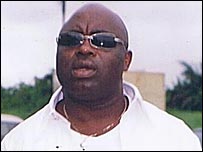 As Frank Ogburo came out of the Vista Building of high rise flats close to Woolwich town centre he encountered two uniformed police officers.
From the CCTV footage that covered the front entrance a calamity is seen to unfold. First of all the police are seen to engage Frank in conversation but then things turn ugly.
An inquest at Southwark Coroner's Court has now heard that after separate discussions between two officers and Frank and a woman staying in the same flat, Frank was asked to leave the area so as to avoid another flare up.
The jury accepted that Frank Ogburo refused the first request to leave and was then told that he was likely to be arrested if he didn't go. Eye-witnesses saw a struggle between the officers and Frank which resulted in him being sprayed with CS Gas, being handcuffed and brought to the floor.
One witness I spoke to, the night after the incident, told me he shouted at the police officers, remonstrating with them that they were in danger of doing serious harm to the man on the ground.
This individual told me he'd been in the Territorial Army and knew the consequences of restraint.
As the struggle on the floor continued more people gathered. Frank Ogburo was heard to shout "you're killing me, I can't breathe". CCTV footage captured several more officers joining in the restraint and striking Frank to subdue him. By this point Frank's wrists were in handcuffs behind his back.
The CCTV footage continued to show four officers were physically on top of Frank, with another looking on. Crucially one officer placed a knee on the prone man's neck for a prolonged period and despite Frank no longer struggling, none of the officers seemed to notice he was not responding.
Positional asphyxia is a condition brought about when the restraint is so severe, an individual can no longer move their neck, chest wall or diaphragm to breathe.
Ever since the inquest into the death of Roger Sylvester in 2003 it has been well recognised in the police service that that there are potentially fatal risks associated with restraining an individual face down. Guidelines were drawn up as a consequence of that case to ensure all Met officers were trained to understand those risks.
They were clearly not heeded when Frank Ogburo was restrained. His death according to the jury was as a "consequence of restraint".
The jury went on to say in their narrative verdict, "had the risk factors been correctly identified and acted upon it is likely that Mr Ogburo would have survived".
In a highly unusual move the Assistant Deputy Coroner, Selena Lynch, has written to the Police Commissioner, Sir Paul Stephenson, to ask whether "more training, different training, or training that is delivered in a different way is something that might usefully be considered".
The verdict has meant that the Independent Police Complaints Commission that conducted the initial investigation into this death in police custody has referred the case back to the Crown Prosecution Service to see if any charges against the officers should be considered.
That course of action was rejected before the inquest took place, but now the evidence has been heard in open court there may be a stronger case to pursue disciplinary action against the officers who the Jury believe should have known better.
For the moment the course of the law evidently still has some way to run.
 I’m Kurt Barling, BBC London’s Special Correspondent. This is where I discuss some of the big topical issues which have an impact on Londoners' lives and share stories which remind us of our rich cultural heritage.

Comments Post your comment