

Bomber Command's final call
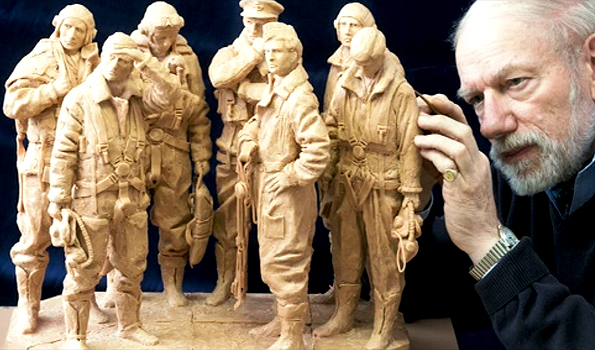
After 65 years one of the longest serving political ghosts of the Second World War has finally been put to rest, in a planning meeting at Westminster Council.
Until 13 May 2010 there had never been approval for a memorial commemorating the deaths of the 55,573 aircrew of Bomber Command.
In a decision eagerly awaited by Commonwealth veterans from around the world, Westminster Council has finally given the go ahead to construct a Portland Stone and bronze memorial on the northern edge of Piccadilly at the junction with Hyde Park Corner and Green Park.
Fittingly, it sits almost opposite the RAF Club on Piccadilly where members of that armed service past and present still congregate to share memories, remember fallen comrades and ensure the RAF has a powerful support and lobbying network on Civvy street.
A few weeks ago Squadron Leader Tony Iveson (DFC) met me there to talk about the importance of the memorial and the sense of urgency that it get completed before the generation of men, like him, who flew in that conflict are no longer with us.
Tony's biography is like dozens of those old black and white war movies I watched as a kid rolled into one.
Early in the war he flew the legendary Spitfire before being recruited to be a pilot in 617 squadron made famous by the Dambusters. He flew Lancasters on the daring raids which finally sank the giant German battleship the Tirpitz.
Now 90 he exudes the modesty and charm of someone who has known heroes a plenty and thanks his own lucky stars for survival from the great lottery that war was.
As a longstanding chairman of the Bomber Command Association he says that getting this far is like a mission accomplished, to finally see his fellow flyers recognised for the contribution they made in defeating Hitler and preventing London being emasculated like so many German cities.
The political ambivalence surrounding Air Marshal Arthur 'Bomber' Harris in the aftermath of war, started when the full extent of the damage to German cities on the bombing raids, became known.
In particular the Dresden raids caused consternation in many circles; although in recent years doubts have been cast on the scale of the civilian losses and destruction reported by Nazi authorities at the time.
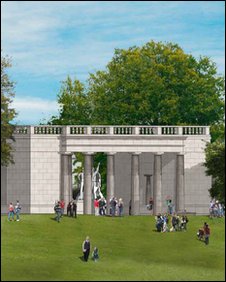
In what the architect Liam O'Connor has described as an especially challenging project, the design has won the day.
Its grandeur will no doubt inspire many generations to come; a monument to sacrifice, reconciliation and peace.
Now the politics is out of the way the architectural team led by Liam O'Connor can complete probably the last memorial of its kind to celebrate the sacrifices made in a war that is slowly fading from living memory.
The target is to have it ready for its first official commemoration on 11 November 2011 (11/11/11).
 I’m Kurt Barling, BBC London’s Special Correspondent. This is where I discuss some of the big topical issues which have an impact on Londoners' lives and share stories which remind us of our rich cultural heritage.

Comment number 1.
At 20:50 14th Mar 2011, fionahyde wrote:Its about time that people realized these men were doing their job, following orders and carrying out missions as dictated by the leader of their country, Mr Churchill. They carried out those orders frequently at the expense of their own lives, faithfully placing themselves in danger for the good of their homeland. I find it awful that it has taken so long to approve this, and I find the design amazing and cannot wait to see it.
Complain about this comment (Comment number 1)