BBC BLOGS - Barling's London

Archives for June 2010

The Prince and the changing face of London

Post categories:

Kurt Barling|10:26 UK time, Tuesday, 29 June 2010

It's quite rare for a High Court judge to reveal the mores of royalty. Even rarer to get involved in the debate about how London's skyline might change over the next few decades.
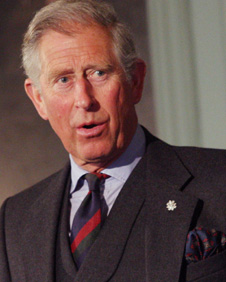
Prince Charles. Getty ImagesPerhaps inadvertently that's the territory Mr Justice Vos strayed into last week when he released a letter to the public that had been written and personally signed by the Prince of Wales to Sheikh Hamad bin Jassim bin Jabr Al-Thani, The Qatar Prime Minister and cousin to the ruling Emir of Qatar.

The Prince then pressed his case in person over tea with his close friend the Emir. The upshot, the Prince was making it clear he seriously disliked the plans on the table for the Chelsea Barracks development.

The plans that had been designed and developed for the site by Lord Richard Rogers' architectural practice were in keeping with his modernist aesthetic. Within three months of the letter the planning application to Westminster Council was withdrawn.

The Candy brothers, who have rocketed to being big players in the development of high value real estate in London through their company CPC, sued for early payment of over 68 million pounds worth of fees.

The Candy's alleged that Qatari Diar, the real estate arm of the Qatari Investment Authority, acted in bad faith by withdrawing from the project that CPC had effectively put together.

Mr Justice Vos' judgement said that there was no bad faith and there should be no early payment of fees. Perhaps the pursuit of early payment tells us something about the sluggish real estate market even at the top end of the market.

Ironically the Candy's may still get their fee, just not early.

Anyway the dispute brought into sharp focus the intervention of the Prince of Wales in the planning process. Many architects believe that by using private channels to scupper the development project, rather than the public consultation process, the Prince is having an unacceptable and inordinate influence on the future face of London.

Unsurprisingly Lord Rogers and a number of Royal Institute of British Architects spokespeople have been hopping mad ever since.

The Prince's officials counter that the Prince is a man of passion and principle and is entitled to his views. The big question for many is where and how those views should be ventilated, particularly if they are in the public interest.

If it's a matter of public interest, public consultation is the tried and tested route of determining how London's skyline and streetscape should look.

When a judge says, "both Qatari Diar and CPC were faced with a very difficult position once the Prince of Wales intervened in the planning process in March 2009", you can be sure this is a constitutional observation.

The judge is saying the Prince mucked up the accountability of the planning process on this particular development.

The London skyline and streetscape has been through many transitions over the past few hundred years and the fact that international investors still want to come here speaks volumes for the global status of the capital.

Natural resource rich Emirates and Kingdoms see London real estate as a good long-term investment, they also use London based expertise in other markets. It is part of the price and reward we pay for that global status.

Qatari Diar has just published a new Masterplan proposal for the Chelsea Barracks site. They have retained big hitting consultants in public consultation.

A sign of how sensitive development on this scale has become. There are real efforts being made to solicit a broad cross-section of views on this plan.

Its tone is more traditional and the planning application may as a consequence be less controversial; it's due to be submitted by the autumn.

Shaping the capital is dependent on a planning system which has been prone to long delays and now we know outside interference. What this points to is a problem of accountability.

If we are to respect the City we live in, Londoners need to feel that there are systems in place to protect the collective interest.

Clearly the Chelsea Barracks development presents us with an opportunity to test just how robust and accountable London's planning regime is.
A death in custody

Post categories:

Kurt Barling|18:06 UK time, Wednesday, 23 June 2010

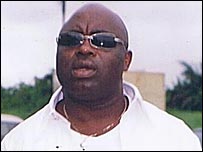
Frank Ogburo was 43 and he was on a brief tourist visit to London to see friends in September 2006.

A few days before he was due to return to his native Nigeria it is probable that he was involved in a domestic altercation in the friend's flat where he'd been staying in Woolwich.

No one was harmed in that incident but the police were called by a neighbour who heard raised voices and had grown concerned about the fracas.

Frank OgboruAs Frank Ogburo came out of the Vista Building of high rise flats close to Woolwich town centre he encountered two uniformed police officers.

From the CCTV footage that covered the front entrance a calamity is seen to unfold. First of all the police are seen to engage Frank in conversation but then things turn ugly.

An inquest at Southwark Coroner's Court has now heard that after separate discussions between two officers and Frank and a woman staying in the same flat, Frank was asked to leave the area so as to avoid another flare up.

The jury accepted that Frank Ogburo refused the first request to leave and was then told that he was likely to be arrested if he didn't go. Eye-witnesses saw a struggle between the officers and Frank which resulted in him being sprayed with CS Gas, being handcuffed and brought to the floor.

One witness I spoke to, the night after the incident, told me he shouted at the police officers, remonstrating with them that they were in danger of doing serious harm to the man on the ground.

This individual told me he'd been in the Territorial Army and knew the consequences of restraint.

As the struggle on the floor continued more people gathered. Frank Ogburo was heard to shout "you're killing me, I can't breathe". CCTV footage captured several more officers joining in the restraint and striking Frank to subdue him. By this point Frank's wrists were in handcuffs behind his back.

The CCTV footage continued to show four officers were physically on top of Frank, with another looking on. Crucially one officer placed a knee on the prone man's neck for a prolonged period and despite Frank no longer struggling, none of the officers seemed to notice he was not responding.

Positional asphyxia is a condition brought about when the restraint is so severe, an individual can no longer move their neck, chest wall or diaphragm to breathe.

Ever since the inquest into the death of Roger Sylvester in 2003 it has been well recognised in the police service that that there are potentially fatal risks associated with restraining an individual face down. Guidelines were drawn up as a consequence of that case to ensure all Met officers were trained to understand those risks.

They were clearly not heeded when Frank Ogburo was restrained. His death according to the jury was as a "consequence of restraint".

The jury went on to say in their narrative verdict, "had the risk factors been correctly identified and acted upon it is likely that Mr Ogburo would have survived".

In a highly unusual move the Assistant Deputy Coroner, Selena Lynch, has written to the Police Commissioner, Sir Paul Stephenson, to ask whether "more training, different training, or training that is delivered in a different way is something that might usefully be considered".

The verdict has meant that the Independent Police Complaints Commission that conducted the initial investigation into this death in police custody has referred the case back to the Crown Prosecution Service to see if any charges against the officers should be considered.

That course of action was rejected before the inquest took place, but now the evidence has been heard in open court there may be a stronger case to pursue disciplinary action against the officers who the Jury believe should have known better.

For the moment the course of the law evidently still has some way to run.

Fire safety: Who is regulating the regulators?

Post categories:

Kurt Barling|16:46 UK time, Wednesday, 9 June 2010

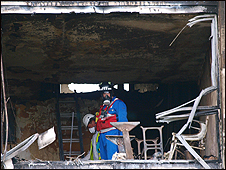
Lakanal House fire 2

Strange how a story can create ripples beyond the expectations of the story teller.

When BBC London reported on the absence of Fire Risk Assessments in hundreds of London tower blocks, a frenzy of public landlord activity seems to have taken place.

It has now come to light that that frenzy extended to at least one public building owned by the Crown; quite possibly others too.

On February 16th this year the HQ of the Communities and Local Government Ministry (CLG), Eland House, was served with an enforcement notice under the Fire Regulatory Reform (Fire Safety) Order 2005. A freedom of information request from info4fire.com drew this one out of the woodwork.

There is a certain, 'so what?' factor about this; until you consider the statutory responsibilities of CLG.

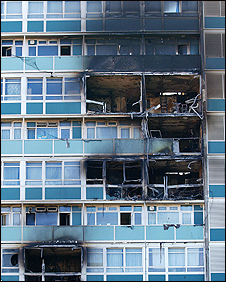
The Lakanal fire tragedy in July 2009, where six people died, exposed serious weaknesses in the fire safety regime covering tower blocks and other multiple occupancy buildings.

The government department responsible for making sure these fire safety rules worked, you guessed it, CLG.

Not only that. Government buildings are not regulated in the same way as other London buildings which are the responsibility, in fire safety terms, of the London Fire Brigade.

The Crown Premises Inspection Group is the body making sure that public servants working in these buildings are safe from incineration. The man that group reports to is Sir Ken Knight.

This is the very same man, who as the government's Chief Fire Adviser, reported after the Lakanal fire that:

"Consideration should be given to conducting a review as to how the 'responsible person' under the Regulatory Reform (Fire Safety) Order 2005, can be assured that their assessment of risk is suitable and sufficient, particularly where the premises is of a higher risk."

The breaches found at CLG are not insignificant according to the inspector who filed the report.

In a note to the boss, former Secretary of State John Denham, the inspector outlined the risk that the "Crown" may be putting its employees at a greater risk than "non-Crown employees".

In short, the Secretary of State may himself have been failing in his responsibilities as a "responsible person" under his own fire regulations for protecting those people working at Eland House.

It certainly wasn't clear to the inspector who the responsible person was. Sounds familiar, mightily embarrassing you might think.

Lakanal House fire

Ironically unlike New Look and Shell who have previously been fined six-figure sums for breaching the same fire regulations, CLG has Crown immunity from prosecution. No danger then of a very public furore arising out of a court case.

The enforcement order identified what it said were breaches of 13 out of 15 articles in the Fire Safety Order which were the responsibility of CLG.

It found that in the building's atrium fire engineering to stop the spread of a blaze had been crucially compromised. It noted that by installing a cafeteria after the building was completed no-one seems to have considered the possibility of "uncontrolled fire spread throughout the building."

The inspector also found there was an unsuitable and inadequate Fire Risk Assessment. No evidence of adequate training of officials. Crucially, in an echo of the problems Sir Ken Knight identified in Southwark, there was no clearly nominated responsible person to make sure fire safety regulations were adhered to.

They say a fish rots from the head first.

Potters Bar: Still finding closure eight years on

Post categories:

Kurt Barling|17:36 UK time, Wednesday, 2 June 2010

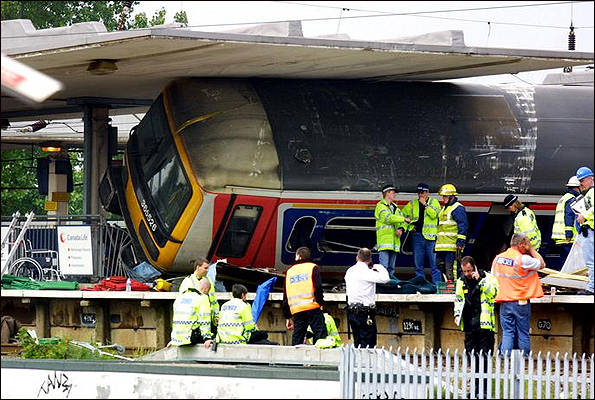
Potters Bar Train Crash

It is an unfortunate and common observation that inquests can take a very long time indeed to take place after unexpected deaths.

In particular, cases involving large organisations and corporate entities, families of the victims can wait years to learn just why their loved ones perished.

The Potters Bar rail crash happened on 10th May 2002.

The families have twice tried to get a full public inquiry to look into the circumstances of the tragedy where six passengers and one pedestrian lost their lives.

After all other legal avenues had been exhausted, finally the inquest could begin.

We, of course, know that the crash resulted from defective points. Lawyers for the family will set out to probe whether this resulted from systemic failings.

This is the beginning of the journey that the inquest will take over the next two to three months to get to the bottom of what happened and why.

The coroner, Judge Michael Findlay Baker QC, will help the jury of eight women and three men navigate through a mountain of evidence, much of it technical, to determine why things went wrong.

It seemed strange to be finally hearing eye-witnesses evidence after eight years.

Some witnesses who were passengers on the train found it difficult to remember precisely what happened, often citing the passage of time that had passed.

No such difficulties for Wing Commander Martin Rose who had flown in from his duties in Kuwait to attend the hearing.

On the 12.45 from King's Cross back then he was in the same first class section of the carriage as husband and wife Austen Kark and Nina Bawden.

He described his trip in the direction of Kings Lynn as initially uneventful. Then without warning he felt and heard a metal juddering.

He felt himself bouncing on his set and within seconds he sense the train had been derailed.

The carriage began to tilt and told the jury his first instinct was to "save his drink" he'd just purchased from the steward.

He then felt the carriage begin to roll and whilst he was trying to remain in his seat he had a sensation of weightlessness.

As former air crew this was not an unfamiliar feeling and he sensed himself floating out of his seat.

He described seeing Austen Kark (he only discovered who he was later on) also "floating" out of his seat.

Desperate to avoid a collision with him he stretched out an arm to grab hold of something and found a rail.

"This probably saved my life", he told the jury.

Austen Kark was not so lucky.

All this happened in a matter of seconds. Wing Commander Rose described the sensation of being inside a "tumble-dryer" as the carriage rolled a complete 360 degrees before coming to a halt across the two platforms and perpendicular to the track.

Once he had gathered his wits about him and with only minor injuries he was able to clamber across the carriage to search for the other two passengers in his compartment.

He found Austen Kark unresponsive and unconscious and Nina Bowden badly injured and coming in and out of consciousness.

He made a pact with her to stay put until help arrived.

Within minutes emergency services were on the scene and WC Rose had been evacuated to a local Sainsbury's which had been set up to tend the "walking wounded."

This dramatic testimony offered a genuine insight into the crash and the impact it must have had on so many of the terrified passengers; a reminder of the human cost when things go so badly wrong.

In the end that is why inquests happen to provide answers because of the human cost.

The current hearing in Letchworth, Hertfordshire, will no doubt add to the debate about whether something can be done to ensure inquests like this are held more swiftly, so relatives of those who lose their lives in such circumstances can find closure in a more timely manner.

BBC © 2014The BBC is not responsible for the content of external sites. Read more.

This page is best viewed in an up-to-date web browser with style sheets (CSS) enabled. While you will be able to view the content of this page in your current browser, you will not be able to get the full visual experience. Please consider upgrading your browser software or enabling style sheets (CSS) if you are able to do so.